
















New forest certification standard to benefit small producers – WWF Brasil
Report on Forest Certification Initiative for Small-Scale Producers in Brazil and its Alignment with Sustainable Development Goals
Introduction
A new standard for Small and Low Intensity Managed Forests (SLIMF) has been approved in Brazil to provide small and medium-scale producers of forest-based products with facilitated access to certification. This initiative represents a strategic effort to integrate sustainable forest management with economic development, directly contributing to the achievement of multiple Sustainable Development Goals (SDGs).
Advancing SDG 15: Life on Land
The primary objective of the SLIMF standard is to promote the sustainable management of forests, directly supporting the targets of SDG 15. By simplifying the certification process, the initiative aims to expand the area of responsibly managed forests, thereby protecting biodiversity and vital ecosystems.
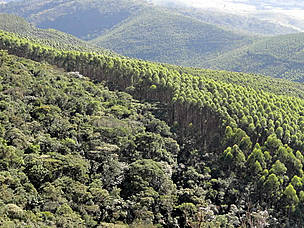
- The standard is applicable to both native and planted forests throughout Brazil, encouraging the conservation and restoration of critical biomes like the Atlantic Forest.
- It ensures that certified wood and non-wood products originate from processes that are environmentally adequate and promote the long-term existence of forests.
- An increase in Forest Stewardship Council® (FSC) certified areas directly translates to an increase in native forests undergoing restoration and regeneration processes.
Fostering Sustainable Economic Growth and Production (SDG 8 & SDG 12)
The initiative is designed to transform markets by integrating small-scale producers into sustainable supply chains, a key component of SDG 8 (Decent Work and Economic Growth) and SDG 12 (Responsible Consumption and Production).
- Facilitated certification opens new markets for small and medium producers, allowing them to improve production practices and add environmental value to their products.
- It promotes a market transformation for paper, cellulose, and packaging by increasing the supply of certified materials.
- The SLIMF standard reduces costs and procedural barriers, making sustainable production more economically viable and accessible for smaller operations.
Supporting Social Equity and Poverty Reduction (SDG 1)
By specifically targeting small-scale producers and communities, the program addresses the social dimensions of sustainability, contributing to SDG 1 (No Poverty). It provides a pathway for vulnerable producers to improve their livelihoods through sustainable practices.
- The initiative empowers small producers by improving their economic standing through access to premium markets for certified goods.
- It formally includes a large number of smallholders and communities in an economic system that values social and environmental responsibility.
- The standard applies to the extraction of non-wood products like Brazil nuts and oils, supporting diverse, community-based economies.
Multi-Stakeholder Collaboration for the Goals (SDG 17)
The success of this initiative is founded on a robust multi-stakeholder partnership, exemplifying the collaborative approach championed by SDG 17 (Partnerships for the Goals). The joint effort ensures a comprehensive approach that balances environmental, social, and economic priorities.
The key partners in this collaborative effort include:
- FSC® Brazil
- WWF-Brazil
- The Federal University of Viçosa
- Companies within the paper, cellulose, and packaging sector
Conclusion
The approval of the SLIMF certification standard in Brazil is a significant development for sustainable forestry. It serves as a practical mechanism for achieving interconnected Sustainable Development Goals by linking the conservation of terrestrial ecosystems (SDG 15) with inclusive economic growth (SDG 8), poverty reduction (SDG 1), and the promotion of responsible production and consumption patterns (SDG 12). This progress is made possible through effective multi-stakeholder partnerships (SDG 17), demonstrating a holistic model for sustainable development.
Analysis of Sustainable Development Goals in the Article
-
SDG 15: Life on Land
- The article’s central theme is the promotion of sustainable forest management through FSC certification. It explicitly mentions efforts for the “conservation and restoration of Atlantic Forest formations,” the “rational use of forests,” and increasing the “area of native forests undergoing processes of restoration and regeneration,” all of which are core components of SDG 15.
-
SDG 12: Responsible Consumption and Production
- The initiative aims to increase the supply of certified wood, which promotes sustainable production patterns. The article defines Forest Certification as ensuring wood originates from a “production process managed in an environmentally adequate, socially just and economically viable manner.” This directly addresses the goal of achieving sustainable management and efficient use of natural resources.
-
SDG 8: Decent Work and Economic Growth
- The article focuses on small and medium-scale producers, aiming to “facilitate access to FSC certification thereby stimulating the opening up of new markets.” By helping these producers “improve their production practices and aggregate social and environmental value to their product,” the initiative supports sustainable economic growth and productivity for a specific economic group.
-
SDG 17: Partnerships for the Goals
- The project described is a multi-stakeholder partnership. The article clearly states it is a “joint effort made by FSC® Brazil, WWF-Brazil and the Federal University of Viçosa, together with companies in the paper, cellulose and packaging sector.” This collaboration is a direct example of the partnerships required to achieve the SDGs.
Specific SDG Targets Identified
-
Target 15.2: Promote the implementation of sustainable management of all types of forests, halt deforestation, restore degraded forests and substantially increase afforestation and reforestation globally.
- The article directly supports this target by introducing a new standard (SLIMF) to “include small-scale Brazilian wood producers in FSC forest certification schemes.” The stated goal is to expand the “rational use of forests” and increase the “area of native forests undergoing processes of restoration and regeneration.”
-
Target 12.2: By 2030, achieve the sustainable management and efficient use of natural resources.
- The FSC certification itself is a tool to achieve this target. The article explains that the certification’s purpose is to “foster and disseminate the rational use of forests and guarantee their long term existence,” which aligns perfectly with the sustainable management and use of natural resources.
-
Target 8.3: Promote development-oriented policies that support productive activities, decent job creation, entrepreneurship, creativity and innovation, and encourage the formalization and growth of micro-, small- and medium-sized enterprises.
- The SLIMF standard is a policy-oriented tool specifically designed to “reduce costs and facilitate access to FSC certification” for “small and medium-scale producers.” This directly encourages the growth and formalization of these enterprises by helping them access new markets.
-
Target 17.17: Encourage and promote effective public, public-private and civil society partnerships.
- The initiative is a clear example of this target in action. The article identifies the partners as a “joint effort made by FSC® Brazil, WWF-Brazil and the Federal University of Viçosa, together with companies,” representing a civil society and private sector partnership.
Indicators for Measuring Progress
-
Indicator related to Target 15.2 (Progress towards sustainable forest management)
- The article explicitly mentions a key indicator: the “increase in the FSC certified area.” This provides a direct, measurable way to track the expansion of sustainable forest management. A secondary implied indicator is the “increase in the area of native forests undergoing processes of restoration and regeneration.”
-
Indicator related to Target 8.3 (Growth of small-scale enterprises)
- An implied indicator is the “numbers of small-scale producers and communities” that are brought into the FSC system. The article notes their numbers are “enormous,” and tracking their inclusion would measure the success of the SLIMF standard in supporting small enterprises.
-
Indicator related to Target 12.2 (Sustainable management of resources)
- The article implies that the “supply side of good certified wood” is an indicator of progress. An increase in the availability of certified products in the market reflects a shift towards more sustainable production patterns.
Summary Table of SDGs, Targets, and Indicators
| SDGs | Targets | Indicators |
|---|---|---|
| SDG 15: Life on Land | Target 15.2: Promote the implementation of sustainable management of all types of forests… restore degraded forests… | Increase in the FSC certified area; Increase in the area of native forests undergoing restoration. |
| SDG 12: Responsible Consumption and Production | Target 12.2: Achieve the sustainable management and efficient use of natural resources. | Increase in the supply of certified wood products. |
| SDG 8: Decent Work and Economic Growth | Target 8.3: Promote policies that support… the formalization and growth of micro-, small- and medium-sized enterprises. | Number of small-scale producers and communities obtaining certification and accessing new markets. |
| SDG 17: Partnerships for the Goals | Target 17.17: Encourage and promote effective public, public-private and civil society partnerships. | The existence and functioning of the joint partnership between FSC Brazil, WWF-Brazil, a university, and private companies. |
Source: wwf.org.br
What is Your Reaction?
 Like
0
Like
0
 Dislike
0
Dislike
0
 Love
0
Love
0
 Funny
0
Funny
0
 Angry
0
Angry
0
 Sad
0
Sad
0
 Wow
0
Wow
0