
























































Oklahoma maternal mortality rate dips slightly, remains above national average – KGOU
Report on Maternal Mortality in Oklahoma: An Analysis Through the Lens of Sustainable Development Goals
An annual report on maternal health in Oklahoma indicates an improvement in the state’s maternal mortality rate, aligning with national trends. However, the rate remains elevated compared to the national average, highlighting significant challenges in achieving key targets of the United Nations Sustainable Development Goals (SDGs), particularly SDG 3 (Good Health and Well-being), SDG 1 (No Poverty), SDG 5 (Gender Equality), and SDG 10 (Reduced Inequalities).
Statistical Analysis of Maternal Mortality Rates
State and National Comparison
The data reveals a critical gap between state and national health outcomes, directly impacting progress on SDG 3, which aims to ensure healthy lives and promote well-being for all at all ages.
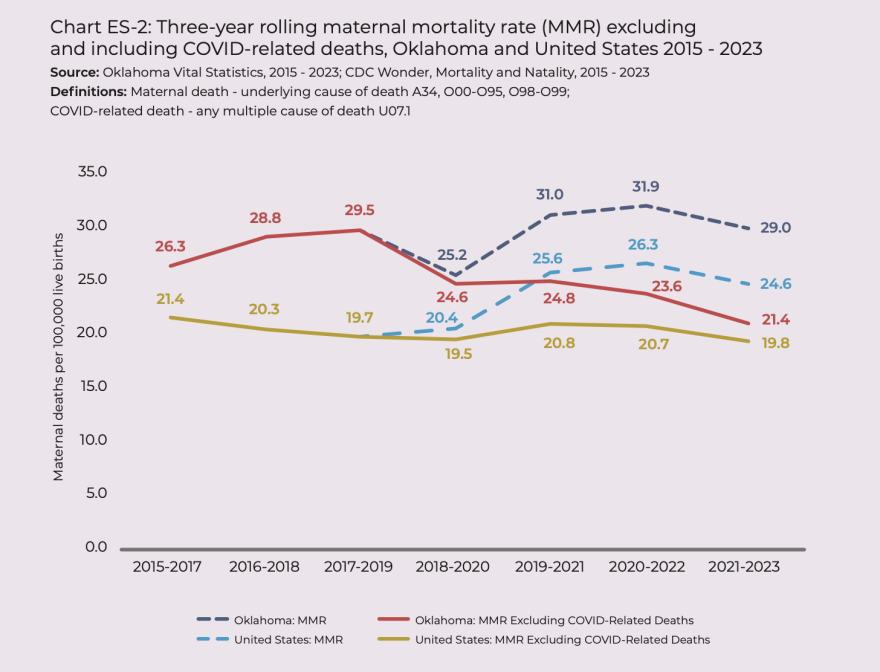
- Oklahoma’s three-year rolling maternal mortality rate declined from 31.9 per 100,000 live births (2020-2022) to 29 per 100,000 (2021-2023).
- The national rate stands at 24.6 per 100,000 live births.
- Excluding deaths related to COVID-19, Oklahoma’s maternal mortality rate decreased by 9.3%, a more significant reduction than the national decrease of 4.3%.
Racial Disparities and SDG 10: Reduced Inequalities
The data exposes profound racial inequalities, a direct challenge to SDG 10. The disparity underscores the need for targeted interventions to ensure equitable health outcomes for all women, a cornerstone of both SDG 5 (Gender Equality) and SDG 10.
- Black women in Oklahoma face the highest maternal mortality rate at 71.6 per 100,000 live births.
- White women in Oklahoma have the lowest rate at 19.2 per 100,000 live births, marking a nearly 16% decrease from the previous report.
Data collection on Indigenous Oklahomans is limited due to Indigenous data sovereignty, which presents a challenge for fully assessing and addressing inequalities within this population.
Contributing Factors and Systemic Challenges
Analysis of Preventable Deaths (2018-2022)
The Oklahoma Maternal Mortality Review Committee reviewed 100 deaths occurring during or within one year of pregnancy from 2018 to 2022. The findings indicate that a majority of these deaths were preventable, pointing to systemic failures that hinder the achievement of SDG 3.
- 43% of the reviewed deaths were pregnancy-related, with top causes being hemorrhage, infection, and cardiac conditions.
- Nearly 70% of these pregnancy-related deaths were deemed preventable.
Barriers to Achieving Good Health and Well-being (SDG 3)
Multiple factors contribute to Oklahoma’s elevated maternal mortality rate, reflecting complex challenges related to poverty (SDG 1), gender equality (SDG 5), and access to essential services.
- Systemic Barriers:
- Limited access to health care
- Higher rates of poverty and uninsurance
- Presence of maternity care deserts
- Patient and Family Level Factors:
- Lack of vaccination
- Absence of, or delay in, accessing perinatal care
- Financial challenges and substance abuse
- Provider Level Factors:
- Delays in diagnosis and treatment
- Failure to follow the established standard of care
Recommendations for Progress Towards Sustainable Development Goals
The Maternal Mortality Review Committee has proposed several recommendations aimed at strengthening health systems and addressing the root causes of maternal mortality. These actions are crucial for making substantive progress on SDGs 3, 10, 11, and 16.
- Implement Obstetric Early Warning Systems: Utilize these systems in all relevant facilities to monitor vital signs and clinical indicators, directly supporting SDG 3’s target to reduce maternal mortality.
- Enhance Mental and Behavioral Health Screening: Screen every pregnant patient for mental health conditions and substance use disorders and refer them to appropriate resources. This addresses a critical component of overall health as outlined in SDG 3.
- Ensure Consistent Patient Engagement: Health care workers should provide consistent touchpoints to encourage engagement with available resources throughout the perinatal period, improving health care access and quality (SDG 3).
- Establish a Perinatal Mental Health Advisory Group: Create a dedicated group to address perinatal mental health and substance use, strengthening institutional capacity to handle complex health issues (SDG 16).
- Advocate for Housing Support: Pursue legislative action to prioritize housing support for pregnant and postpartum individuals, recognizing the link between stable housing, poverty reduction, and health outcomes (SDG 1, SDG 11).
Analysis of Sustainable Development Goals in the Article
1. Which SDGs are addressed or connected to the issues highlighted in the article?
The article on Oklahoma’s maternal mortality rate addresses several interconnected Sustainable Development Goals (SDGs). The primary focus is on health outcomes, but the contributing factors discussed extend to issues of poverty and inequality.
- SDG 3: Good Health and Well-being: This is the most central SDG, as the entire article revolves around maternal health, mortality rates, causes of death (hemorrhage, infection, cardiac conditions), and contributing factors like mental health and substance abuse. The recommendations provided, such as improving access to quality healthcare, directly align with this goal.
- SDG 10: Reduced Inequalities: The article explicitly highlights significant disparities in health outcomes based on race. It provides data showing that Black women in Oklahoma experience a maternal mortality rate (71.6 per 100,000 live births) that is substantially higher than that of White women (19.2 per 100,000). This points directly to inequalities in health access and outcomes within the population.
- SDG 1: No Poverty: The article identifies “higher poverty” and “financial challenges” as contributing factors to the elevated maternal mortality rate. This connects the issue of poor health outcomes directly to the economic status of individuals, aligning with the goal of eradicating poverty.
2. What specific targets under those SDGs can be identified based on the article’s content?
Based on the details in the article, several specific SDG targets can be identified:
- Target 3.1: By 2030, reduce the global maternal mortality ratio to less than 70 per 100,000 live births.
- Explanation: The article’s core subject is the maternal mortality rate in Oklahoma. It provides specific statistics (29 deaths per 100,000 live births) and compares them to national figures, directly addressing the central theme of this target.
- Target 3.4: By 2030, reduce by one third premature mortality from non-communicable diseases through prevention and treatment and promote mental health and well-being.
- Explanation: The article mentions that top causes of maternal death include cardiac conditions, a non-communicable disease. Furthermore, it highlights recommendations to screen every pregnant patient for mental health conditions, directly supporting the promotion of mental health and well-being.
- Target 3.5: Strengthen the prevention and treatment of substance abuse.
- Explanation: The article identifies “substance abuse” as a contributing factor to maternal deaths and includes a recommendation from the review committee to screen patients for “substance use disorders” and refer them to resources.
- Target 3.8: Achieve universal health coverage, including financial risk protection, access to quality essential health-care services…for all.
- Explanation: The article points to “limited health care access,” “higher… uninsured rates,” and “maternity care deserts” as significant problems. It also notes that delays in accessing care and a lack of perinatal care contribute to preventable deaths, highlighting gaps in universal health coverage.
- Target 10.2: By 2030, empower and promote the social, economic and political inclusion of all, irrespective of…race…or other status.
- Explanation: The article’s data on the starkly different maternal mortality rates between Black women (71.6 per 100,000) and White women (19.2 per 100,000) is a clear measure of racial inequality in health outcomes, which this target aims to eliminate.
3. Are there any indicators mentioned or implied in the article that can be used to measure progress towards the identified targets?
Yes, the article mentions several explicit and implied indicators that align with the official SDG indicators used to measure progress.
- Indicator 3.1.1: Maternal mortality ratio.
- Explanation: This is the most explicit indicator in the article. It provides precise figures for Oklahoma’s maternal mortality rate (“a decline in maternal deaths from 31.9 per 100,000 live births… to 29 per 100,000”) and the national rate (“24.6 per 100,000”).
- Maternal mortality ratio disaggregated by race (Implied indicator for Target 10.2).
- Explanation: The article provides the maternal mortality rate for different racial groups, stating the rate for White women is “19.2 per 100,000 live births” and for Black women is “71.6 per 100,000 live births.” This disaggregated data serves as a direct indicator of health inequality.
- Proportion of population with access to essential health services (Implied indicator for Target 3.8).
- Explanation: While not providing a specific percentage, the article implies this indicator by repeatedly mentioning factors like “limited health care access,” “uninsured rates,” and the existence of “maternity care deserts.” These factors directly measure the lack of access to essential health services.
- Prevalence of mental health and substance use disorders (Implied indicator for Targets 3.4 and 3.5).
- Explanation: The article’s recommendation to “screen every pregnant patient for mental health conditions and substance use disorders” implies that the prevalence of these conditions is a key metric to track for improving maternal health outcomes.
4. Table of SDGs, Targets, and Indicators
| SDGs | Targets | Indicators Identified in the Article |
|---|---|---|
| SDG 3: Good Health and Well-being |
3.1: Reduce global maternal mortality.
3.4: Reduce premature mortality from non-communicable diseases and promote mental health. 3.5: Strengthen prevention and treatment of substance abuse. 3.8: Achieve universal health coverage. |
Explicit: Maternal mortality rate (e.g., 29 per 100,000 live births in Oklahoma).
Implied: Prevalence of mental health conditions among pregnant patients; mortality from cardiac conditions. Implied: Prevalence of substance use disorders among pregnant patients. Implied: Uninsured rates; measures of limited healthcare access and “maternity care deserts.” |
| SDG 10: Reduced Inequalities | 10.2: Promote inclusion of all, irrespective of race. | Explicit: Maternal mortality rate disaggregated by race (e.g., 71.6 for Black women vs. 19.2 for White women). |
| SDG 1: No Poverty | 1.2: Reduce poverty in all its dimensions. | Implied: Poverty rates and financial challenges faced by pregnant women, mentioned as contributing factors to mortality. |
Source: kgou.org
What is Your Reaction?
 Like
0
Like
0
 Dislike
0
Dislike
0
 Love
0
Love
0
 Funny
0
Funny
0
 Angry
0
Angry
0
 Sad
0
Sad
0
 Wow
0
Wow
0



;Resize=620#)







