



















































On Migrant Crackdowns and Empty Humanitarian Rhetoric – UCLA Luskin

Report on “Beyond Sanctuary” and its Implications for Sustainable Development Goals
Introduction and Core Thesis
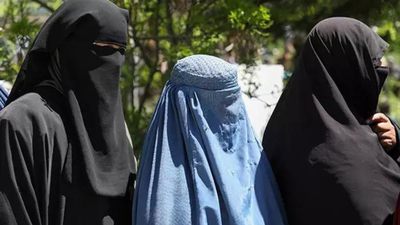
A recently published book, “Beyond Sanctuary: The Humanism of a World in Motion,” co-edited by Professor Ananya Roy of UCLA Luskin and Veronika Zablotsky, presents a critical examination of the treatment of migrant populations. The work analyzes the disparity between the humanitarian rhetoric of Western liberal democracies and the actual treatment of poor and vulnerable migrants, aligning with a critical assessment of global development frameworks.
Alignment with SDG 10: Reduced Inequalities
The book’s central arguments directly address the objectives of Sustainable Development Goal 10, which aims to reduce inequality within and among countries.
- The essays investigate the systemic inequalities faced by migrant populations, particularly those who are poor and vulnerable.
- Professor Roy articulates that the act of forcing individuals from their homes constitutes a form of racial segregation and oppression, a direct challenge to the principles of SDG 10.
- The research highlights the “illegalization” of migration and presence as a key mechanism that drives inequality, denying individuals access to rights and services.
Implications for SDG 16: Peace, Justice, and Strong Institutions
The publication critiques the efficacy of institutional frameworks in protecting migrant rights, a core component of SDG 16, which promotes just, peaceful, and inclusive societies.
- The analysis exposes the failure of institutions to provide genuine asylum and protection, pointing to a significant gap between stated policy and practical implementation.
- The denial of asylum status is identified as a critical failure of legal and justice systems to protect vulnerable people in motion, undermining the goal of providing access to justice for all.
- The book underscores the urgent need for effective, accountable, and inclusive institutions that uphold the human rights of all individuals, irrespective of their migratory status, as envisioned by SDG 16.
Broader Connections to Global Goals
The themes explored in “Beyond Sanctuary” resonate with several other Sustainable Development Goals.
- SDG 1 (No Poverty): The focus on “poor and vulnerable migrants” acknowledges that the risks of migration and subsequent denial of status can perpetuate and deepen cycles of poverty.
- SDG 11 (Sustainable Cities and Communities): As the research is led by a professor of urban planning, it implicitly questions the capacity of communities to be inclusive and safe for all residents, a key target of SDG 11.
Analysis of Sustainable Development Goals in the Article
1. Which SDGs are addressed or connected to the issues highlighted in the article?
-
SDG 10: Reduced Inequalities
- The article directly addresses this goal by focusing on how “poor and vulnerable migrants are viewed and treated.” It highlights systemic inequalities through concepts like “racial segregation and oppression” and the critique of “empty humanitarian rhetoric,” which points to a disparity between stated values and the actual treatment of migrants.
-
SDG 16: Peace, Justice and Strong Institutions
- This goal is relevant because the article discusses institutional processes and failures related to justice for migrants. The “denial of asylum status” and the “illegalization of their presence” are outcomes of legal and institutional frameworks that fail to provide equal access to justice and protection for this population.
2. What specific targets under those SDGs can be identified based on the article’s content?
-
Under SDG 10 (Reduced Inequalities):
- Target 10.7: Facilitate orderly, safe, regular and responsible migration and mobility of people. The article highlights the failure to meet this target by describing migrants “crossing deadly borders, risking death, risking separation from loved ones.” This points to a reality of disorderly, unsafe, and irregular migration.
- Target 10.2: Empower and promote the social, economic and political inclusion of all, irrespective of origin or other status. The article’s mention of “racial segregation and oppression” and the “illegalization of their presence” directly contradicts this target, indicating the active exclusion of migrants from social and legal systems.
-
Under SDG 16 (Peace, Justice and Strong Institutions):
- Target 16.3: Promote the rule of law at the national and international levels and ensure equal access to justice for all. The “denial of asylum status” mentioned by Ananya Roy is a clear example of migrants being denied equal access to legal processes and justice within the institutions of host countries.
3. Are there any indicators mentioned or implied in the article that can be used to measure progress towards the identified targets?
- The article does not mention official quantitative indicators but implies several qualitative or proxy measures for assessing the situation of migrants.
-
Implied Indicators for Target 10.7:
- Number of migrant deaths and separations: The phrase “risking death, risking separation from loved ones” implies that the number of deaths, disappearances, and family separations during migration is a key indicator of the lack of safe migration pathways. This aligns with official indicator 10.7.3.
- Proportion of migrant population with irregular status: The reference to “the illegalization of their presence” suggests that the number or percentage of migrants living without legal status is a critical measure of failed migration policies.
-
Implied Indicator for Target 16.3:
- Asylum application success rates: The “denial of asylum status” can be measured by tracking the proportion of asylum claims that are rejected. A high denial rate for certain groups could indicate a lack of equal access to justice.
Summary Table of SDGs, Targets, and Indicators
| SDGs | Targets | Indicators (Implied from Article) |
|---|---|---|
| SDG 10: Reduced Inequalities | 10.7: Facilitate orderly, safe, regular and responsible migration and mobility of people. |
|
| 10.2: Empower and promote the social, economic and political inclusion of all. |
|
|
| SDG 16: Peace, Justice and Strong Institutions | 16.3: Promote the rule of law and ensure equal access to justice for all. |
|
Source: luskin.ucla.edu
What is Your Reaction?
 Like
0
Like
0
 Dislike
0
Dislike
0
 Love
0
Love
0
 Funny
0
Funny
0
 Angry
0
Angry
0
 Sad
0
Sad
0
 Wow
0
Wow
0