Opinion | Why college football is a perfect metaphor for economic inequality – Alabama Political Reporter
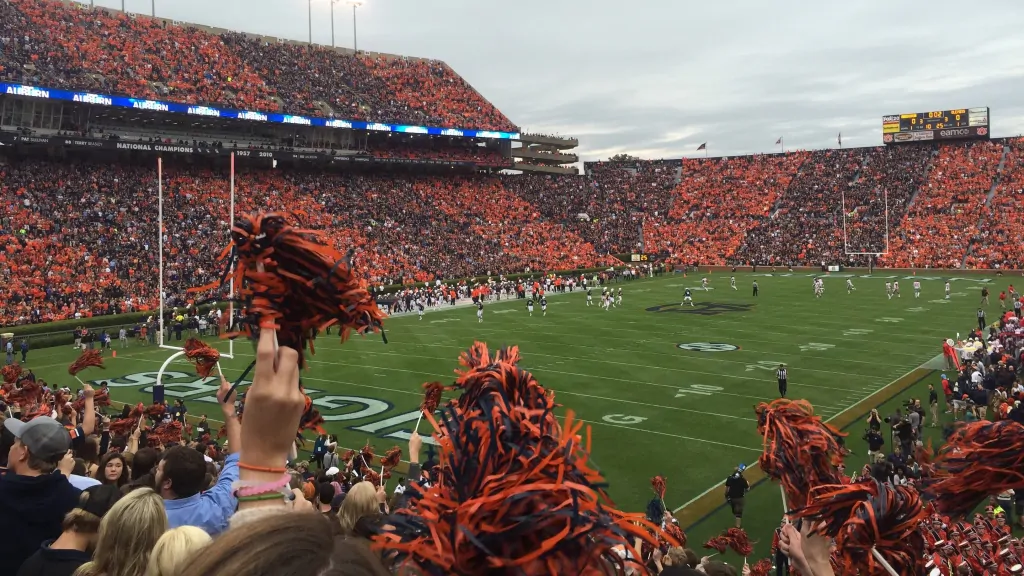
An Analysis of Economic Disparities in Collegiate Athletics through the Lens of Sustainable Development Goals
Introduction: Economic Models in Collegiate Sports
Recent high-value transactions within the American college football industry highlight significant economic dynamics that warrant examination through the framework of the United Nations Sustainable Development Goals (SDGs). The system, characterized by multi-million dollar contracts for coaches and executives, stands in stark contrast to the compensation models for student-athletes. The recent allowance for athletes to earn from their Name, Image, and Likeness (NIL) has brought these disparities into sharp focus, providing a case study for analyzing principles of equitable economic systems.
Alignment with SDG 10: Reduced Inequalities
The economic structure of major collegiate sports programs directly relates to the objectives of SDG 10, which aims to reduce inequality within and among countries. The analysis reveals several key areas of disparity:
- Extreme Wage Gaps: A significant income gap exists between the highest-paid employees (coaches, executives) and the primary laborers (student-athletes). Contracts for coaches can reach totals such as $84 million over seven years, while universities also incur substantial costs, like a $50 million buyout for a previous coach.
- Revenue Distribution: Substantial revenue is generated by universities, apparel companies, and television networks, with profits concentrated among top executives and administrative staff. This model reflects a broader economic system where wealth is not distributed equitably among all contributors to its creation.
- Systemic Suppression of Earnings: For decades, the system artificially depressed the wages of student-athletes by prohibiting direct payment, creating an institutional barrier to economic participation and contributing to inequality.
- Public Perception and Inequality: Public discourse often criticizes athletes for seeking compensation, deflecting from the systemic inequalities that benefit established powerful entities. This mirrors broader societal trends where labor’s demand for fair wages is framed as a disruption rather than a legitimate claim to a share of generated wealth.
Implications for SDG 8: Decent Work and Economic Growth
The debate over athlete compensation is central to SDG 8, which promotes sustained, inclusive, and sustainable economic growth, full and productive employment, and decent work for all. The conditions within college athletics can be assessed against these principles:
- Recognition of Labor: Student-athletes are the essential workers in a multi-billion dollar industry. Their labor, physical sacrifice, and time commitment generate the product that institutions, corporations, and media monetize.
- Fair Compensation: The concept of “decent work” includes fair remuneration. The historical model of amateurism denied athletes a fair wage for their work, a practice misaligned with SDG 8. The introduction of NIL rights is a partial step toward rectifying this, allowing athletes to capture a portion of the value they create.
- Economic Disenfranchisement: By restricting athletes’ earning potential, the system has historically limited their ability to achieve economic security and build wealth, contrary to the goal of inclusive economic growth.
Institutional Frameworks and SDG 16: Peace, Justice and Strong Institutions
The governance of collegiate sports reflects the principles of SDG 16, which calls for effective, accountable, and inclusive institutions at all levels. The struggle for athlete compensation is a movement for institutional reform.
- Institutional Accountability: The governing bodies of college sports have long maintained a system that benefits the institutions financially at the expense of the athletes. The push for NIL rights challenges these institutions to become more accountable to all stakeholders, not just management.
- Access to Justice: The ability of athletes to finally secure the right to be paid represents a form of economic justice, achieved after prolonged advocacy and legal challenges against a powerful, entrenched system.
- Reforming Institutions: The ongoing debate illustrates the challenge of reforming established institutions to ensure they operate on principles of fairness and equity, a core target of SDG 16. The resistance to player compensation highlights the institutional inertia that often protects the interests of the most powerful.
Analysis of Sustainable Development Goals in the Article
1. Which SDGs are addressed or connected to the issues highlighted in the article?
-
SDG 8: Decent Work and Economic Growth
The article directly addresses the principles of decent work and fair compensation. It uses the situation of college athletes as a metaphor for the broader workforce, highlighting their struggle for “a fair and decent wage” after toiling with “criminally low wages.” This connects to the goal of promoting sustained, inclusive, and sustainable economic growth, full and productive employment, and decent work for all.
-
SDG 10: Reduced Inequalities
This is the central theme of the article. The author explicitly states that the college sports situation is a “perfect microcosm of the economic inequality in America” and mentions that the country has “one of the worst wage gaps in the world.” The entire piece contrasts the immense wealth of coaches, executives, and universities with the financial struggles of the players, directly tackling the issue of reducing inequality within a country.
2. What specific targets under those SDGs can be identified based on the article’s content?
-
Under SDG 8: Decent Work and Economic Growth
-
Target 8.5: By 2030, achieve full and productive employment and decent work for all women and men, including for young people and persons with disabilities, and equal pay for work of equal value.
The article’s focus on college athletes (young people) fighting to be paid for their labor aligns with this target. The author argues that the players “had the nerve to finally, finally stand up for themselves and fight to be paid” for the value they create, which generates hundreds of millions of dollars for others. The complaint about “criminally low wages that had been artificially depressed by a system” is a direct call for wages that reflect the value of the work performed.
-
Target 8.5: By 2030, achieve full and productive employment and decent work for all women and men, including for young people and persons with disabilities, and equal pay for work of equal value.
-
Under SDG 10: Reduced Inequalities
-
Target 10.3: Ensure equal opportunity and reduce inequalities of outcome, including by eliminating discriminatory laws, policies and practices and promoting appropriate legislation, policies and action in this regard.
The previous system where players were not allowed to earn money was a policy that created a massive inequality of outcome. The article champions the players’ fight which led to the establishment of Name, Image, and Likeness (NIL) rights. This change in policy is a direct example of promoting action to ensure more equal opportunity for athletes to share in the profits they help generate. -
Target 10.4: Adopt policies, especially fiscal, wage and social protection policies, and progressively achieve greater equality.
The article critiques the economic “system that is controlled by the wealthy executives and CEOs” and celebrates the players’ fight for a “fair piece of the pie.” This is fundamentally a discussion about wage policies within the college sports industry. The introduction of NIL rights is a new policy that begins to address the wage gap and moves toward greater equality between the institution’s earners and the student-athletes.
-
Target 10.3: Ensure equal opportunity and reduce inequalities of outcome, including by eliminating discriminatory laws, policies and practices and promoting appropriate legislation, policies and action in this regard.
3. Are there any indicators mentioned or implied in the article that can be used to measure progress towards the identified targets?
-
The article, being an opinion piece, does not cite specific statistical indicators but strongly implies several ways to measure the inequality it describes. These can be interpreted as follows:
- Wage and Earnings Gaps: The article provides concrete examples that can be used as indicators of inequality. It contrasts a coach’s new contract of “$12 million per year” with the players’ recent and controversial ability to earn any money at all. An implied indicator is the ratio of executive/coach compensation to athlete compensation. The reference to America having “one of the worst wage gaps in the world” also points to this as a key measure of progress.
- Revenue Distribution Policies: The article criticizes a system where “everyone all around the sport of college football is making buckets upon buckets of money” except for the players. An indicator for progress towards Target 10.4 would be the proportion of total athletic program revenue that is shared with or allocated to student-athletes through scholarships, stipends, and NIL earnings. The shift from a policy of zero direct compensation to one that allows it is a measurable change.
4. Summary Table of SDGs, Targets, and Indicators
| SDGs | Targets | Indicators (Implied from the Article) |
|---|---|---|
| SDG 8: Decent Work and Economic Growth | Target 8.5: Achieve decent work and equal pay for work of equal value, especially for young people. | The existence and value of payments to student-athletes (e.g., NIL deals) as compensation for their work, which generates massive revenue. |
| SDG 10: Reduced Inequalities | Target 10.3: Ensure equal opportunity and reduce inequalities of outcome by eliminating discriminatory policies. | The presence of policies and legislation (like NIL rights) that allow athletes to earn money, reversing previous prohibitive rules. |
| Target 10.4: Adopt policies, especially wage policies, to progressively achieve greater equality. | The wage gap between the highest-paid employees (coaches, executives) and the athletes. A reduction in this ratio would indicate progress. |
Source: alreporter.com
What is Your Reaction?
 Like
0
Like
0
 Dislike
0
Dislike
0
 Love
0
Love
0
 Funny
0
Funny
0
 Angry
0
Angry
0
 Sad
0
Sad
0
 Wow
0
Wow
0