
































‘Protecting the beauty we have.’ Lee Greener Gateway Committee removes invasive plant species from local parks – The Berkshire Eagle
Report on Community-Led Ecological Restoration in Lee and its Alignment with Sustainable Development Goals
Introduction: Local Action for Global Goals
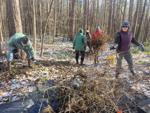
A community initiative in Lee, led by the Greener Gateway Committee, is actively addressing the proliferation of invasive plant species in Longcope Park. This effort directly supports several key United Nations Sustainable Development Goals (SDGs), particularly those concerning terrestrial ecosystems, community well-being, and sustainable partnerships. The project focuses on removing invasive wild barberry and Euonymus plants to restore the local ecosystem’s health and biodiversity.
SDG 15: Life on Land – Protecting Terrestrial Ecosystems
The core activities of the initiative are directly aligned with the objectives of SDG 15, which aims to protect, restore, and promote the sustainable use of terrestrial ecosystems and halt biodiversity loss.
Key Actions and Impacts
- Target 15.8 (Invasive Species): Volunteers are systematically removing invasive wild barberry, which displaces native plants and disrupts the local ecological balance. This action is a direct implementation of the goal to prevent the introduction and significantly reduce the impact of invasive alien species on land ecosystems.
- Target 15.5 (Biodiversity Loss): By clearing invasive flora, the committee is working to halt the degradation of natural habitats and protect biodiversity. Committee member Katherine Miller noted the danger to the local plant community, underscoring the project’s role in safeguarding local biodiversity.
Methodology for Invasive Species Control
- Manual removal of plants using pitchforks, trimmers, and shovels.
- Collection of uprooted plants on tarps for sun-drying to prevent regrowth and further spread.
- Planning for follow-up culling in the spring to manage new growth from remaining seeds and berries.
SDG 3 & SDG 11: Fostering Healthy and Sustainable Communities
The project yields significant co-benefits for public health and the creation of sustainable community spaces, contributing to SDG 3 (Good Health and Well-being) and SDG 11 (Sustainable Cities and Communities).
Contributions to Community Well-being
- SDG 3 (Good Health and Well-being): The report notes that dense barberry provides a thriving habitat for ticks. By clearing these plants, the initiative helps reduce the risk of tick-borne diseases for park visitors.
- SDG 11 (Sustainable Cities and Communities): The work ensures that the walking trail in Longcope Park remains accessible and safe for hikers and sightseers. This directly supports Target 11.7, which calls for providing universal access to safe, inclusive, and accessible green and public spaces.
SDG 17: Partnerships for the Goals – A Collaborative Strategy
The initiative exemplifies the power of local partnerships in achieving sustainability objectives, a central theme of SDG 17.
Strategic Framework and Collaboration
- Public Awareness and Education: The committee aims to educate residents on the impact of invasive species, empowering them to contribute to ecosystem health in their own properties, as stated by Linda Cysz of the Lee Land Trust.
- Sustained Action: The committee has adopted a strategy of recurring monthly volunteer events, recognizing that consistent effort is more effective than isolated annual events. Activities are scheduled to resume in March, including an annual Earth Day cleanup.
- Multi-Stakeholder Collaboration: The project involves collaboration between the Lee Greener Gateway Committee, the Lee Land Trust, the local youth group Greenagers, and community volunteers, demonstrating a strong local partnership to achieve shared environmental goals.
Analysis of Sustainable Development Goals in the Article
1. Which SDGs are addressed or connected to the issues highlighted in the article?
The article highlights several issues that connect to the following Sustainable Development Goals (SDGs):
-
SDG 15: Life on Land
This is the most prominent SDG in the article. The entire focus is on protecting a local terrestrial ecosystem by combating invasive species. The article states that the invasive wild barberry is “damaging to the town’s ecosystem” and “pushes out native plants.” The actions of the Lee Greener Gateway Committee to remove these plants are a direct effort to protect and restore local biodiversity and ecosystems, which is the core mission of SDG 15.
-
SDG 11: Sustainable Cities and Communities
The article discusses community-led action to improve a public green space, Longcope Park. The committee’s work aims to “keep the trail accessible to hikers and sightseers.” By making the park safer and more pleasant, they are contributing to the goal of providing access to safe, inclusive, and accessible green and public spaces, which is a key component of creating sustainable communities.
-
SDG 3: Good Health and Well-being
A direct link to public health is made when the article mentions that “ticks thrive in areas with dense barberry.” Ticks are vectors for various diseases, such as Lyme disease. By clearing the invasive plants that serve as a habitat for ticks, the volunteers are taking preventative measures to reduce the risk of communicable diseases in the community, thereby promoting good health and well-being.
2. What specific targets under those SDGs can be identified based on the article’s content?
Based on the article, the following specific SDG targets can be identified:
-
Target 15.8 (under SDG 15)
“By 2020, introduce measures to prevent the introduction and significantly reduce the impact of invasive alien species on land and water ecosystems and control or eradicate the priority species.”
The article is a clear example of this target in action at a local level. The Lee Greener Gateway Committee is actively working to control and eradicate invasive species like wild barberry and Euonymus (“burning bush”) from Longcope Park. The text describes how volunteers “cleared out the plants from the brush” to reduce their damaging impact on the local ecosystem.
-
Target 15.5 (under SDG 15)
“Take urgent and significant action to reduce the degradation of natural habitats, halt the loss of biodiversity and, by 2020, protect and prevent the extinction of threatened species.”
The article notes that invasive barberry “pushes out native plants,” which leads to habitat degradation and a loss of local biodiversity. The committee’s efforts to remove these invasive plants are a direct action to halt this process and allow the natural habitat to recover.
-
Target 11.7 (under SDG 11)
“By 2030, provide universal access to safe, inclusive and accessible, green and public spaces…”
The cleanup work is focused on Longcope Park, a public walking trail. The committee’s goal is to “keep the trail accessible to hikers and sightseers.” By removing dense, thorny, and tick-harboring brush, they are making this public green space safer and more accessible for community members.
-
Target 3.3 (under SDG 3)
“By 2030, end the epidemics of… communicable diseases.”
This target is addressed indirectly. The article explicitly states that “ticks thrive in areas with dense barberry.” Since ticks are carriers of communicable diseases, the removal of their habitat is a preventative health measure aimed at reducing the local incidence of such diseases, contributing to the broader goal of combating them.
3. Are there any indicators mentioned or implied in the article that can be used to measure progress towards the identified targets?
The article, being a news report, implies several qualitative and quantitative indicators that could be used to measure progress:
-
Indicators for Targets 15.8 and 15.5:
- Area of land managed for invasive species: The article specifies the work is being done at “Longcope Park” along a “walking path just under a mile long.” This geographic area serves as a direct indicator of the scope of the intervention.
- Frequency of community action: Progress can be measured by the regularity of the cleanup efforts. The article mentions “monthly volunteer cleanups” and an “annual Earth Day volunteer event,” indicating a sustained effort to manage the problem.
- Amount of invasive species removed: The action of volunteers tossing cleared plants “onto a tarp” implies a measurable quantity of biomass being removed from the ecosystem.
-
Indicators for Target 11.7:
- Number of community engagement events: The article mentions multiple events, including the specific “Saturday’s cleanup” and future plans for events starting again in March, which can be counted to measure community involvement.
- Level of public awareness: A key goal is to “make local residents aware of how damaging barberry is.” An implied indicator of success would be an increase in residents who can identify and manage invasive plants in “their own yards,” as stated by Linda Cysz.
-
Indicator for Target 3.3:
- Reduction of vector habitats: The primary indicator here is the successful removal of dense barberry, which the article identifies as a habitat where “ticks thrive.” Clearing these areas directly indicates a reduction in the environmental conditions that support disease vectors.
4. Summary Table of SDGs, Targets, and Indicators
| SDGs | Targets | Indicators |
|---|---|---|
| SDG 15: Life on Land | Target 15.8: Reduce the impact of invasive alien species on land and water ecosystems and control or eradicate the priority species. |
|
| SDG 15: Life on Land | Target 15.5: Take urgent action to reduce the degradation of natural habitats and halt the loss of biodiversity. |
|
| SDG 11: Sustainable Cities and Communities | Target 11.7: Provide universal access to safe, inclusive and accessible, green and public spaces. |
|
| SDG 3: Good Health and Well-being | Target 3.3: End the epidemics of communicable diseases. |
|
Source: berkshireeagle.com
What is Your Reaction?
 Like
0
Like
0
 Dislike
0
Dislike
0
 Love
0
Love
0
 Funny
0
Funny
0
 Angry
0
Angry
0
 Sad
0
Sad
0
 Wow
0
Wow
0