




































A dose of Reality Day at DeForest High School – hngnews.com
Report on DeForest High School’s Reality Day Initiative
Introduction
Austin Hofer, currently the Career and Technical Education Coordinator at DeForest High School, experienced similar challenges as a student at Milton High School. Now, he leads the team organizing Reality Day, an event designed to provide juniors with a practical understanding of adult financial responsibilities.
Overview of Reality Day
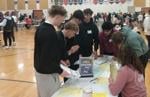
Reality Day is an educational event held at DeForest High School that simulates real-life financial situations for students. The event aims to equip juniors with essential life skills such as budgeting, paying bills, and managing money effectively.
Alignment with Sustainable Development Goals (SDGs)
The Reality Day initiative strongly supports several United Nations Sustainable Development Goals, particularly:
- SDG 4: Quality Education – By providing practical financial education, the program enhances students’ knowledge and skills, preparing them for responsible adulthood.
- SDG 8: Decent Work and Economic Growth – Reality Day fosters financial literacy, which is crucial for economic participation and sustainable livelihoods.
- SDG 10: Reduced Inequalities – The event offers equal learning opportunities for all juniors, helping to bridge gaps in financial knowledge.
Key Components of Reality Day
- Simulated budgeting exercises where students allocate income to various expenses.
- Bill payment scenarios to teach timely financial obligations.
- Money management activities that encourage responsible spending and saving habits.
Impact and Benefits
- Empowers students with practical skills for financial independence.
- Prepares youth to contribute positively to economic growth and sustainability.
- Supports the development of responsible citizens aligned with global sustainability goals.
Conclusion
DeForest High School’s Reality Day, under the leadership of Austin Hofer, exemplifies a commitment to sustainable education by integrating essential life skills with the objectives of the Sustainable Development Goals. This initiative not only prepares students for the financial realities of adulthood but also contributes to broader societal goals of quality education and economic empowerment.
1. Sustainable Development Goals (SDGs) Addressed or Connected
- SDG 4: Quality Education – The article discusses Reality Day, an educational event aimed at preparing high school juniors for adult responsibilities, highlighting the importance of practical and career-oriented education.
- SDG 8: Decent Work and Economic Growth – By focusing on career and technical education and preparing students for real-world financial management, the article connects to promoting sustained, inclusive economic growth and productive employment.
2. Specific Targets Under the Identified SDGs
- Under SDG 4: Quality Education
- Target 4.4: Increase the number of youth and adults who have relevant skills, including technical and vocational skills, for employment, decent jobs, and entrepreneurship.
- Target 4.7: Ensure that all learners acquire knowledge and skills needed to promote sustainable development, including financial literacy and life skills.
- Under SDG 8: Decent Work and Economic Growth
- Target 8.6: Reduce the proportion of youth not in employment, education, or training.
- Target 8.3: Promote development-oriented policies that support productive activities, decent job creation, entrepreneurship, and encourage formalization and growth of micro-, small- and medium-sized enterprises.
3. Indicators Mentioned or Implied to Measure Progress
- For SDG 4 Targets:
- Indicator 4.4.1: Proportion of youth and adults with information and communications technology (ICT) skills, including technical and vocational skills.
- Indicator 4.7.1: Extent to which (i) global citizenship education and (ii) education for sustainable development are mainstreamed at all levels in national education policies, curricula, teacher education, and student assessment.
- For SDG 8 Targets:
- Indicator 8.6.1: Proportion of youth (aged 15-24 years) not in education, employment, or training.
- Indicator 8.3.1: Proportion of informal employment in non-agriculture employment, by sex.
- Implied Indicators:
- Participation rates in career and technical education programs such as Reality Day.
- Student preparedness for financial management and employment after high school.
4. Table: SDGs, Targets and Indicators
| SDGs | Targets | Indicators |
|---|---|---|
| SDG 4: Quality Education |
|
|
| SDG 8: Decent Work and Economic Growth |
|
|
Source: hngnews.com
What is Your Reaction?
 Like
0
Like
0
 Dislike
0
Dislike
0
 Love
0
Love
0
 Funny
0
Funny
0
 Angry
0
Angry
0
 Sad
0
Sad
0
 Wow
0
Wow
0