





















































Scientists Just Built A 1-Kilometer Resolution Digital Twin Of Earth – Universe Today
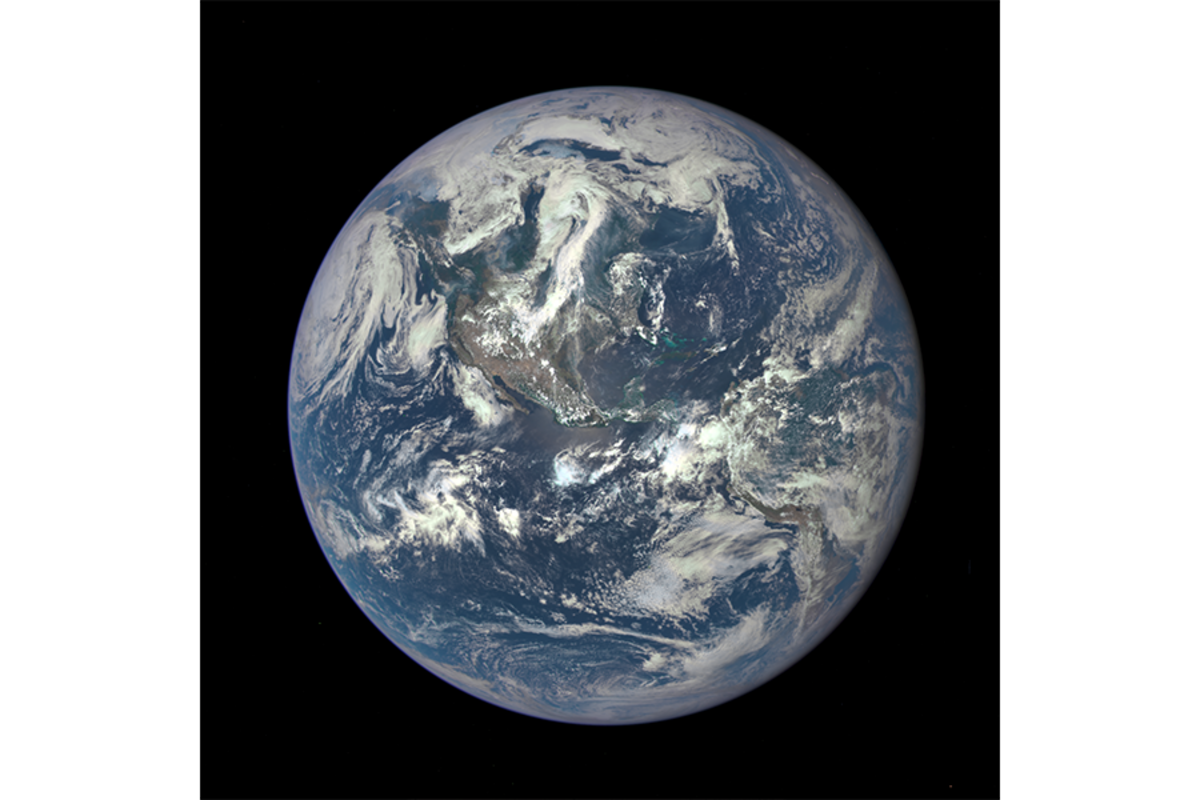
Advancements in High-Resolution Earth System Modeling and Implications for Sustainable Development Goals
A new report details a significant breakthrough in climate science: the development of a near kilometer-scale resolution model that integrates weather forecasting with long-term climate modeling. This innovation represents a critical step towards achieving several Sustainable Development Goals (SDGs), particularly SDG 13 (Climate Action), by providing unprecedented tools for understanding and mitigating climate change impacts.
Model Specifications and Contribution to SDG Targets
The model, developed by researchers at the Max Planck Institute, achieves a resolution of 1.25 kilometers. This high-fidelity approach is essential for addressing specific SDG targets related to safety, sustainability, and resilience.
- Resolution: 1.25 km, utilizing 672 million calculated cells to cover the Earth’s surface and atmosphere.
- SDG 11 (Sustainable Cities and Communities): The fine-grained detail allows for more accurate prediction of extreme weather events, directly supporting Target 11.5 by enhancing urban disaster preparedness and strengthening resilience against climate-related hazards.
- SDG 2 (Zero Hunger): Precise local weather and climate projections can inform agricultural practices, contributing to Target 2.4 by helping to build resilient farming systems and ensure food security in the face of a changing climate.
Integrated Modeling Approach for Holistic Environmental Management
A key innovation is the model’s ability to combine “fast” and “slow” Earth system processes. This integrated methodology provides a comprehensive view of planetary dynamics, crucial for the protection of global ecosystems as outlined in the SDGs.
- Fast Processes (Weather Systems): The model utilizes the ICOsahedral Nonhydrostatic (ICON) framework to simulate rapid changes in energy and water cycles. This capability is fundamental for improving early warning systems, a core component of SDG 13.
- Slow Processes (Climate Systems): The model also incorporates long-term dynamics such as the carbon cycle, biosphere changes, and ocean geochemistry. This directly supports:
- SDG 14 (Life Below Water): By modeling ocean systems, it provides critical data for Target 14.3, which aims to minimize and address the impacts of ocean acidification.
- SDG 15 (Life on Land): By tracking changes in the biosphere, the model aids efforts to protect and restore terrestrial ecosystems, aligning with Targets 15.1 and 15.2.
Technological Infrastructure and SDG 9
The computational feat was made possible by advanced software engineering and state-of-the-art supercomputing infrastructure, highlighting the importance of SDG 9 (Industry, Innovation, and Infrastructure).
Hardware and Software
- Supercomputing Power: The model runs on the JUPITER and Alps supercomputers, utilizing 20,480 Nvidia GH200 Grace Hopper superchips.
- Computational Strategy: “Fast” weather models are processed on GPUs, while “slow” climate models run in parallel on CPUs, optimizing efficiency.
- Software Modernization: The legacy Fortran code was modernized using the Data-Centric Parallel Programming (DaCe) framework to leverage modern computational architectures.
This project exemplifies Target 9.5, which calls for enhancing scientific research and upgrading the technological capabilities of industrial sectors, by pushing the boundaries of computational science to address a critical global challenge.
Performance, Challenges, and the Role of SDG 17
The model can simulate 145.7 days of Earth system activity in a single 24-hour period. This rapid analytical capability significantly enhances the potential for climate change adaptation and mitigation planning, directly contributing to SDG 13.
However, the immense computational resources required present a significant barrier to widespread adoption. This challenge underscores the importance of SDG 17 (Partnerships for the Goals). International collaboration and investment are necessary to make such powerful predictive tools accessible to all nations, particularly those most vulnerable to climate impacts, ensuring that advancements in climate science benefit global efforts to achieve a sustainable future.
Analysis of Sustainable Development Goals in the Article
1. Which SDGs are addressed or connected to the issues highlighted in the article?
-
SDG 13: Climate Action
- The entire article is centered on a significant advancement in climate science. The development of a “kilometer-scale resolution model that combines weather forecasting with climate modeling” is a direct contribution to understanding and predicting the impacts of climate change. This tool is fundamental for taking informed action to combat climate change and its impacts.
-
SDG 9: Industry, Innovation, and Infrastructure
- The article heavily emphasizes scientific research and technological innovation. It details the creation of a new climate model by researchers at the “Max Planck Institute,” the use of advanced software engineering like the “Data-Centric Parallel Programming (DaCe)” framework, and the reliance on cutting-edge infrastructure, specifically the “JUPITER and Alps, two supercomputers” powered by “GH200 Grace Hopper” chips. This showcases the enhancement of scientific research and technological capabilities.
-
SDG 17: Partnerships for the Goals
- The article points to collaboration as a key element of this scientific breakthrough. The core “ICOsahedral Nonhydrostatic (ICON) model” was developed jointly by the “German Weather service and the Max Planck Institute for Meteorology.” Furthermore, the project utilized supercomputing infrastructure located in two different countries, Germany (“JUPITER”) and Switzerland (“Alps”), indicating international cooperation in science and technology.
2. What specific targets under those SDGs can be identified based on the article’s content?
-
Under SDG 13 (Climate Action):
- Target 13.1: Strengthen resilience and adaptive capacity to climate-related hazards and natural disasters. The new model’s ability to combine “fast” systems like the “energy and water cycles – which basically means the weather” with “slow” processes like the “carbon cycle” at high resolution directly enhances the capacity for early warning and prediction of extreme weather events, which is crucial for building resilience.
- Target 13.3: Improve education, awareness-raising and human and institutional capacity on climate change mitigation, adaptation, impact reduction and early warning. The development of this model represents a monumental leap in the institutional capacity of scientific bodies like the Max Planck Institute to provide accurate and detailed climate projections, which are essential for planning and early warning systems.
-
Under SDG 9 (Industry, Innovation, and Infrastructure):
- Target 9.5: Enhance scientific research, upgrade the technological capabilities of industrial sectors in all countries, in particular developing countries, including, by 2030, encouraging innovation and substantially increasing the number of research and development workers per 1 million people and public and private research and development spending. The article is a case study in achieving this target, describing a project that enhances scientific research through “in depth software engineering” and the use of “brand-spanking new computer chips,” specifically “20,480 GH200 superchips.”
-
Under SDG 17 (Partnerships for the Goals):
- Target 17.6: Enhance North-South, South-South and triangular regional and international cooperation on and access to science, technology and innovation. The article provides a clear example of international scientific cooperation through the joint development of the ICON model by the “German Weather service and the Max Planck Institute” and the use of supercomputers in both Germany and Switzerland.
3. Are there any indicators mentioned or implied in the article that can be used to measure progress towards the identified targets?
-
For SDG 13 Targets:
- Implied Indicator: Resolution of climate and weather models. The article explicitly states the new model’s resolution is “1.25 kilometers,” a massive improvement over typical models with resolutions of “more than 40 km.” This metric can be used to track progress in the capacity for early warning systems.
- Implied Indicator: Speed and efficiency of climate simulations. The article quantifies the model’s performance, stating it can “accurately model 145.7 days in a single day.” This is a direct measure of the increased institutional capacity to process climate data.
-
For SDG 9 Targets:
- Indicator: Investment in and scale of research infrastructure. The article mentions the use of “20,480 GH200 superchips” across two supercomputers, “JUPITER and Alps.” The scale of this computational power serves as an indicator of the investment in scientific and technological infrastructure.
- Indicator: Complexity of computational models. The article notes the model used “nearly 1 trillion ‘degrees of freedom’,” which is the “total number of values it had to calculate.” This complexity is an indicator of the advancement in scientific research capabilities.
-
For SDG 17 Targets:
- Indicator: Number of joint scientific and technological cooperation agreements or projects. The development of the “ICOsahedral Nonhydrostatic (ICON) model” by the “German Weather service and the Max Planck Institute for Meteorology” is a specific instance of such a project, serving as a qualitative indicator of partnership.
4. Summary Table of SDGs, Targets, and Indicators
| SDGs | Targets | Indicators |
|---|---|---|
| SDG 13: Climate Action |
|
|
| SDG 9: Industry, Innovation, and Infrastructure |
|
|
| SDG 17: Partnerships for the Goals |
|
|
Source: universetoday.com
What is Your Reaction?
 Like
0
Like
0
 Dislike
0
Dislike
0
 Love
0
Love
0
 Funny
0
Funny
0
 Angry
0
Angry
0
 Sad
0
Sad
0
 Wow
0
Wow
0