
















Sea Level Rise Poses Growing Flood Risk for Hazardous Coastal Sites – Program Business
Report on Coastal Hazardous Site Vulnerability to Sea-Level Rise and Implications for Sustainable Development Goals
1.0 Introduction: Climate Action and Infrastructure Risk
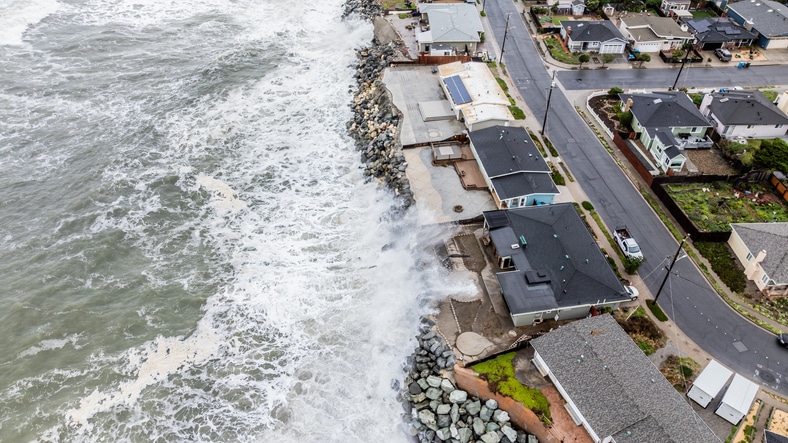
A recent study published in Nature Communications reports that continued greenhouse gas emissions could lead to the flooding of approximately 5,500 hazardous coastal sites in the United States by 2100. This analysis highlights a critical intersection of climate change impacts with sustainable development, directly challenging the achievement of several Sustainable Development Goals (SDGs). The findings underscore the urgency of SDG 13 (Climate Action), as the severity of future risk is contingent on emission scenarios. The report provides a data-driven framework for understanding long-term risks to coastal infrastructure and communities.
2.0 Projected Impacts on Critical Infrastructure
The study projects significant threats to essential services and industrial capacity, undermining SDG 9 (Industry, Innovation and Infrastructure) and SDG 7 (Affordable and Clean Energy). Under a high-emissions scenario, the resilience of critical infrastructure is severely compromised.
2.1 Infrastructure Exposure by 2100
- Fossil Fuel Ports and Terminals: Over 40% are projected to be at risk.
- Power Plants: Roughly one-third are projected to be at risk.
- Sewage Treatment Facilities, Refineries, and Formerly Used Defense Sites: Over 20% are projected to be at risk.
The report notes that the timeline for these impacts could accelerate, with over half of the identified sites facing severe flood risks as early as 2050 due to the doubling of extreme coastal flooding events.
3.0 Social Equity and Community Vulnerability
The research reveals that flood risk is not evenly distributed, exposing deep-seated issues related to social and environmental justice. This directly impacts progress toward SDG 10 (Reduced Inequalities) and SDG 11 (Sustainable Cities and Communities).
3.1 Disproportionately Affected Communities
The study identifies that neighborhoods most exposed to destabilized hazardous sites are often those characterized by higher social vulnerability, including:
- Hispanic communities
- Households with incomes below twice the federal poverty line
- Households without a vehicle
- Renters
3.2 Systemic Factors
The authors state that systemic issues such as racial residential segregation and the unequal distribution of stormwater infrastructure contribute to “racialized patterns of flooding.” This indicates that achieving resilient and sustainable communities requires addressing historical and ongoing institutional inequities, a core tenet of SDG 16 (Peace, Justice and Strong Institutions).
4.0 Public Health and Environmental Consequences
The potential release of contaminants from flooded sites poses a direct threat to human and environmental health, challenging the objectives of SDG 3 (Good Health and Well-being), SDG 6 (Clean Water and Sanitation), and SDG 14 (Life Below Water).
4.1 Health Risks
- Bacterial Exposure: Inundation of industrial animal farms or sewage treatment plants could expose nearby populations to bacteria like E. coli.
- Chemical Exposure: Floodwaters interacting with industrial sites could release chemicals associated with rashes, headaches, fatigue, and eye irritation.
- Exacerbation of Existing Conditions: Flood events can worsen underlying health conditions for vulnerable individuals.
The contamination of coastal waters would also degrade marine ecosystems, directly conflicting with the goals of SDG 14.
5.0 Conclusion and Recommendations for Sustainable Development
The study serves as a critical planning tool for mitigating future climate-related disasters. The authors emphasize that time remains to “get ahead of the problem” by pursuing pathways aligned with the Sustainable Development Goals. Key takeaways include:
- Urgent Climate Action (SDG 13): Reducing greenhouse gas emissions is the most effective way to mitigate the scale of projected flooding and its cascading impacts.
- Invest in Resilient Infrastructure (SDG 9): Stakeholders must prioritize the fortification or relocation of critical infrastructure in high-risk coastal zones, particularly facilities related to energy (SDG 7) and sanitation (SDG 6).
- Promote Social Equity (SDG 10 & 11): Mitigation and adaptation strategies must be developed with a focus on protecting the most socially vulnerable communities to ensure a just transition and build truly sustainable cities.
By integrating these findings into long-range planning, stakeholders can work to enhance resilience and ensure that progress toward the SDGs is not derailed by the escalating impacts of climate change.
Analysis of Sustainable Development Goals in the Article
1. Which SDGs are addressed or connected to the issues highlighted in the article?
-
SDG 3: Good Health and Well-being
- The article directly connects the flooding of hazardous sites to potential public health crises. It mentions that floodwaters inundating industrial animal farms or sewage treatment plants could expose nearby populations to bacteria like E. coli. Furthermore, it highlights the risk of chemical exposure from industrial sites, which could lead to “rashes, headaches, fatigue, and burning of the eyes,” and worsen underlying health conditions for vulnerable individuals.
-
SDG 6: Clean Water and Sanitation
- The research points to a significant risk to water quality and sanitation infrastructure. It projects that “over a fifth of coastal sewage treatment facilities” could be at risk of flooding by 2100. The inundation of these facilities and other hazardous sites would release contaminants and untreated sewage into coastal waters, directly compromising water safety and sanitation systems.
-
SDG 9: Industry, Innovation and Infrastructure
- The article emphasizes the vulnerability of critical industrial and energy infrastructure to climate change. It projects that by 2100, under a high-emissions scenario, “roughly a third of power plants,” “over a fifth of… refineries,” and “over 40 percent of fossil fuel ports and terminals” are at risk of flooding. This highlights the need for developing resilient infrastructure that can withstand climate-related hazards.
-
SDG 10: Reduced Inequalities
- A key finding of the study is the link between flood risk and social vulnerability. The article states that affected neighborhoods could include communities described as “Hispanic, households with incomes below twice the federal poverty line, households without a vehicle, non-voters, and renters.” It also points to “racial residential segregation and unequal distribution of stormwater infrastructure” as factors contributing to “racialized patterns of flooding,” indicating that the impacts of climate change are not distributed equally.
-
SDG 11: Sustainable Cities and Communities
- The article’s focus is on the threat that rising sea levels and coastal flooding pose to coastal communities and settlements. It discusses the risk to thousands of hazardous sites located in these areas and the subsequent danger to the inhabitants. The study’s stated purpose is to help stakeholders “plan ahead” and “increase resilience in coastal areas,” which is central to making cities and human settlements safe, resilient, and sustainable.
-
SDG 13: Climate Action
- The entire premise of the article is based on the impacts of climate change. It discusses the consequences of accumulating greenhouse gases, leading to “rising sea levels” and “extreme coastal flooding.” The study analyzes different outcomes based on “low- and high-emissions scenarios,” directly addressing the urgent need to combat climate change and adapt to its impacts. The call to “mitigate risks and increase resilience” is a core component of climate action.
-
SDG 14: Life Below Water
- The release of contaminants from approximately 5,500 flooded hazardous coastal sites, including sewage plants, refineries, and industrial facilities, would lead to severe marine pollution. This land-based pollution directly threatens coastal ecosystems and marine life, aligning with the goal of preventing and reducing marine pollution.
2. What specific targets under those SDGs can be identified based on the article’s content?
-
Target 3.9: Substantially reduce deaths and illnesses from hazardous chemicals and pollution.
- The article explicitly discusses the potential for “health risks if industrial animal farms or sewage treatment plants are inundated,” leading to exposure to bacteria like E. coli, and chemicals associated with various illnesses. This directly relates to reducing illnesses from water pollution and contamination by hazardous chemicals.
-
Target 6.3: Improve water quality by reducing pollution and minimizing release of hazardous chemicals.
- The projected flooding of “over a fifth of coastal sewage treatment facilities” and thousands of other hazardous sites would result in the release of untreated waste and toxic substances into water bodies, directly undermining efforts to improve water quality.
-
Target 9.1: Develop quality, reliable, sustainable and resilient infrastructure.
- The study’s findings that critical infrastructure such as “power plants,” “refineries,” and “fossil fuel ports and terminals” are at high risk of flooding underscore the urgent need to build infrastructure that is resilient to climate-related disasters.
-
Target 10.2: Empower and promote the social, economic and political inclusion of all.
- The article’s identification of socially vulnerable groups—including low-income households and Hispanic communities—as being disproportionately affected by these environmental hazards highlights existing inequalities. Addressing this “racialized pattern of flooding” is essential for promoting social inclusion and ensuring that climate adaptation measures do not leave vulnerable populations behind.
-
Target 11.5: Significantly reduce the number of people affected by disasters, with a focus on protecting the poor and people in vulnerable situations.
- The article focuses on the impact of a water-related disaster (coastal flooding) and specifically points out that the risks are concentrated near “communities described as socially vulnerable.” The study’s aim to inform planning directly supports the goal of protecting these vulnerable populations from disaster impacts.
-
Target 13.1: Strengthen resilience and adaptive capacity to climate-related hazards.
- The entire study serves this target. By projecting future risks under different emissions scenarios, it provides the data needed for stakeholders to “mitigate risks and increase resilience in coastal areas” and adapt to the inevitable impacts of climate change like sea-level rise.
-
Target 14.1: Prevent and significantly reduce marine pollution of all kinds, in particular from land-based activities.
- The potential release of contaminants from thousands of flooded coastal industrial sites, refineries, and sewage plants represents a massive threat of pollution from land-based activities that would directly impact the marine environment.
3. Are there any indicators mentioned or implied in the article that can be used to measure progress towards the identified targets?
-
Number and percentage of hazardous sites at risk of flooding.
- The article provides specific numbers, stating that “about 5,500 hazardous sites” could be struck by flooding by 2100. It also gives percentages for specific infrastructure types, such as “over a fifth of coastal sewage treatment facilities” and “over 40 percent of fossil fuel ports.” A reduction in these numbers through relocation or fortification would be a direct measure of progress.
-
Proportion of critical infrastructure vulnerable to climate-related disasters.
- The article implies this indicator by quantifying the risk to power plants (a third), refineries (over a fifth), and ports (over 40%). Tracking the percentage of these facilities that are retrofitted or made resilient would measure progress towards Target 9.1.
-
Number of people in vulnerable communities exposed to environmental hazards.
- The article implies this indicator by linking site exposure to socially vulnerable communities, including “Hispanic, households with incomes below twice the federal poverty line… and renters.” Measuring the population size of these groups within the identified high-risk flood zones would provide a baseline to track progress in protecting them (Target 11.5).
-
Incidence of waterborne diseases and chemical exposure in coastal communities post-flooding.
- While not providing data, the article implies this indicator by warning of exposure to “bacteria like E. coli” and “chemicals associated with rashes, headaches, fatigue.” Monitoring public health data in affected areas after flood events would be a key indicator for Target 3.9.
4. SDGs, Targets, and Indicators Summary
| SDGs | Targets | Indicators |
|---|---|---|
| SDG 3: Good Health and Well-being | 3.9: Substantially reduce deaths and illnesses from hazardous chemicals and pollution. | Incidence of waterborne diseases (e.g., from E. coli) and illnesses related to chemical exposure in coastal communities following flood events. |
| SDG 6: Clean Water and Sanitation | 6.3: Improve water quality by reducing pollution and minimizing release of hazardous chemicals. | Percentage of coastal sewage treatment facilities at risk of flooding; Levels of contaminants in coastal waters after flooding events. |
| SDG 9: Industry, Innovation and Infrastructure | 9.1: Develop quality, reliable, sustainable and resilient infrastructure. | Percentage of critical infrastructure (power plants, refineries, ports) at risk of flooding. |
| SDG 10: Reduced Inequalities | 10.2: Empower and promote the social, economic and political inclusion of all. | Proportion of socially vulnerable populations (defined by income, race, etc.) living in areas exposed to flood risk from hazardous sites. |
| SDG 11: Sustainable Cities and Communities | 11.5: Significantly reduce the number of people affected by disasters, with a focus on protecting the poor and people in vulnerable situations. | Number of people in socially vulnerable communities affected by the flooding of hazardous sites. |
| SDG 13: Climate Action | 13.1: Strengthen resilience and adaptive capacity to climate-related hazards. | Number of hazardous coastal sites identified as at-risk (baseline of 5,500); Number of coastal communities with implemented risk mitigation and resilience plans. |
| SDG 14: Life Below Water | 14.1: Prevent and significantly reduce marine pollution of all kinds, in particular from land-based activities. | Volume and type of contaminants released into marine environments from flooded coastal sites. |
Source: programbusiness.com
What is Your Reaction?
 Like
0
Like
0
 Dislike
0
Dislike
0
 Love
0
Love
0
 Funny
0
Funny
0
 Angry
0
Angry
0
 Sad
0
Sad
0
 Wow
0
Wow
0