










































SeaBot Maritime, University of Plymouth Sign MoU to Advance Marine Autonomy Collaboration – Marine Technology News
Report on the Strategic Partnership Between SeaBot Maritime and the University of Plymouth to Advance Sustainable Development Goals in the Maritime Sector
Introduction: A Partnership for Sustainable Goals
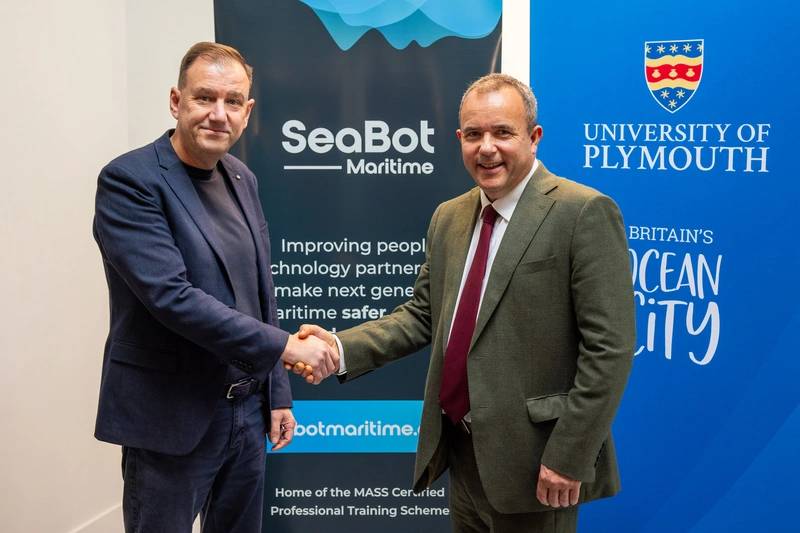
A strategic partnership has been established between SeaBot Maritime, an international leader in maritime autonomy training, and the University of Plymouth. This collaboration, formalized through a Memorandum of Understanding (MoU), aims to expand autonomous maritime training into South West England. The initiative is fundamentally aligned with several United Nations Sustainable Development Goals (SDGs), focusing on innovation, education, and sustainable economic growth within the global maritime industry.
Fostering SDG 17: Partnerships for the Goals
The collaboration exemplifies SDG 17 by creating a robust partnership between a private sector entity and a leading academic institution. This synergy combines SeaBot Maritime’s industry expertise with the University of Plymouth’s research and educational capabilities to achieve shared objectives.
- The partnership leverages the strengths of both organizations to advance innovation, research, and skills development in marine autonomy.
- It strengthens the UK’s network of autonomous maritime professionals, fostering a collaborative ecosystem for sustainable industrial development.
- Joint funding opportunities will be explored to support training and collaborative projects, reinforcing the commitment to a long-term, sustainable partnership.
Commitment to SDG 4 (Quality Education) and SDG 8 (Decent Work and Economic Growth)
A primary focus of the MoU is the development of a highly skilled workforce, directly contributing to SDG 4 and SDG 8 by providing quality education and creating opportunities for decent work in an emerging high-tech sector.
- Developing and Delivering Training: The partnership will deliver existing and new courses using the University’s facilities, co-designing jointly branded programs to ensure industry relevance and academic rigor.
- Preparing the Future Workforce: The initiative is designed to equip professionals with the specialist expertise required to lead in the use of intelligent maritime technologies, supporting economic growth and job creation.
- Capacity Building: University staff will be trained to deliver SeaBot Maritime courses, building local educational capacity and ensuring the long-term sustainability of the training programs. A dedicated future skills training centre is a potential long-term outcome.
Driving SDG 9 (Industry, Innovation, and Infrastructure) and SDG 14 (Life Below Water)
The partnership is set to advance research and establish new standards, fostering innovation in line with SDG 9. The development of autonomous maritime systems has significant potential to support SDG 14 by enabling more efficient and environmentally conscious marine operations.
- Advancing Research: Collaborative research initiatives at national and international levels will advance academic and industry knowledge in autonomous systems.
- Developing Industry Standards: The organizations will collaborate on developing standards for Maritime Autonomous Surface Ships (MASS) and integrate certification into the University’s portfolio, building resilient and innovative infrastructure for the maritime industry.
- Supporting Sustainable Marine Operations: The advancement of marine autonomy contributes to safer, more efficient maritime transport, which can reduce fuel consumption and environmental impact, thereby supporting the sustainable use of oceans and marine resources.
Implementation and Outlook
Building on successful programs in the Solent region, SeaBot Maritime will implement its training model in the South West, with courses scheduled to commence in 2026. This expansion represents a significant step towards creating a national centre for marine autonomy that is built on the principles of sustainable development, quality education, and collaborative innovation.
1. Which SDGs are addressed or connected to the issues highlighted in the article?
-
SDG 4: Quality Education
- The article’s central theme is the expansion of maritime autonomy training programs through a partnership between SeaBot Maritime and the University of Plymouth. It explicitly mentions developing and delivering training, creating learning modules, and preparing a future workforce, all of which are core components of quality education.
-
SDG 8: Decent Work and Economic Growth
- By providing specialized training in a “rapidly evolving sector,” the initiative aims to equip professionals with skills for high-tech jobs. This contributes to creating a skilled workforce, which in turn supports economic growth and productivity in the maritime industry.
-
SDG 9: Industry, Innovation, and Infrastructure
- The partnership is focused on advancing “innovation, research, and skills development in marine autonomy.” It discusses advancing research in autonomous maritime systems, developing standards for Maritime Autonomous Surface Ships (MASS), and using “intelligent maritime technologies,” which directly aligns with fostering innovation and upgrading technological capabilities within the maritime industry.
-
SDG 14: Life Below Water
- Although not a primary focus, the advancement of marine autonomy and technology has direct implications for the sustainable use of oceans. The collaboration involves the National Oceanography Centre and aims to “advance academic and industry knowledge,” which can be applied to better monitor and manage marine environments, supporting the goals of protecting life below water.
-
SDG 17: Partnerships for the Goals
- The article is fundamentally about a strategic partnership. The Memorandum of Understanding (MoU) between SeaBot Maritime (a private company) and the University of Plymouth (an academic institution) is a clear example of a multi-stakeholder partnership. The text also mentions collaboration with other entities like the National Oceanography Centre and the Royal Navy, reinforcing the theme of collaboration to achieve common goals.
2. What specific targets under those SDGs can be identified based on the article’s content?
-
SDG 4: Quality Education
- Target 4.4: “By 2030, substantially increase the number of youth and adults who have relevant skills, including technical and vocational skills, for employment, decent jobs and entrepreneurship.” The article directly addresses this by describing the development and delivery of training programs designed to provide “maritime autonomy professionals” with specialized skills for the modern maritime sector.
-
SDG 9: Industry, Innovation, and Infrastructure
- Target 9.5: “Enhance scientific research, upgrade the technological capabilities of industrial sectors… encouraging innovation…” The partnership’s focus on advancing “research in autonomous maritime systems,” developing standards for MASS, and promoting “intelligent maritime technologies” is a direct effort to enhance research and upgrade technology in the maritime industry.
-
SDG 14: Life Below Water
- Target 14.a: “Increase scientific knowledge, develop research capacity and transfer marine technology…” The MoU sets the stage for “collaborative research and funding initiatives” to “advance academic and industry knowledge” and inform the global maritime community, which aligns with increasing scientific knowledge and research capacity related to the marine environment.
-
SDG 17: Partnerships for the Goals
- Target 17.17: “Encourage and promote effective public, public-private and civil society partnerships…” The entire article is an announcement of such a partnership. The collaboration between SeaBot Maritime (private sector) and the University of Plymouth (public education sector) to achieve shared objectives in training and research is a textbook example of this target in action.
3. Are there any indicators mentioned or implied in the article that can be used to measure progress towards the identified targets?
-
For SDG 4 (Target 4.4):
- Implied Indicator: The number of professionals trained. The article states that SeaBot Maritime has “successfully trained maritime autonomy professionals” and will be rolling out its “proven training model” in the South West. Tracking the number of participants who complete these courses would be a direct measure of progress.
- Implied Indicator: The number of new courses and modules developed. The text mentions the partners will “deliver and develop both existing and new courses,” “creating additional learning modules,” and co-designing “new jointly branded programs.” The creation and implementation of this new curriculum is a measurable outcome.
-
For SDG 9 (Target 9.5):
- Implied Indicator: The number of collaborative research projects initiated. The MoU sets the stage for “collaborative research and funding initiatives at both national and international levels.” The quantity and scope of these projects would indicate progress in advancing research.
- Implied Indicator: Development of industry standards. The article explicitly states the organizations will “collaborate on developing standards for Maritime Autonomous Surface Ships (MASS).” The successful creation and adoption of these standards is a tangible indicator of innovation.
-
For SDG 17 (Target 17.17):
- Mentioned Indicator: The signing of a Memorandum of Understanding (MoU). The article states that the two parties “have signed a Memorandum of Understanding (MoU), marking the start of a strategic partnership.” This formal agreement is a primary indicator that a partnership has been established.
- Implied Indicator: The establishment of a dedicated training centre. The article notes the “potential to develop a dedicated future skills training centre for marine autonomy.” The successful establishment of such a centre would be a significant milestone for the partnership.
4. Table of SDGs, Targets, and Indicators
| SDGs | Targets | Indicators (Mentioned or Implied in the Article) |
|---|---|---|
| SDG 4: Quality Education | Target 4.4: Increase the number of adults with relevant technical and vocational skills for employment. |
|
| SDG 9: Industry, Innovation, and Infrastructure | Target 9.5: Enhance scientific research and upgrade technological capabilities. |
|
| SDG 14: Life Below Water | Target 14.a: Increase scientific knowledge and develop research capacity. |
|
| SDG 17: Partnerships for the Goals | Target 17.17: Encourage and promote effective public-private partnerships. |
|
Source: marinetechnologynews.com
What is Your Reaction?
 Like
0
Like
0
 Dislike
0
Dislike
0
 Love
0
Love
0
 Funny
0
Funny
0
 Angry
0
Angry
0
 Sad
0
Sad
0
 Wow
0
Wow
0