


























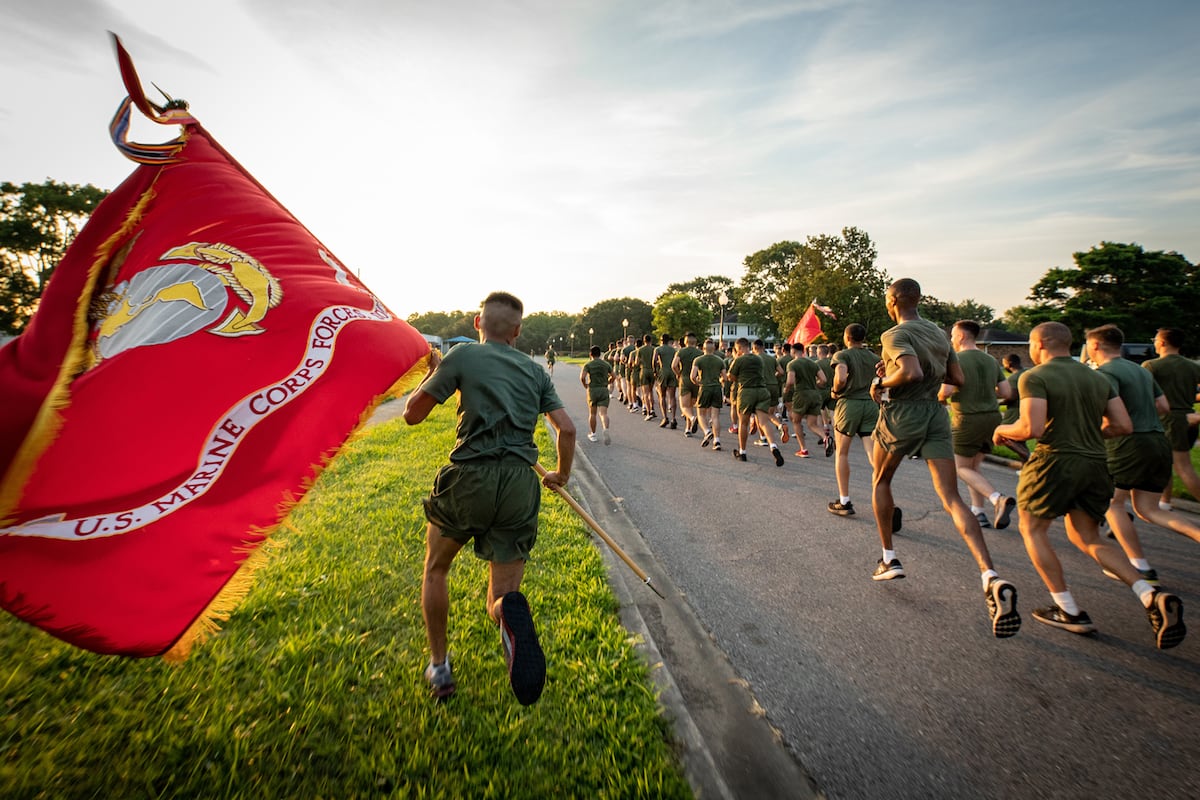
Selected Reserve Marines eligible for up to $20,000 retention bonus – Military Times
Report on the Selected Marine Corps Reserve (SMCR) Retention and Affiliation Bonus Program and its Contribution to Sustainable Development Goals
Program Overview
A new initiative, the Selected Marine Corps Reserve Retention and Affiliation Bonus Program, has been established to offer financial incentives to qualified personnel. The program is designed to encourage continued service in specific job specialties, thereby strengthening the institution and supporting broader development goals. This report analyzes the program’s structure and its alignment with the United Nations Sustainable Development Goals (SDGs).
- Objective: To incentivize experienced Marines in ranks E-4 to E-6 to extend their service within the SMCR, enhancing unit readiness and meeting validated billet requirements.
- Target Audience: Corporals, Sergeants, and Staff Sergeants in the Selected Marine Corps Reserve, Individual Mobilization Augmentee, Individual Ready Reserve, and those transitioning from the active component.
- Scope: The program includes 100 designated Military Occupational Specialties (MOSs) across fields such as infantry, artillery, radio, and engineering.
Alignment with Sustainable Development Goals
SDG 8: Decent Work and Economic Growth
The program directly contributes to SDG 8 by promoting sustained, inclusive, and sustainable economic growth, full and productive employment, and decent work. By offering substantial financial bonuses, the initiative provides economic stability and growth opportunities for service members and their families.
- 36-Month Service Extension: Eligible personnel receive a lump-sum bonus of up to $20,000.
- 24-Month Service Extension: Eligible personnel receive a bonus payment of $10,000.
- 12-Month Service Extension: Eligible personnel receive a bonus payment of $5,000.
An additional $5,000 kicker is available for Marines assigned to specific units and locations, further enhancing economic incentives and supporting targeted regional stability.
SDG 16: Peace, Justice, and Strong Institutions
This initiative is a clear investment in building effective, accountable, and inclusive institutions at all levels, a core tenet of SDG 16. Retaining experienced personnel is critical for maintaining a robust and ready military force, which serves as a foundation for national security, peace, and justice.
- Institutional Strengthening: The program aims to facilitate seamless transitions from the active component and Individual Ready Reserve to the SMCR, ensuring the institution retains valuable skills and experience.
- Enhanced Readiness: By encouraging continued service from experienced Marines, the program directly addresses the commandant’s retention priorities and enhances the operational readiness of units.
- Strategic Manning: The policy incentivizes service in critical MOSs to meet validated billet requirements, ensuring the institution is properly staffed and capable of fulfilling its mission.
SDG 4: Quality Education
The retention of experienced non-commissioned officers (NCOs) in ranks E-4 to E-6 is fundamental to providing quality education and mentorship within the military framework. These leaders are responsible for the training and professional development of junior personnel, aligning with the goals of SDG 4 to ensure inclusive and equitable quality education and promote lifelong learning opportunities for all.
- Mentorship and Training: Experienced NCOs provide essential hands-on training and leadership development, which constitutes a specialized form of vocational education.
- Skill Transfer: The program allows Marines who apply for a 24- or 36-month extension to do so alongside a lateral move request, facilitating the transfer of skills across different specialties and enriching the institutional knowledge base.
Program Eligibility and Administration
Eligibility Criteria
To qualify for the retention bonus, personnel must meet specific criteria outlined in the governing MARADMIN memo, authorized by the Deputy Commandant for Manpower and Reserve Affairs.
- Rank: Corporals (E-4), Sergeants (E-5), and Staff Sergeants (E-6).
- MOS: Must hold one of the 100 designated eligible MOSs.
- Service Commitment: Must agree to a service extension of 12, 24, or 36 months in the SMCR.
Ineligibility Conditions
Certain conditions will render a Marine ineligible for the program to ensure that incentives are directed toward personnel in good standing.
- Receiving a nonjudicial punishment within the 12 months prior to application.
- Being passed over for promotion.
- Having been reduced in rank.
- Staff Sergeants who have been selected for the rank of Gunnery Sergeant are not eligible.
Analysis of Sustainable Development Goals in the Article
1. Which SDGs are addressed or connected to the issues highlighted in the article?
-
SDG 8: Decent Work and Economic Growth
The article directly addresses economic incentives and employment. It details a bonus program designed to retain personnel in specific jobs, which relates to promoting sustained, inclusive, and sustainable economic growth, full and productive employment, and decent work for all. The focus is on providing financial bonuses to encourage continued service, thereby ensuring stable employment for experienced Marines.
-
SDG 16: Peace, Justice and Strong Institutions
The article discusses measures to strengthen a key national institution, the U.S. Marine Corps. The stated aim of the bonus program is “to meet validated billet requirements and enhance unit readiness.” A well-staffed and effective military is a component of a strong national institution, which is essential for maintaining peace and security. The program is an initiative to build and maintain an effective and accountable institution at the national level.
2. What specific targets under those SDGs can be identified based on the article’s content?
-
SDG 8: Decent Work and Economic Growth
- Target 8.5: By 2030, achieve full and productive employment and decent work for all women and men… and equal pay for work of equal value. The article’s focus on the “Selected Marine Corps Reserve Retention and Affiliation Bonus Program” is a direct effort to ensure continued, productive employment for skilled personnel. By offering significant financial bonuses (up to $20,000), the program incentivizes experienced Marines to remain employed in critical roles, contributing to the goal of full and productive employment.
-
SDG 16: Peace, Justice and Strong Institutions
- Target 16.6: Develop effective, accountable and transparent institutions at all levels. The initiative is explicitly designed to make the Marine Corps a more effective institution. The article states the program’s goal is to “enhance unit readiness” by “encouraging continued service from experienced Marines.” This directly contributes to developing a more effective military force. The publication of the policy in a MARADMIN memo, which is publicly accessible, also points towards institutional transparency.
- Target 16.a: Strengthen relevant national institutions… to build capacity at all levels. This program is a clear example of strengthening a national institution. By implementing a retention bonus, the Marine Corps is building its capacity to fulfill its duties by ensuring it retains qualified and experienced personnel in “100 MOSs… with a range of infantry, artillery, radio and engineer jobs.”
3. Are there any indicators mentioned or implied in the article that can be used to measure progress towards the identified targets?
-
Indicators for SDG 8 (Decent Work and Economic Growth)
- Financial Incentives for Retention: The article provides specific monetary values that serve as direct indicators of the economic incentives offered for continued employment. These include “up to $20,000 lump-sum bonuses,” payments of “$5,000 and $10,000” for shorter terms, and an additional “$5,000 kicker.”
- Length of Service Extension: The program’s success can be measured by the number of personnel who commit to the specified service extensions of “12, 24, and 36 months,” which is a direct indicator of employment retention.
-
Indicators for SDG 16 (Peace, Justice and Strong Institutions)
- Institutional Readiness and Staffing: The primary goal of the program is to “enhance unit readiness” and “meet validated billet requirements.” The level of unit readiness and the percentage of critical billets filled by experienced personnel are direct indicators of the institution’s effectiveness and strength.
- Recruitment and Retention Statistics: The article mentions that the Marine Corps “exceeded its most recent active-duty and reserve enlisted recruiting goal… bringing in 30,536 Marines.” These figures are quantitative indicators used to measure the institution’s ability to maintain its required personnel strength, which is fundamental to its capacity and effectiveness.
4. Create a table with three columns titled ‘SDGs, Targets and Indicators” to present the findings from analyzing the article.
| SDGs | Targets | Indicators |
|---|---|---|
| SDG 8: Decent Work and Economic Growth | 8.5: Achieve full and productive employment and decent work for all. |
|
| SDG 16: Peace, Justice and Strong Institutions | 16.6: Develop effective, accountable and transparent institutions at all levels. |
|
| 16.a: Strengthen relevant national institutions. |
|
Source: militarytimes.com
What is Your Reaction?
 Like
0
Like
0
 Dislike
0
Dislike
0
 Love
0
Love
0
 Funny
0
Funny
0
 Angry
0
Angry
0
 Sad
0
Sad
0
 Wow
0
Wow
0