
















Solar Photovoltaic Glass Market Set to Soar: Revolutionary – openPR.com
Global Solar Photovoltaic Glass Market Report: Advancing Sustainable Development Goals
The Global Solar Photovoltaic (PV) Glass Market is projected to achieve a Compound Annual Growth Rate (CAGR) of 30.2% during the 2024-2031 forecast period. This growth is intrinsically linked to the global pursuit of the United Nations Sustainable Development Goals (SDGs), particularly SDG 7 (Affordable and Clean Energy) and SDG 13 (Climate Action). The market, which includes specialized glass for solar panels, is fundamental to enhancing solar energy efficiency and durability, thereby accelerating the worldwide transition to renewable energy solutions.
Market Growth Drivers and SDG Alignment
The expansion of the Solar PV Glass market is propelled by factors that directly support key Sustainable Development Goals.
- Commitment to SDG 7 (Affordable and Clean Energy): The rising global demand for renewable energy, evidenced by expanding solar installations and utility-scale projects, is the primary market driver. This directly contributes to increasing the share of renewable energy in the global energy mix.
- Support for SDG 13 (Climate Action): Supportive government policies, financial incentives, and regulatory frameworks promoting clean energy adoption are crucial. These measures are essential for achieving national and international climate targets by stimulating investment in solar infrastructure.
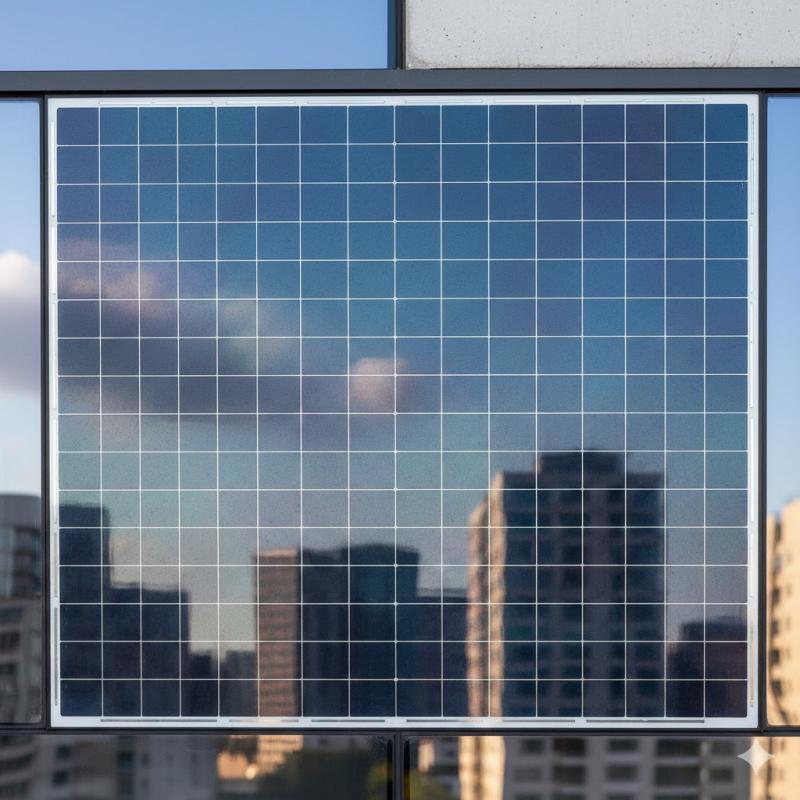
- Fostering SDG 9 (Industry, Innovation, and Infrastructure): Continuous technological advancements in solar glass, such as anti-reflective coatings, bifacial glass, and building-integrated photovoltaics (BIPV), enhance performance and reduce costs. This innovation builds resilient and sustainable infrastructure and promotes inclusive industrialization.
Technological Innovation and Recent Developments
Recent industry advancements highlight a focus on efficiency and integration, furthering progress towards SDG 9 and SDG 11 (Sustainable Cities and Communities).
United States
- First Solar (October 2025): Launched advanced PV glass with higher light transmittance, boosting energy conversion efficiency for utility-scale projects in line with SDG 7.
- Corning (September 2025): Introduced tempered PV glass for building-integrated photovoltaics, combining transparency and structural strength to support the development of sustainable buildings (SDG 11).
- Guardian Glass (August 2025): Expanded production of bifacial solar glass, which enables dual-sided PV modules to enhance overall energy yield and contribute to more efficient clean energy generation.
Japan
- Asahi Glass (October 2025): Launched high-transparency PV glass for rooftop and BIPV applications, improving energy efficiency while maintaining aesthetic design for sustainable urban development.
- Nippon Sheet Glass (September 2025): Introduced tempered PV glass with enhanced weather resistance, increasing the durability and reliability of clean energy infrastructure (SDG 9).
- Mitsubishi Chemical (August 2025): Developed bifacial PV glass for dual-sided modules, elevating electricity generation efficiency for industrial and commercial applications.
Market Segmentation Analysis
By Photovoltaic Cell Type:
- Monocrystalline
- Multicrystalline
- Thick film
- Amorphous
- Others
By Application:
Applications are increasingly focused on integrating renewable energy into urban environments, supporting SDG 11.
- Roof integration
- Skylight
- Facades
- Sunshade
- Curtain Wall
- Canopy
- Carports
- Solar Parking lots
By End User:
- Commercial Buildings
- Residential Buildings
- Industrial Buildings
- Others
Regional Outlook and Global Collaboration
The market’s growth is a global phenomenon, reflecting a collective international effort to achieve the SDGs. Key regions driving this progress include:
- North America (U.S., Canada, Mexico)
- Europe (U.K., Italy, Germany, Russia, France, Spain, The Netherlands)
- Asia-Pacific (India, Japan, China, South Korea, Australia, Indonesia)
- South America (Colombia, Brazil, Argentina)
- Middle East & Africa (Saudi Arabia, U.A.E., South Africa)
Key Industry Stakeholders
Major companies are instrumental in driving the innovation and production necessary to meet global clean energy demands. Their contributions are vital for achieving the scale required for a meaningful impact on the SDGs.
- Onyx Solar Group LLC
- AGC Solar
- Nippon Sheet Glass Co., Ltd
- Taiwan Glass Ind. Corp.
- Xinyi Solar Holdings Ltd.
- Sisecam Flat Glass
- Guardian Glass
- Saint-Gobain Solar
- Borosil Glass Works Ltd
- Henan Huamei Cinda Industrial Co., Ltd.
Analysis of Sustainable Development Goals (SDGs) in the Article
1. Which SDGs are addressed or connected to the issues highlighted in the article?
The article on the Solar Photovoltaic (PV) Glass Market is directly and indirectly connected to several Sustainable Development Goals. The primary focus on solar energy technology and its market growth links it to goals concerning energy, industry, innovation, sustainable cities, and climate action.
- SDG 7: Affordable and Clean Energy: This is the most prominent SDG addressed. The entire article discusses a key component of solar panels, which are fundamental to generating clean and renewable energy. The text highlights the “rising global demand for renewable energy” and “clean energy adoption,” which are central to this goal.
- SDG 9: Industry, Innovation, and Infrastructure: The article emphasizes “technological advancements in solar glass,” such as “anti-reflective coatings, higher efficiency panels, and building-integrated photovoltaics (BIPV).” It also describes how companies are launching advanced products and expanding production, which relates to fostering innovation and building resilient, sustainable infrastructure.
- SDG 11: Sustainable Cities and Communities: The discussion of applications for solar PV glass, including “building-integrated photovoltaics,” “rooftop and façade installations,” “Skylight,” and “Curtain Wall” for residential and commercial buildings, directly connects to making cities and human settlements more sustainable by integrating renewable energy generation into urban infrastructure.
- SDG 13: Climate Action: While not explicitly named, the expansion of the solar energy market is a critical strategy for climate change mitigation. By enabling the growth of solar power, the developments in PV glass contribute to reducing greenhouse gas emissions and transitioning away from fossil fuels, which is the core of climate action.
2. What specific targets under those SDGs can be identified based on the article’s content?
Based on the information provided, several specific SDG targets can be identified:
-
Target 7.2: By 2030, increase substantially the share of renewable energy in the global energy mix.
- The article directly supports this target by describing the significant growth of the solar PV glass market, with a projected “CAGR of 30.2%,” which facilitates the “expanding solar installations worldwide” and the overall increase in solar energy’s contribution to the global energy supply.
-
Target 9.4: By 2030, upgrade infrastructure and retrofit industries to make them sustainable, with increased resource-use efficiency and greater adoption of clean and environmentally sound technologies and industrial processes.
- The article details numerous “technological advancements” such as “advanced PV glass featuring higher light transmittance,” “bifacial solar glass,” and “building-integrated photovoltaics (BIPV).” These innovations represent the adoption of cleaner and more efficient technologies within the energy and construction industries.
-
Target 13.2: Integrate climate change measures into national policies, strategies and planning.
- The article identifies “Supportive government policies, incentives, and regulations promoting clean energy adoption, such as renewable targets and subsidies” as a major market growth driver. This indicates that countries are actively integrating climate-friendly energy policies, which in turn fuels the demand for solar technologies.
3. Are there any indicators mentioned or implied in the article that can be used to measure progress towards the identified targets?
The article provides several quantitative and qualitative indicators that can be used to measure progress towards the identified targets:
- Indicator for Target 7.2: The projected market growth rate of 30.2% CAGR for the Global Solar Photovoltaic Glass Market serves as a strong proxy indicator for the increasing share of renewable energy. A rapidly growing market for a key solar component implies a corresponding rapid growth in solar energy installation and production.
- Indicator for Target 9.4: The article implies progress through indicators of technological improvement. Specific examples like “boosting energy conversion efficiency,” developing “bifacial solar glass to enable dual-sided PV modules,” and creating glass with “enhanced weather resistance” are qualitative indicators of the adoption of more efficient and sustainable technologies in the industry.
- Indicator for Target 13.2: The mention of “supportive government policies, incentives, and regulations” and “renewable targets and subsidies” acts as a qualitative indicator. The existence and strengthening of such policies are a direct measure of how climate change considerations are being integrated into national planning.
4. Summary Table of SDGs, Targets, and Indicators
| SDGs | Targets | Indicators Identified in the Article |
|---|---|---|
| SDG 7: Affordable and Clean Energy | Target 7.2: Increase substantially the share of renewable energy in the global energy mix. | The projected market growth rate of 30.2% CAGR for solar PV glass, indicating a rise in solar energy installations. |
| SDG 9: Industry, Innovation, and Infrastructure | Target 9.4: Upgrade infrastructure and industries for sustainability by adopting clean and environmentally sound technologies. | Technological advancements mentioned, such as glass with higher light transmittance, improved durability, bifacial capabilities, and suitability for building-integrated photovoltaics (BIPV). |
| SDG 13: Climate Action | Target 13.2: Integrate climate change measures into national policies, strategies and planning. | The article cites “Supportive government policies, incentives, and regulations promoting clean energy adoption” as a key market driver. |
Source: openpr.com
What is Your Reaction?
 Like
0
Like
0
 Dislike
0
Dislike
0
 Love
0
Love
0
 Funny
0
Funny
0
 Angry
0
Angry
0
 Sad
0
Sad
0
 Wow
0
Wow
0