




































Statement of the Forty-third meeting of the Polio IHR Emergency Committee – World Health Organization (WHO)
Report on the International Poliovirus Situation and Sustainable Development Goals
Executive Summary of the 43rd IHR Emergency Committee Meeting
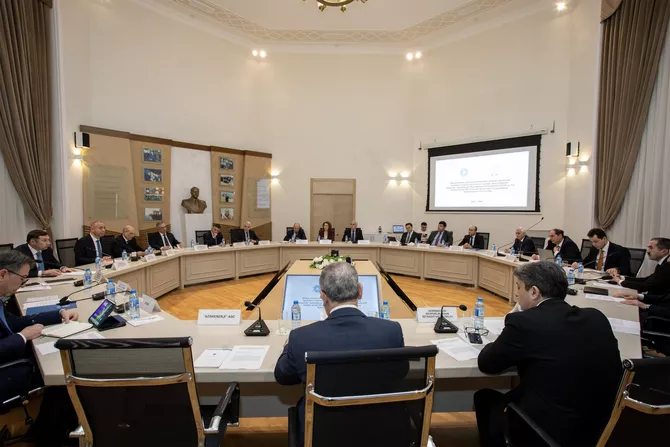
On October 1, 2025, the World Health Organization (WHO) convened the 43rd meeting of the Emergency Committee under the International Health Regulations (IHR) to assess the international spread of poliovirus. This report summarizes the key findings and recommendations, placing significant emphasis on their alignment with the United Nations Sustainable Development Goals (SDGs), particularly SDG 3: Good Health and Well-being. The Committee reviewed data on wild poliovirus (WPV1) and circulating vaccine-derived polioviruses (cVDPV), concluding that the situation remains a Public Health Emergency of International Concern (PHEIC). The global effort to eradicate polio is a critical component of achieving universal health coverage and ensuring no one is left behind, core tenets of the 2030 Agenda for Sustainable Development.
Global Poliovirus Epidemiological Update
Wild Poliovirus (WPV1) Transmission
Global WPV1 transmission remains geographically confined to Afghanistan and Pakistan, a testament to the global partnership (SDG 17) driving eradication. However, persistent transmission poses a significant threat to achieving SDG 3.
- Case Data (as of 17 September 2025): A total of 28 WPV1 cases were reported in 2025 (4 in Afghanistan, 24 in Pakistan). This is a decrease from 99 cases in 2024. Environmental surveillance detected 443 positive samples in 2025, compared to 741 in 2024.
- Geographical Spread: Transmission is most intense along cross-border corridors between Afghanistan and Pakistan. In Pakistan, South Khyber Pakhtunkhwa (KP) is the primary reservoir, with ongoing transmission also detected in Sindh, Punjab, and Balochistan provinces. In Afghanistan, intense transmission continues in the southern region.
- Challenges to Eradication: The fight against WPV1 is hampered by factors that also impede progress on other SDGs.
- Insecurity and Access (SDG 16: Peace, Justice and Strong Institutions): Insecurity in Pakistan’s South KP leaves over 250,000 children unreached. In Afghanistan, a shift to site-to-site vaccination campaigns due to security concerns limits access, particularly for younger children, undermining efforts to ensure equitable health outcomes (SDG 10: Reduced Inequalities).
- Population Movement: The movement of populations, including undocumented migrants, between the two endemic countries increases the risk of cross-border transmission, complicating efforts to build resilient health systems (SDG 3). Coordinated vaccination at border points exemplifies a targeted approach to protect vulnerable groups.
Circulating Vaccine-Derived Poliovirus (cVDPV) Outbreaks
The emergence of cVDPV outbreaks in areas with low immunization coverage highlights systemic weaknesses in health infrastructure, directly challenging the attainment of SDG 3. These outbreaks disproportionately affect communities impacted by conflict, poverty, and instability, further exacerbating inequalities (SDG 10).
- Global Caseload (as of 17 September 2025): A total of 143 cVDPV cases have been reported in 2025, predominantly cVDPV2 (136 cases). New outbreaks of cVDPV1 were reported in Algeria, Djibouti, and Israel, while cVDPV3 outbreaks were reported in Cameroon and Chad.
- Key Transmission Zones: Nigeria and Chad in the Lake Chad Basin, and Yemen and Ethiopia in the Horn of Africa, are major contributors to the global cVDPV2 caseload. These regions face complex humanitarian emergencies that disrupt routine immunization and outbreak response, hindering progress towards SDG 3.
- Underlying Risk Factors: The risk of cVDPV outbreaks is driven by a convergence of factors that represent significant barriers to sustainable development.
- Low Immunity and Zero-Dose Children: Gaps in routine immunization create pools of susceptible children, particularly since the withdrawal of OPV2 in 2016. Reaching every child with essential vaccines is fundamental to achieving Universal Health Coverage (Target 3.8 of SDG 3).
- Insecurity and Inaccessibility (SDG 16): Conflict and lack of access, particularly in northern Yemen and parts of Somalia, prevent vaccination campaigns from reaching all children, perpetuating transmission cycles.
International Health Regulations (IHR) and Global Health Security
PHEIC Determination and Recommendations
The Committee unanimously concluded that the risk of international poliovirus spread continues to constitute a PHEIC, reaffirming the global threat to health security and the collective responsibility to act, in line with SDG 3 and SDG 17.
Risk Assessment
- Risk of WPV1 Spread: The risk remains high due to intense transmission in endemic reservoirs, persistent immunity gaps from inconsistent campaign quality, and significant cross-border population movement.
- Risk of cVDPV Spread: The risk is high due to ongoing transmission in Africa, large populations of unimmunized children in conflict zones like Yemen, and new outbreaks across multiple regions, indicating widening immunity gaps against all three poliovirus types.
- Systemic Contributing Factors: Weak routine immunization systems, often exacerbated by humanitarian emergencies and conflict, create vulnerabilities that threaten global progress. This underscores the need for integrated approaches that strengthen health systems (SDG 3) and promote peace and stability (SDG 16).
Temporary Recommendations for Affected States
The Committee’s recommendations are designed to mitigate the risk of international spread and accelerate eradication, directly supporting the achievement of SDG 3. States are categorized based on infection status.
Category 1: States infected with WPV1, cVDPV1, or cVDPV3
Countries including Afghanistan, Pakistan, Algeria, DR Congo, Israel, Cameroon, and Chad are advised to:
- Declare polio eradication a national public health emergency to mobilize a whole-of-government response.
- Ensure all residents and long-term visitors receive a polio vaccine dose prior to international travel, providing an International Certificate of Vaccination or Prophylaxis. This measure protects global health security.
- Intensify efforts to increase routine immunization coverage, a cornerstone of sustainable health systems (SDG 3).
- Strengthen cross-border coordination to vaccinate mobile populations, a key action for reducing inequalities (SDG 10) and fostering international partnership (SDG 17).
Category 2: States infected with cVDPV2
Countries including Nigeria, Ethiopia, Yemen, and 25 others are advised to:
- Declare a national public health emergency and conduct urgent risk assessments.
- Utilize the global novel OPV2 stockpile for outbreak response, ensuring equitable access to essential health products (a principle of SDG 3).
- Strengthen surveillance and routine immunization to build population immunity and prevent future outbreaks.
- For states with local transmission, encourage vaccination for international travelers to prevent further spread.
Category 3: States previously infected (last 24 months)
Countries including Egypt, Kenya, Mozambique, and others are advised to:
- Urgently strengthen routine immunization to maintain high population immunity.
- Enhance surveillance quality to ensure early detection of any re-introduction of the virus.
- Focus vaccination efforts on mobile, displaced, and other vulnerable populations to ensure equitable coverage (SDG 10).
Conclusion: Polio Eradication as a Catalyst for the SDGs
The global effort to eradicate polio is more than a public health initiative; it is an investment in sustainable development. The infrastructure built for polio surveillance, vaccination campaigns, and community engagement strengthens health systems, contributing directly to SDG 3. By focusing on the most vulnerable and marginalized communities, the program advances SDG 10 (Reduced Inequalities) and helps break the cycle of poverty linked to disability (SDG 1). The challenges of insecurity and financial shortfalls highlight the interconnectedness of health with peace (SDG 16) and global partnerships (SDG 17). Sustained political and financial commitment from all stakeholders is essential to finish the job, secure a polio-free world for future generations, and deliver on the promise of the Sustainable Development Goals.
Analysis of Sustainable Development Goals in the Article
1. Which SDGs are addressed or connected to the issues highlighted in the article?
-
SDG 3: Good Health and Well-being
This is the central SDG addressed in the article. The entire text focuses on the global effort to eradicate poliovirus, a communicable disease. It discusses disease surveillance, vaccination campaigns, international health regulations, and the challenges in stopping transmission, all of which are core components of ensuring healthy lives and promoting well-being for all ages.
-
SDG 16: Peace, Justice and Strong Institutions
The article explicitly links the failure to eradicate polio in certain regions to conflict and insecurity. It states that “insecurity,” “access constraints,” and “conflict” are major barriers to reaching children with vaccines in countries like Afghanistan, Pakistan, Yemen, and Somalia. This demonstrates a direct connection between the lack of peace and the inability to achieve public health goals.
-
SDG 17: Partnerships for the Goals
The article highlights the critical role of global collaboration. It details the work of the WHO Emergency Committee, the Global Polio Eradication Initiative (GPEI), and the necessity of cross-border coordination between countries like Afghanistan and Pakistan. Furthermore, it calls on “donor countries and partner organizations to strengthen their financial support,” underscoring the need for a global partnership to achieve the goal of polio eradication.
2. What specific targets under those SDGs can be identified based on the article’s content?
-
SDG 3: Good Health and Well-being
- Target 3.3: By 2030, end the epidemics of… communicable diseases. The article is entirely focused on this target, with specific goals mentioned for the “interruption and certification of WPV1 eradication by 2027 and interruption and certification of cVDPV2 elimination by 2029.”
- Target 3.8: Achieve universal health coverage, including access to… essential medicines and vaccines for all. The article’s emphasis on reaching “all children,” addressing “zero-dose and under-immunized children,” and ensuring “uniformly high population immunity” directly relates to achieving universal vaccine coverage.
- Target 3.d: Strengthen the capacity of all countries… for early warning, risk reduction and management of national and global health risks. The article’s discussion of the International Health Regulations (IHR), the declaration of a Public Health Emergency of International Concern (PHEIC), and the extensive disease surveillance systems (both acute flaccid paralysis and environmental surveillance) are practical applications of this target.
-
SDG 16: Peace, Justice and Strong Institutions
- Target 16.1: Significantly reduce all forms of violence and related death rates everywhere. The article provides clear evidence of how violence and insecurity impede health services. For example, in Pakistan, “more than 250,000 children remain unreached, primarily due to access constraints caused by insecurity,” and in Afghanistan, “House-to-house campaigns are not being implemented since October 2024 due to security concerns.”
-
SDG 17: Partnerships for the Goals
- Target 17.2: Developed countries to implement fully their official development assistance commitments. The article points to a gap in this area by highlighting a “current financial shortfall, estimated at nearly 30%” for the GPEI and urging “donor countries and partner organizations to strengthen their financial support.”
- Target 17.9: Enhance international support for implementing effective and targeted capacity-building in developing countries. The role of the GPEI and WHO in providing technical support, coordinating synchronized campaigns, and managing vaccine stockpiles (like nOPV2) for affected countries is a direct example of this target.
- Target 17.16: Enhance the Global Partnership for Sustainable Development. The entire effort described involves a multi-stakeholder partnership between the WHO, GPEI, national governments, and donors. The article specifically praises the “strong coordination mechanisms between the Afghanistan and Pakistan programmes at both national and subnational levels.”
3. Are there any indicators mentioned or implied in the article that can be used to measure progress towards the identified targets?
Yes, the article is rich with data that serves as indicators for measuring progress:
- Incidence of disease: The number of new WPV1 and cVDPV cases reported is a primary indicator. For example, the article states, “15 new WPV1 cases have been reported from the two endemic countries,” and “a total of 143 cVDPV cases have been reported” in 2025. This directly measures progress towards Target 3.3.
- Environmental surveillance results: The number of positive poliovirus samples found in the environment is a key surveillance indicator. The article notes, “a total of 443 WPV1 positive samples have been reported so far in 2025.” This helps measure the geographic spread and intensity of transmission.
- Vaccination coverage rates: The article refers to “high reported coverage and Lot Quality Assurance Sampling (LQAS) pass rates” as measures of campaign quality, which are indicators for Target 3.8.
- Number of unreached children: The article quantifies gaps in vaccination coverage by stating that in one area of Pakistan, “more than 250,000 children remain unreached.” This serves as a direct indicator of challenges in achieving universal health coverage (Target 3.8) and the impact of insecurity (Target 16.1).
- Financial resource mobilization: The “current financial shortfall, estimated at nearly 30%” for the GPEI is a clear indicator used to measure the funding gap for global partnerships, relevant to Target 17.2.
- Genetic biodiversity of the virus: The article mentions that “an increase in the genetic biodiversity was observed in 2024, necessitating a split of two genetic clusters into eight genetic clusters.” This is a technical indicator used to track the virus’s evolution and transmission chains.
4. Create a table with three columns titled ‘SDGs, Targets and Indicators” to present the findings from analyzing the article.
| SDGs | Targets | Indicators |
|---|---|---|
| SDG 3: Good Health and Well-being |
3.3: End epidemics of communicable diseases.
3.8: Achieve universal health coverage, including access to vaccines. 3.d: Strengthen capacity for early warning and management of global health risks. |
– Number of new WPV1 cases (e.g., “28 WPV1 cases have been reported: 4 in Afghanistan and 24 in Pakistan”). – Number of new cVDPV cases (e.g., “143 cVDPV cases have been reported”). – Number of positive environmental surveillance samples (e.g., “443 WPV1 positive samples”). – Vaccination coverage rates (e.g., “Lot Quality Assurance Sampling (LQAS) pass rates”). – Number of “zero-dose” and unreached children (e.g., “more than 250,000 children remain unreached”). – Declaration of a Public Health Emergency of International Concern (PHEIC). |
| SDG 16: Peace, Justice and Strong Institutions | 16.1: Significantly reduce all forms of violence. |
– Number of children unreached due to insecurity and access constraints. – Inability to conduct specific campaign types due to security risks (e.g., “House-to-house campaigns are not being implemented… due to security concerns”). |
| SDG 17: Partnerships for the Goals |
17.2: Developed countries to implement ODA commitments.
17.9: Enhance international support and capacity-building. 17.16: Enhance the Global Partnership for Sustainable Development. |
– Financial shortfall for global health initiatives (e.g., “financial shortfall, estimated at nearly 30%”). – Implementation of synchronized cross-border vaccination campaigns. – Level of coordination between international bodies (WHO, GPEI) and national governments. |
Source: who.int
What is Your Reaction?
 Like
0
Like
0
 Dislike
0
Dislike
0
 Love
0
Love
0
 Funny
0
Funny
0
 Angry
0
Angry
0
 Sad
0
Sad
0
 Wow
0
Wow
0