



























Territoriality and Federalism: Conflict and Coexistence In the Horn – horn review
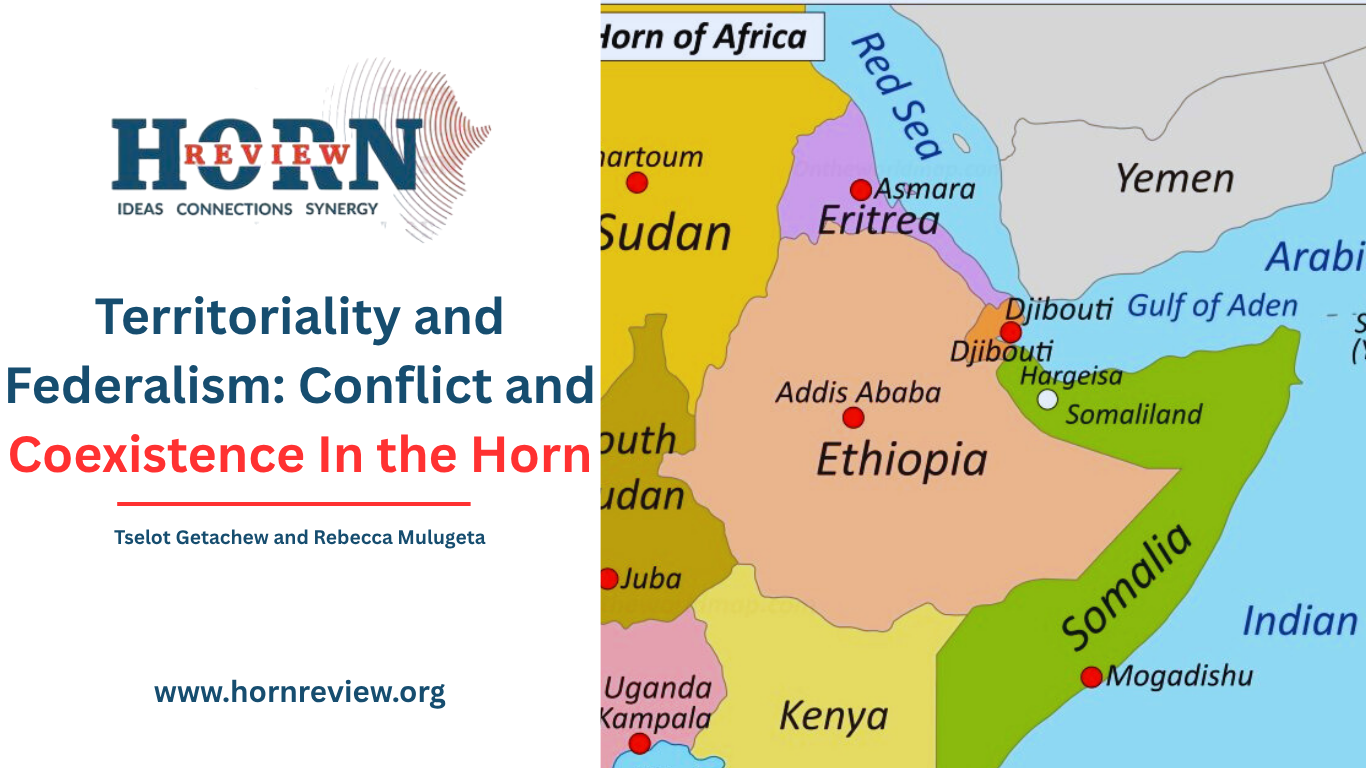
Report on Ethnic Federalism and its Implications for Sustainable Development Goals
Introduction: Governance Models and Sustainable Development
An analysis of federalism reveals its potential as a model for managing diversity, yet its application in states with significant linguistic and cultural pluralism presents complex challenges. This report examines the impact of ethnic federalism on stability and inclusivity, with a specific focus on its alignment with the United Nations Sustainable Development Goals (SDGs), particularly SDG 16 (Peace, Justice and Strong Institutions) and SDG 10 (Reduced Inequalities). While administrative federalism, as seen in Germany, has successfully maintained national unity, the ethnic model raises critical questions about its capacity to foster harmony or entrench division. This is especially pertinent in multi-ethnic states where boundaries can either serve as a tool for peaceful coexistence or a catalyst for conflict, directly affecting the viability of sustainable development.
The Impact of Ethnic Federalism on SDG 16: Peace, Justice and Strong Institutions
Global Case Studies and Institutional Failure
The implementation of ethnic federalism has yielded divergent outcomes globally, highlighting its precarious relationship with the core tenets of SDG 16, which calls for peaceful, just, and inclusive societies. Historical and contemporary examples illustrate this dichotomy:
- Negative Precedents: The colonial-era imposition of ethnic identity cards in Rwanda and the post-war ethnic federation in Yugoslavia demonstrate how institutionalizing ethnic divisions can lead to catastrophic violence and state fragmentation. These events represent a total failure to achieve SDG 16, resulting in genocide and widespread conflict that dismantled justice systems and social cohesion.
- Alternative Models: Nigeria’s federal system, which utilizes decentralization to manage tensions among numerous ethnic groups, offers a contrasting approach aimed at preserving territorial integrity and regional autonomy, thereby contributing more constructively to the goals of SDG 16.
The legacy of arbitrary colonial borders continues to undermine the establishment of strong and just institutions across Africa and Asia, as these externally imposed divisions often disregard existing social structures and fuel enduring conflicts.
The Ethiopian Context: Constitutional Challenges to Peace and Stability
Ethiopia’s adoption of an ethnic federal structure in 1991, constitutionally entrenched in 1995, was designed to grant self-governance to its diverse groups. However, this framework has created significant obstacles to achieving SDG 16.
- Constitutional Instability: Article 39 of the constitution, which grants ethnic groups the right to secession, is a persistent source of tension and a potential trigger for internal conflict, undermining the goal of building stable institutions.
- Violent Conflict: The 2020 Tigray War, rooted in border disputes between the Amhara and Tigray regions, exemplifies how ethnic federalism can escalate political disagreements into armed conflict, directly contravening the objective of reducing violence (SDG 16.1).
- Inter-regional Disputes: Ongoing violent clashes involving groups such as the Gumuz, Amhara, and Oromo over territory and self-rule further destabilize the nation and impede the development of peaceful communities.
Socio-Economic Consequences: Undermining SDG 1, SDG 2, and SDG 10
Resource Competition and Increased Inequality (SDG 10)
In Ethiopia and the broader Horn of Africa, ethnic boundaries have intrinsically linked access to resources and political power with territorial and ethnic identity. This dynamic directly undermines SDG 10 (Reduced Inequalities) by institutionalizing competition and marginalization.
- Conflicts over land, grazing areas, and administrative control between groups like the Oromo and Gumuz, or the Gumuz and Amhara, have led to the displacement and systemic marginalization of numerous communities.
- Contested administrative changes, such as those near the Oromia-Somali border, have precipitated protests and further entrenched divisions, exacerbating inequalities between ethnic groups.
Threats to Livelihoods, Poverty, and Hunger (SDG 1 & SDG 2)
The persistent conflicts fueled by ethnic boundary disputes pose a direct threat to achieving SDG 1 (No Poverty) and SDG 2 (Zero Hunger). Inter-communal violence disrupts agricultural activities, displaces populations from fertile land, and destroys livelihoods, leading to increased food insecurity and poverty in affected regions.
Regional Instability and Governance in the Horn of Africa
Transnational Ethnicities and Cross-Border Conflict
The Horn of Africa is characterized by ethnic populations, such as the Afar and Somali, whose homelands span multiple countries. This reality presents a significant challenge to regional stability and governance.
- Ethiopia’s internal ethnic federalism can have external repercussions, potentially fueling secessionist movements or ambitions for cross-border ethnic consolidation (e.g., “Greater Somalia”), which threatens regional peace.
- Unresolved historical border disputes, often rooted in colonial demarcation like the Ethiopia-Eritrea conflict over Badme, continue to prevent the establishment of lasting peace and cooperation required to address shared development challenges.
Conclusion: Realigning Governance for Sustainable Development
While ethnic federalism is intended to empower diverse groups through autonomy, its implementation in the Horn of Africa demonstrates a significant risk of consolidating divisions, intensifying resource competition, and fueling conflict. This outcome fundamentally obstructs progress toward the Sustainable Development Goals, particularly SDG 16, SDG 10, SDG 2, and SDG 1. Achieving a balance between recognizing ethnic identities and preserving national unity is paramount. For sustainable development to be realized, governance structures must prioritize the creation of strong, inclusive, and just institutions that can mediate disputes and foster national synergy over fragmentation.
Analysis of Sustainable Development Goals in the Article
1. Which SDGs are addressed or connected to the issues highlighted in the article?
-
SDG 16: Peace, Justice and Strong Institutions
The article is fundamentally about governance structures (federalism), their impact on peace and conflict, and the strength of institutions in managing ethnic diversity. It directly discusses violent conflicts (Tigray War, Rwandan genocide), state fragmentation (Yugoslavia), border disputes (Ethiopia-Eritrea), and the role of constitutional frameworks (Ethiopia’s 1995 constitution) in either promoting stability or fueling discord. The core theme revolves around building peaceful, inclusive societies through effective governance, which is the essence of SDG 16.
-
SDG 10: Reduced Inequalities
The article explores how ethnic demarcation, while intended to provide group rights and self-determination, can create or worsen inequalities. It mentions that ethnic boundaries have “linked entitlement to resources and political influence with territory and ethnicity, heightening competition.” It also refers to the marginalization and dislocation of certain groups (e.g., Gumuz) and the creation of ethnic identity cards in Rwanda that led to “hate and exclusion.” These issues directly relate to inequality of opportunity and the political and social exclusion of specific ethnic groups, which SDG 10 aims to address.
2. What specific targets under those SDGs can be identified based on the article’s content?
-
Target 16.1: Significantly reduce all forms of violence and related death rates everywhere.
The article explicitly details instances of extreme violence and conflict. It cites the 1994 Rwandan genocide where “800,000 were killed,” the “violent conflict and state fragmentation” in Yugoslavia, the “2020 Tigray War,” “violent clashes” among the Amhara people, and the “Ethiopia-Eritrea border war.” These examples directly connect to the goal of reducing violence and conflict-related deaths.
-
Target 16.3: Promote the rule of law at the national and international levels and ensure equal access to justice for all.
The discussion of Ethiopia’s 1995 constitution, particularly the controversial “Article 39 that grants ethnic groups a constitutional right to secession,” is a direct reference to the rule of law. The article analyzes how this legal framework is perceived as a potential trigger for internal struggles, highlighting the critical role of law in either maintaining peace or causing instability.
-
Target 16.6: Develop effective, accountable and transparent institutions at all levels.
The entire article is a comparative analysis of an institutional model: federalism. It questions whether ethnic federalism is an effective system for managing diversity or if it entrenches fragmentation. It contrasts the “curse” of ethnic federalism in places like Ethiopia and Yugoslavia with the perceived success of Germany’s administrative federalism, directly evaluating the effectiveness of different institutional arrangements.
-
Target 10.2: By 2030, empower and promote the social, economic and political inclusion of all, irrespective of… ethnicity… or other status.
The article discusses the stated goal of ethnic federalism, which is to “empower diverse groups through autonomy and self-administration” and give them “group rights and self-determination.” However, it also highlights failures in achieving this, such as the Belgian colonial policy that created ethnic identity cards leading to “hate and exclusion,” and the tensions in Ethiopia that have “traditionally marginalized and dislocated numerous groups.”
3. Are there any indicators mentioned or implied in the article that can be used to measure progress towards the identified targets?
-
Indicators for Target 16.1 (Reduce Violence):
- Conflict-related deaths: The article provides a specific figure for the Rwandan genocide (“800,000 were killed”), which serves as a direct indicator of the scale of violence.
- Incidence of armed conflict: The text names several major conflicts, including the “Tigray War,” the “Ethiopia-Eritrea border war,” and violent clashes between groups like the “Oromo and Gumuz, and between the Gumuz and Amhara.” The frequency and intensity of such events are implied indicators.
- State fragmentation: The disintegration of Yugoslavia is used as an example of the ultimate failure to manage conflict, serving as a qualitative indicator of extreme political violence.
-
Indicators for Target 16.3 (Rule of Law):
- Existence of controversial constitutional provisions: The specific mention of “Article 39” in Ethiopia’s constitution serves as an indicator of a legal framework that could undermine national unity and the rule of law by institutionalizing secession.
- Prevalence of boundary and resource disputes: The article points to “land, grazing space, and administrative border conflicts” as evidence that the legal and administrative systems are failing to resolve disputes peacefully.
-
Indicators for Target 10.2 (Promote Inclusion):
- Incidence of marginalization and displacement: The article states that tensions have “marginalized and dislocated numerous groups” like the Gumuz. The number of internally displaced persons due to ethnic conflict would be a measurable indicator.
- Public protests against administrative changes: The mention of “protests and opposition” following the “contested changes near Moyale, the Oromia-Somali administrative border” is an indicator of perceived exclusion and lack of participatory decision-making.
- Institutionalization of ethnic identity: The example of Belgian colonial authorities creating “ethnic identity cards for Hutu and Tutsi” is an indicator of a policy that formalizes ethnic divisions and can lead to exclusion.
4. Summary Table of SDGs, Targets, and Indicators
| SDGs | Targets | Indicators (Mentioned or Implied in the Article) |
|---|---|---|
| SDG 16: Peace, Justice and Strong Institutions | 16.1: Significantly reduce all forms of violence and related death rates everywhere. |
|
| 16.3: Promote the rule of law… and ensure equal access to justice for all. |
|
|
| 16.6: Develop effective, accountable and transparent institutions at all levels. |
|
|
| SDG 10: Reduced Inequalities | 10.2: Empower and promote the social, economic and political inclusion of all, irrespective of… ethnicity. |
|
Source: hornreview.org
What is Your Reaction?
 Like
0
Like
0
 Dislike
0
Dislike
0
 Love
0
Love
0
 Funny
0
Funny
0
 Angry
0
Angry
0
 Sad
0
Sad
0
 Wow
0
Wow
0