























































This year, School of the Environment marks 125 years since founding – Yale Daily News –
Yale School of the Environment: A 125-Year Legacy of Advancing Sustainable Development Goals
Fostering Quality Education and Global Leadership (SDG 4, SDG 17)
For 125 years, the Yale School of the Environment (YSE) has served as a critical institution for advancing SDG 4: Quality Education, specifically in the fields of environmental stewardship and conservation. The school’s enduring mission has produced over 5,800 graduates who are now environmental leaders in 80 countries, creating a global network that supports SDG 17: Partnerships for the Goals.
- Dean Indy Burke emphasized the school’s global impact and the “urgency of the work ahead,” reflecting a commitment to educating leaders capable of addressing complex environmental challenges.
- Alumni Association Board President Terry Baker noted the community’s “shared passion” and “aligned goal of a healthier planet and communities,” highlighting the collaborative spirit essential for achieving the SDGs.
A History Rooted in Sustainable Land Management (SDG 15)
The school’s history is fundamentally linked to the principles of SDG 15: Life on Land, with an initial focus on sustainable forestry that has since expanded to encompass broader environmental studies.
- 1900: The institution was founded as The Yale Forest School, established to train professional foresters in the sustainable management of terrestrial ecosystems.
- 1923-1930: The school expanded its resources, including the acquisition of thousands of acres of forest land, such as the Yale-Myers Forest, for research and demonstration of sustainable land use practices.
- 1972: The name changed to the Yale School of Forestry and Environmental Studies, signifying a broadened curriculum to address a wider range of issues impacting life on land and beyond.
- 2000: At its centennial, Dean James Gustave Speth identified key challenges including “deforestation and biodiversity loss,” directly aligning the school’s mission with the targets of SDG 15.
Championing Sustainable Infrastructure and Production (SDG 11, SDG 12, SDG 13)
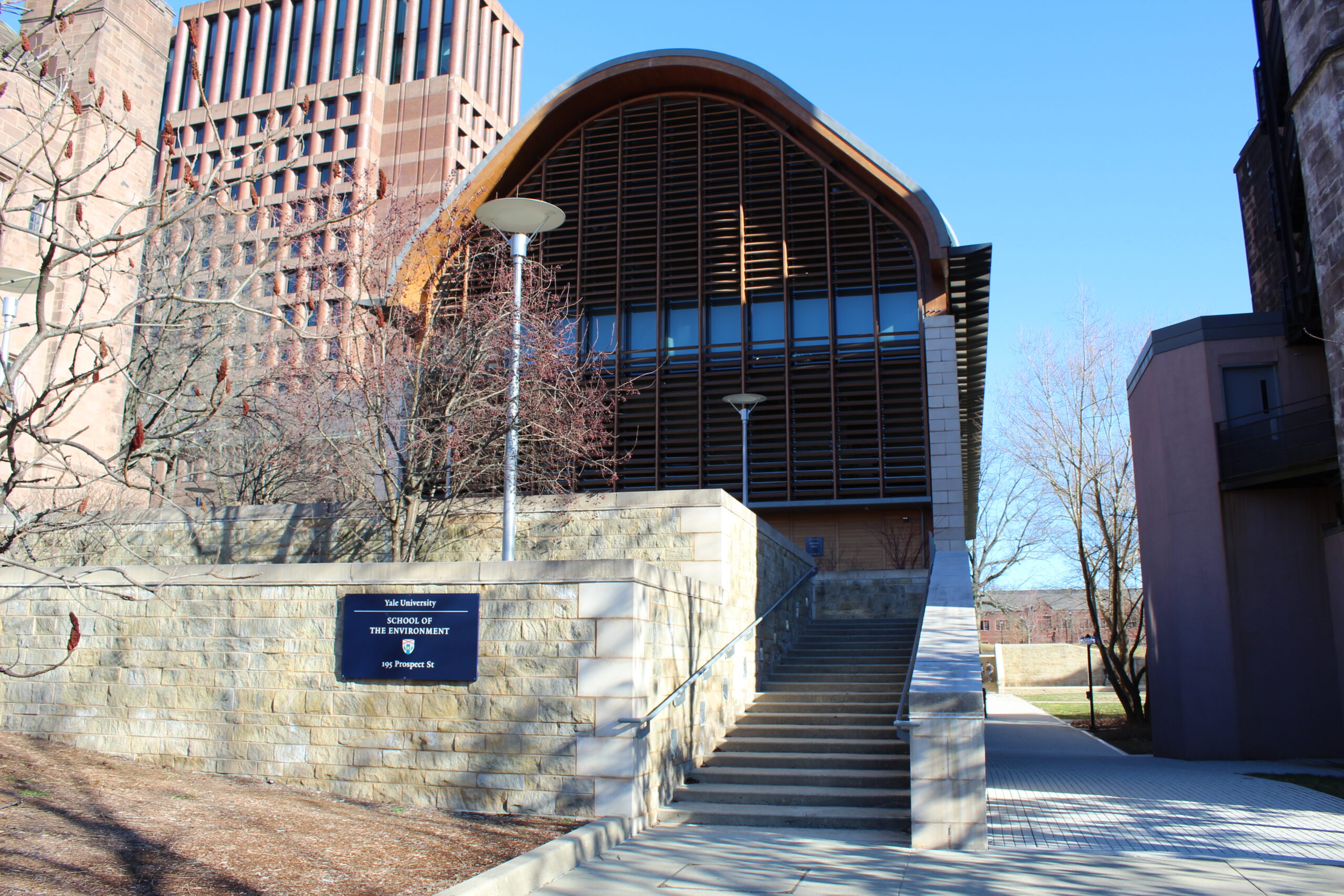
Kroon Hall, the school’s home since 2009, serves as a tangible example of YSE’s commitment to multiple Sustainable Development Goals.
- SDG 12 (Responsible Consumption and Production): The building’s foundation is constructed from Quercus rubra red oaks felled from Yale’s own sustainably managed forests, demonstrating a closed-loop, responsible use of natural resources.
- SDG 13 (Climate Action) & SDG 11 (Sustainable Cities and Communities): Kroon Hall was designed to use 50 percent less energy than a comparable conventional building, contributing to climate mitigation efforts and serving as a model for sustainable infrastructure.
Alumni Impact on Green Economies and Corporate Responsibility (SDG 8, SDG 12)
YSE graduates actively contribute to the SDGs through diverse career paths that promote sustainable economic growth and responsible corporate practices.
- Bryan Garcia (ENV ’00): As President and CEO of the Connecticut Green Bank, Garcia’s work directly supports SDG 8: Decent Work and Economic Growth by fostering a green economy and leveraging private sector partnerships to achieve public environmental goals.
- Charissa Leising (ENV ’13): Leising’s career in corporate sustainability with companies like Apple and Albertson’s, focusing on electronics recycling and material recovery, exemplifies the application of SDG 12: Responsible Consumption and Production in the private sector.
- The school’s emphasis on diversity in its student body fosters the multidisciplinary and innovative thinking required to develop solutions for the interconnected challenges outlined in the SDGs.
Analysis of Sustainable Development Goals in the Article
1. Which SDGs are addressed or connected to the issues highlighted in the article?
-
SDG 4: Quality Education
The entire article focuses on the Yale School of the Environment (YSE), an educational institution that has been training “foresters, conservationists and environmental stewards” for 125 years. It highlights the school’s role in providing specialized education on environmental issues, which is central to SDG 4, particularly in promoting education for sustainable development.
-
SDG 8: Decent Work and Economic Growth
The article mentions alumnus Bryan Garcia, CEO of the Connecticut Green Bank, which “works with private sector disciplines to support the green economy.” This directly connects to promoting sustainable economic growth and creating green jobs.
-
SDG 9: Industry, Innovation, and Infrastructure
The description of Kroon Hall as an “ultra-green” building that “uses 50 percent less energy” and is built with sustainable materials showcases innovation in sustainable infrastructure and resource-efficient industrialization.
-
SDG 11: Sustainable Cities and Communities
Kroon Hall is presented as a model for sustainable buildings. The article states it was built with natural materials from sustainable forests and is highly energy-efficient, which aligns with the goal of creating sustainable and resilient infrastructure within communities.
-
SDG 12: Responsible Consumption and Production
This goal is addressed through multiple examples. The construction of Kroon Hall using “Great Quercus rubra red oaks felled from the Yale Forests” demonstrates sustainable sourcing of materials. The career of alumna Charissa Leising, who has worked in “electronics recycling at Apple, grocery chain sustainability at Albertson’s and material recovery,” directly reflects efforts to promote sustainable consumption and production patterns and reduce waste.
-
SDG 13: Climate Action
The article quotes former Dean James Gustave Speth, who stated in 2000 that the school needed to “address energy and climate change.” This indicates that climate action is a core part of the school’s educational mission, contributing to building knowledge and capacity to tackle climate change.
-
SDG 15: Life on Land
The school’s origins as The Yale Forest School and its continued management of thousands of acres of forest, including the “1,300 acres of Yale Demonstration and Research Forest” and the “8,000 acres” of the Yale-Myers Forest, directly relate to the sustainable management of forests and the conservation of terrestrial ecosystems.
-
SDG 17: Partnerships for the Goals
The article highlights the global impact of the school, noting that “YSE alumni holding environmental leadership positions in 80 countries around the world.” This global network of over 5,800 graduates facilitates the sharing of knowledge and expertise, fostering international cooperation to achieve environmental goals.
2. What specific targets under those SDGs can be identified based on the article’s content?
-
Target 4.7: Ensure that all learners acquire the knowledge and skills needed to promote sustainable development.
The core mission of the Yale School of the Environment for 125 years has been to educate students to become “foresters, conservationists and environmental stewards.” The article details how its graduates, like Bryan Garcia and Charissa Leising, are prepared to “confront environmental problems” and work in sustainability, directly fulfilling this target.
-
Target 8.4: Improve progressively, through 2030, global resource efficiency in consumption and production and endeavour to decouple economic growth from environmental degradation.
The work of Bryan Garcia at the Connecticut Green Bank to “support the green economy” is a direct effort to foster economic activity that is less environmentally degrading and more resource-efficient.
-
Target 9.4: By 2030, upgrade infrastructure and retrofit industries to make them sustainable, with increased resource-use efficiency and greater adoption of clean and environmentally sound technologies and industrial processes.
Kroon Hall is a prime example, described as an “ultra-green” building that “uses 50 percent less energy than a similarly sized building,” showcasing an upgrade in infrastructure for sustainability and resource efficiency.
-
Target 11.c: Support least developed countries, including through financial and technical assistance, in building sustainable and resilient buildings utilizing local materials.
While not focused on least developed countries, the principle of this target is demonstrated by Kroon Hall, which was built using local materials (“red oaks felled from the Yale Forests”), serving as a model for sustainable construction.
-
Target 12.5: By 2030, substantially reduce waste generation through prevention, reduction, recycling and reuse.
The career of alumna Charissa Leising, with roles in “electronics recycling at Apple” and “material recovery with the Fijian government,” directly addresses this target by working on systems to reduce and manage waste.
-
Target 12.6: Encourage companies, especially large and transnational companies, to adopt sustainable practices and to integrate sustainability information into their reporting cycle.
Charissa Leising’s work in “grocery chain sustainability at Albertson’s” and her internship at “clothing brand Patagonia” are examples of efforts to integrate sustainability into corporate practices, aligning with this target.
-
Target 13.3: Improve education, awareness-raising and human and institutional capacity on climate change mitigation, adaptation, impact reduction and early warning.
The school’s focus on addressing “energy and climate change,” as mentioned by Dean Speth, shows its role as an institution dedicated to building human capacity to tackle the climate crisis.
-
Target 15.2: By 2020, promote the implementation of sustainable management of all types of forests, halt deforestation, restore degraded forests and substantially increase afforestation and reforestation globally.
The article explicitly mentions the school’s management of the “Yale Demonstration and Research Forest” and the “Yale-Myers Forest,” and the use of wood from these “sustainable forests” for construction, which is a direct implementation of sustainable forest management.
3. Are there any indicators mentioned or implied in the article that can be used to measure progress towards the identified targets?
-
Indicator for Target 4.7: The number of trained professionals in environmental fields.
The article states that over “5,800 graduates have been with the school” and that they hold “environmental leadership positions in 80 countries.” These numbers serve as a quantitative measure of the school’s contribution to education for sustainable development.
-
Indicator for Target 9.4 / 11.c: The measure of energy efficiency in new infrastructure.
The specific data point that Kroon Hall “uses 50 percent less energy than a similarly sized building” is a direct indicator of increased resource-use efficiency in buildings.
-
Indicator for Target 12.5 / 12.6: The existence and implementation of corporate sustainability programs.
The mention of specific roles and initiatives like “electronics recycling at Apple,” “grocery chain sustainability at Albertson’s,” and corporate sustainability at “Patagonia” implies the existence of programs that can be monitored to measure progress in waste reduction and sustainable practices.
-
Indicator for Target 15.2: Proportion of forest area under a long-term sustainable management plan.
The article provides specific figures for the forests managed by Yale: “1,300 acres of Yale Demonstration and Research Forest” and a donation of “8,000 acres which would go on to become the Yale-Myers Forest.” These acreages represent a direct measure of forest area under sustainable management.
4. Table of SDGs, Targets, and Indicators
| SDGs | Targets | Indicators |
|---|---|---|
| SDG 4: Quality Education | 4.7: Education for sustainable development. | Number of graduates in environmental fields (5,800) and the number of countries they work in (80). |
| SDG 8: Decent Work and Economic Growth | 8.4: Improve resource efficiency and decouple growth from environmental degradation. | Establishment of institutions like the Connecticut Green Bank to “support the green economy.” |
| SDG 9: Industry, Innovation, and Infrastructure | 9.4: Upgrade infrastructure for sustainability and resource-use efficiency. | Energy efficiency metric: Kroon Hall “uses 50 percent less energy than a similarly sized building.” |
| SDG 11: Sustainable Cities and Communities | 11.c: Support building sustainable and resilient buildings utilizing local materials. | Use of locally sourced materials (“red oaks felled from the Yale Forests”) for construction. |
| SDG 12: Responsible Consumption and Production | 12.5: Substantially reduce waste generation. 12.6: Encourage companies to adopt sustainable practices. |
Existence of corporate roles and initiatives in “electronics recycling,” “grocery chain sustainability,” and “material recovery.” |
| SDG 13: Climate Action | 13.3: Improve education and institutional capacity on climate change. | Inclusion of “energy and climate change” in the school’s educational focus. |
| SDG 15: Life on Land | 15.2: Promote the implementation of sustainable management of all types of forests. | Area of forest under sustainable management plan (1,300 acres + 8,000 acres). |
| SDG 17: Partnerships for the Goals | 17.9: Enhance international support for effective and targeted capacity-building. | A global network of alumni in leadership positions across 80 countries. |
Source: yaledailynews.com
What is Your Reaction?
 Like
0
Like
0
 Dislike
0
Dislike
0
 Love
0
Love
0
 Funny
0
Funny
0
 Angry
0
Angry
0
 Sad
0
Sad
0
 Wow
0
Wow
0