




































Warming and resource enhancement shape food webs in South China Sea coral reef system – Nature

Report on the Impact of Warming and Resource Enhancement on Food Webs in the South China Sea Coral Reef System
Introduction
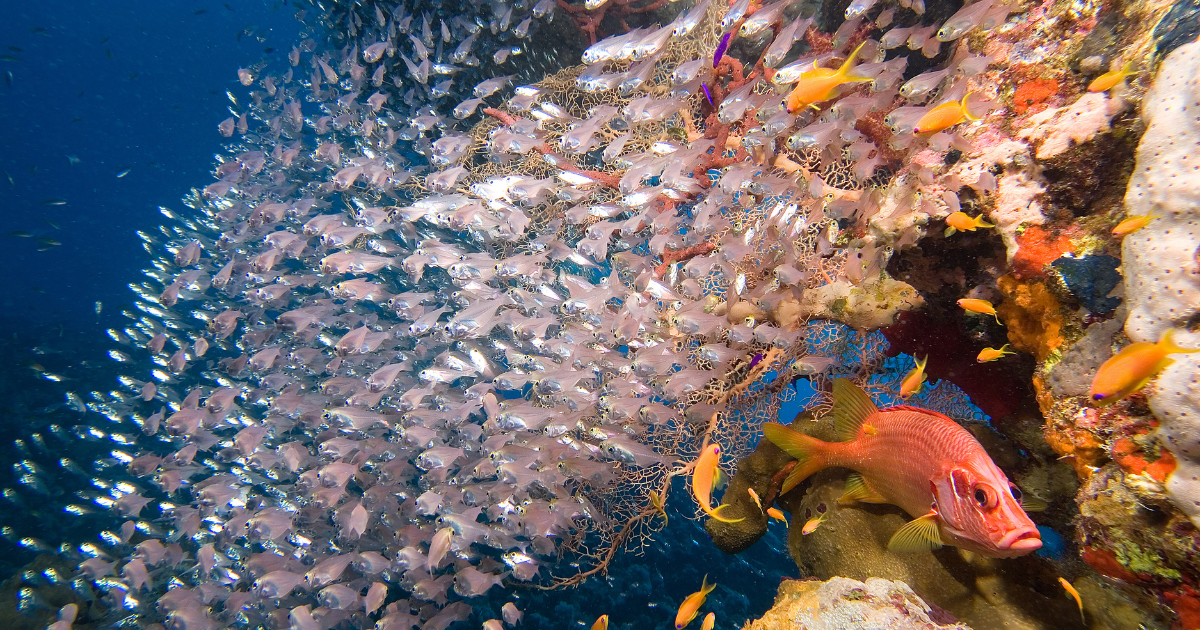
Coral reef ecosystems, vital for marine biodiversity and human livelihoods, are increasingly impacted by rising ocean temperatures and nutrient inputs. Understanding how these environmental changes influence food-web structures is crucial for achieving Sustainable Development Goals (SDGs), particularly SDG 14 (Life Below Water) and SDG 13 (Climate Action).
Methodology
A comprehensive analysis was conducted on 130 coral reef food webs across the South China Sea. These food webs were constructed using environmental DNA (eDNA) surveys combined with trophic interaction data. The food webs were categorized into three habitat types:
- Surface-water habitats
- Bottom-water habitats
- Sediment habitats
Findings
The study revealed significant structural differences among the habitats:
- Surface- and bottom-water food webs: Exhibited higher connectance and nestedness, indicating more complex and interconnected trophic relationships.
- Sediment food webs: Displayed greater compartmentalization, suggesting more isolated trophic modules.
Using linear mixed-effects models, the interaction between temperature and productivity was found to nonlinearly influence food-web properties:
- In surface waters, increased temperature combined with higher productivity enhanced connectance, potentially supporting ecosystem resilience.
- In deeper waters, the same environmental conditions extended trophic pathways and decreased stability, posing risks to ecosystem function.
Implications for Sustainable Development Goals
This research highlights the complex responses of coral reef food webs to climate change and nutrient enrichment, emphasizing the need for integrated management approaches to support SDGs:
- SDG 14 (Life Below Water): Protecting and sustainably managing coral reef ecosystems requires understanding food-web dynamics under environmental stressors.
- SDG 13 (Climate Action): Addressing ocean warming impacts on marine biodiversity is critical for maintaining ecosystem services.
- SDG 15 (Life on Land): Nutrient inputs often originate from terrestrial sources, linking land and marine ecosystem health.
- SDG 17 (Partnerships for the Goals): Collaborative research and policy efforts are essential to mitigate adverse effects on coral reefs.
Conclusion
The study concludes that future environmental changes will differentially affect pelagic and benthic coral reef food webs. These findings underscore the importance of targeted conservation strategies to enhance ecosystem stability and biodiversity, aligning with global sustainable development objectives.
Data Availability
The raw sequence data supporting this study are publicly accessible at the China National Center for Bioinformation / Beijing Institute of Genomics, Chinese Academy of Sciences (GSA: CRA018229) via https://ngdc.cncb.ac.cn/gsa.
1. Sustainable Development Goals (SDGs) Addressed or Connected
- SDG 14: Life Below Water
- The article focuses on coral reef ecosystems in the South China Sea, their food-web structures, and the impact of warming and nutrient inputs, which directly relates to the conservation and sustainable use of oceans, seas, and marine resources.
- SDG 13: Climate Action
- The article discusses rising ocean temperatures and their effects on coral reef food webs, highlighting the need for urgent action to combat climate change and its impacts on marine ecosystems.
- SDG 15: Life on Land (Indirectly)
- Increasing nutrient inputs often originate from terrestrial sources (e.g., runoff), linking terrestrial ecosystem management with marine health.
2. Specific Targets Under Identified SDGs
- SDG 14: Life Below Water
- Target 14.2: Sustainably manage and protect marine and coastal ecosystems to avoid significant adverse impacts, and take action for their restoration to achieve healthy and productive oceans.
- Target 14.3: Minimize and address the impacts of ocean acidification, including through enhanced scientific cooperation at all levels.
- SDG 13: Climate Action
- Target 13.1: Strengthen resilience and adaptive capacity to climate-related hazards and natural disasters in all countries.
- Target 13.3: Improve education, awareness-raising and human and institutional capacity on climate change mitigation, adaptation, impact reduction, and early warning.
- SDG 15: Life on Land (Indirectly)
- Target 15.1: Ensure the conservation, restoration and sustainable use of terrestrial and inland freshwater ecosystems and their services.
3. Indicators Mentioned or Implied to Measure Progress
- Food-Web Structural Properties
- Connectance: Measures the proportion of possible links between species that are realized in the food web.
- Nestedness: Indicates the degree to which interactions are organized in a nested pattern.
- Compartmentalization: Degree to which the food web is divided into relatively independent sub-networks.
- Trophic Pathway Length: Length of energy transfer chains in the food web.
- Stability Metrics: Related to the resilience and stability of the food web under environmental changes.
- Environmental Variables
- Ocean Temperature: Rising temperatures measured to assess impact on food webs.
- Productivity: Nutrient inputs and productivity levels influencing food-web structure.
- Use of Environmental DNA (eDNA) Surveys
- eDNA metabarcoding as a tool to reconstruct food webs and monitor biodiversity changes.
4. Table: SDGs, Targets and Indicators
| SDGs | Targets | Indicators |
|---|---|---|
| SDG 14: Life Below Water |
|
|
| SDG 13: Climate Action |
|
|
| SDG 15: Life on Land (Indirect) |
|
|
Source: nature.com
What is Your Reaction?
 Like
0
Like
0
 Dislike
0
Dislike
0
 Love
0
Love
0
 Funny
0
Funny
0
 Angry
0
Angry
0
 Sad
0
Sad
0
 Wow
0
Wow
0