


























ADM: bioethanol carbon capture facility supports sustainable farming and new markets – Brownfield Ag News
Report on ADM’s Bioethanol Carbon Capture Facility and Alignment with Sustainable Development Goals
1.0 Introduction
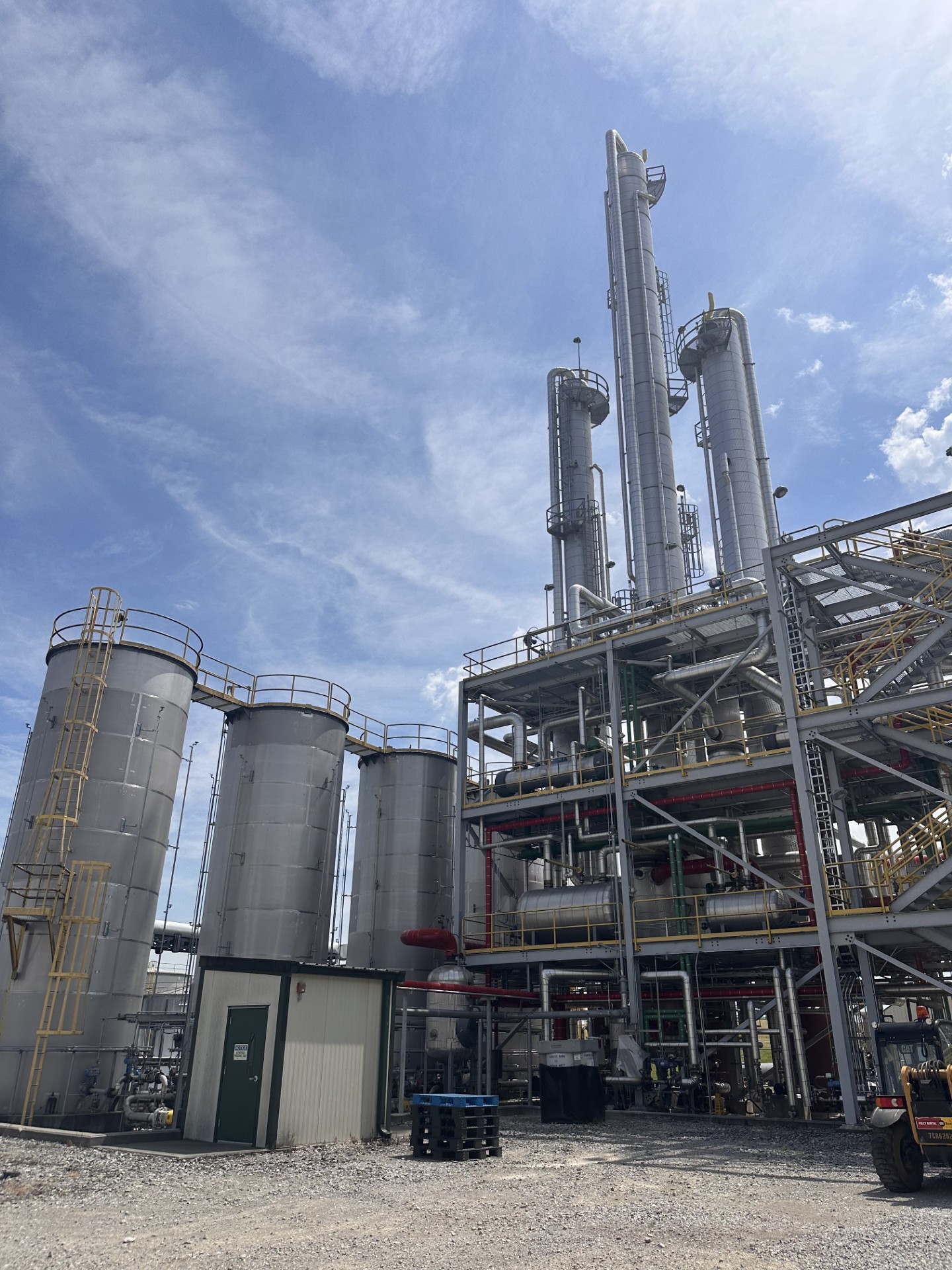
A bioethanol carbon capture and sequestration (CCS) facility operated by ADM in Columbus, Nebraska, is creating new opportunities in sustainable agriculture and clean energy markets. This initiative directly addresses several United Nations Sustainable Development Goals (SDGs), particularly those related to climate action, clean energy, and sustainable economic growth. The project involves capturing carbon dioxide (CO2) from the ethanol production process and permanently storing it underground, thereby reducing the carbon intensity of the resulting biofuel.
2.0 Project Overview and Technological Innovation (SDG 9)
The project represents a significant advancement in sustainable industrial infrastructure, directly supporting SDG 9 (Industry, Innovation, and Infrastructure). The operational framework consists of three key stages:
- Capture: CO2 is captured at ADM’s bioethanol production plant in Columbus, Nebraska.
- Transport: The captured CO2 is transported via the Trailblazer pipeline, operated by Tallgrass.
- Sequestration: The CO2 is permanently stored in a secure underground geological site in Wyoming.
This innovative infrastructure has the capacity to transport over 10 million tons of CO2 annually, an impact equivalent to removing approximately 2 million passenger vehicles from service each year.
3.0 Impact on Sustainable Agriculture and Economic Growth (SDG 2 & SDG 8)
The facility enhances regional economic stability and promotes sustainable farming practices, aligning with SDG 2 (Zero Hunger) and SDG 8 (Decent Work and Economic Growth).
- Strengthened Agricultural Markets: The project increases processing capacity and creates additional, stable demand for corn, providing new economic opportunities for farmers. According to Plant Manager Todd Good, this allows the facility to operate closer to its name-plate capacity, stabilizing the regional market.
- Support for Sustainable Farming: By creating a value chain for lower-carbon agricultural products, the facility incentivizes and supports sustainable farming methods.
4.0 Contribution to Clean Energy and Climate Action (SDG 7 & SDG 13)
The primary outcome of the CCS project is the production of a lower-carbon biofuel, which is critical for achieving SDG 7 (Affordable and Clean Energy) and SDG 13 (Climate Action).
- Reduced Carbon Intensity: The sequestration of CO2 significantly lowers the overall carbon intensity of the bioethanol produced. This makes the fuel a more environmentally sound energy source.
- Enabling New Green Markets: The lower-carbon ethanol is a key component for producing Sustainable Aviation Fuel (SAF). As stated by facility management, carbon sequestration is an essential pathway for creating SAF from ethanol, opening a vital new market for sustainable biofuels.
5.0 Summary of Contributions to Sustainable Development Goals
The ADM carbon capture facility provides a comprehensive model for industrial decarbonization and sustainable development, with direct contributions to the following SDGs:
- SDG 2 (Zero Hunger): Supports sustainable agriculture and enhances market stability for farmers.
- SDG 7 (Affordable and Clean Energy): Increases the viability and environmental integrity of biofuels as a clean energy source.
- SDG 8 (Decent Work and Economic Growth): Creates new market opportunities and enhances the productivity of the biofuel industry.
- SDG 9 (Industry, Innovation, and Infrastructure): Deploys innovative technology and resilient infrastructure for a sustainable industrial process.
- SDG 13 (Climate Action): Directly mitigates climate change by sequestering millions of tons of CO2 emissions annually.
- SDG 17 (Partnerships for the Goals): The collaboration between ADM and Tallgrass exemplifies a successful partnership to achieve sustainability objectives.
Analysis of Sustainable Development Goals in the Article
1. Which SDGs are addressed or connected to the issues highlighted in the article?
The article on ADM’s bioethanol carbon capture facility connects to several Sustainable Development Goals (SDGs) by addressing issues of clean energy, industrial innovation, climate action, economic growth, and sustainable agriculture.
-
SDG 7: Affordable and Clean Energy
This goal is relevant because the article focuses on bioethanol, a form of biofuel, and its potential to create Sustainable Aviation Fuel (SAF). The entire process described aims to make ethanol a cleaner energy source by reducing its carbon footprint, directly contributing to the goal of increasing the share of renewable energy.
-
SDG 9: Industry, Innovation, and Infrastructure
The development of a large-scale carbon capture facility and its integration with an ethanol plant and a pipeline represents a significant industrial innovation and infrastructure project. The article highlights how this technology retrofits an existing industry to make it more sustainable and environmentally friendly.
-
SDG 13: Climate Action
This is a central theme of the article. The project’s primary purpose is to capture and sequester carbon dioxide (CO2), a key greenhouse gas, to mitigate climate change. The article explicitly mentions that the process “will lower the carbon intensity of our ethanol” and quantifies the impact as equivalent to removing millions of cars from the road.
-
SDG 8: Decent Work and Economic Growth
The facility creates new economic opportunities. The article states that it “creates additional processing capacity and demand for corn,” which supports the livelihoods of farmers. Furthermore, by making ethanol eligible for new markets like SAF, it fosters economic growth and diversification within the biofuel industry.
-
SDG 2: Zero Hunger
While not the primary focus, this goal is connected through its targets on sustainable agriculture. The article mentions that the project helps “support sustainable farming.” By creating stable and additional demand for corn, the facility can provide economic stability that enables farmers to invest in more sustainable practices.
2. What specific targets under those SDGs can be identified based on the article’s content?
Based on the article, several specific SDG targets can be identified:
-
Target 7.2: Increase substantially the share of renewable energy in the global energy mix.
The project enhances the viability and sustainability of bioethanol, a renewable energy source. By lowering its carbon intensity, it becomes a more attractive component of the energy mix and a key ingredient for other renewables like Sustainable Aviation Fuel (SAF), as mentioned in the article: “One pathway to get to SAF is through ethanol.”
-
Target 9.4: Upgrade infrastructure and retrofit industries to make them sustainable.
The ADM facility is a direct example of this target in action. An existing ethanol plant (industry) is being retrofitted with carbon capture technology (upgraded infrastructure) to significantly reduce its environmental impact and make its production process more sustainable.
-
Target 13.2: Integrate climate change measures into policies, strategies and planning.
The carbon capture project is a corporate strategy that directly integrates climate change mitigation into its business operations. The article describes a clear plan to reduce greenhouse gas emissions: “The project captures carbon dioxide from ADM’s ethanol plant and transports it…to a secure underground storage site.”
-
Target 8.2: Achieve higher levels of economic productivity through diversification, technological upgrading and innovation.
The implementation of carbon capture is a technological upgrade that allows the company to diversify its product’s end uses. The article notes that lower carbon intensity will “make it more attractive for different end uses,” specifically citing the new market of sustainable aviation fuel.
3. Are there any indicators mentioned or implied in the article that can be used to measure progress towards the identified targets?
Yes, the article mentions several quantitative and qualitative indicators that can be used to measure progress:
-
Annual Volume of CO2 Sequestered
This is a direct, quantitative indicator of climate action. The article specifies that “The pipeline can transport over 10 million tons of CO2 annually.” This measures progress towards Target 13.2.
-
Reduction in Carbon Intensity (CI)
The article explicitly states that the goal is to “lower the carbon intensity of our ethanol.” The CI score of the resulting biofuel is a key performance indicator for measuring the sustainability of the product and its contribution to Target 9.4 and Target 7.2.
-
Equivalent Reduction in Vehicle Emissions
To make the impact more understandable, the article provides a comparative indicator: the annual CO2 captured is “roughly equivalent to removing 2 million passenger vehicles from the road.” This is a powerful metric for communicating progress on climate action (SDG 13).
-
Increased Demand for Corn
An economic indicator mentioned is the creation of “additional processing capacity and demand for corn.” This can be measured by tracking the volume of corn processed at the facility, which relates to the economic benefits for farmers under SDG 8.
-
Production of Sustainable Aviation Fuel (SAF)
The development of new markets is an indicator of successful innovation. The volume of low-carbon ethanol sold for SAF production would be a clear indicator of progress towards Target 8.2 and the expansion of clean energy under Target 7.2.
4. Summary Table of SDGs, Targets, and Indicators
| SDGs | Targets | Indicators |
|---|---|---|
| SDG 7: Affordable and Clean Energy | 7.2: Increase the share of renewable energy. | Volume of low-carbon ethanol used to produce Sustainable Aviation Fuel (SAF). |
| SDG 9: Industry, Innovation, and Infrastructure | 9.4: Upgrade infrastructure and retrofit industries to make them sustainable. | The reduction in the carbon intensity (CI) score of the ethanol produced. |
| SDG 13: Climate Action | 13.2: Integrate climate change measures into strategies and planning. | Annual volume of CO2 captured (“over 10 million tons”); Equivalent emissions reduction (“removing 2 million passenger vehicles”). |
| SDG 8: Decent Work and Economic Growth | 8.2: Achieve higher economic productivity through technological upgrading and innovation. | Increased corn processing capacity and demand; Creation of new markets for low-carbon ethanol. |
| SDG 2: Zero Hunger | 2.4: Ensure sustainable food production systems. | Implied support for “sustainable farming” through stable and increased demand for agricultural products (corn). |
Source: brownfieldagnews.com
What is Your Reaction?
 Like
0
Like
0
 Dislike
0
Dislike
0
 Love
0
Love
0
 Funny
0
Funny
0
 Angry
0
Angry
0
 Sad
0
Sad
0
 Wow
0
Wow
0