




































Air pollution crosses borders, and so must the policies aimed at tackling it – The Conversation

Report on Air Quality Governance in India: Emphasizing Sustainable Development Goals (SDGs)
Introduction
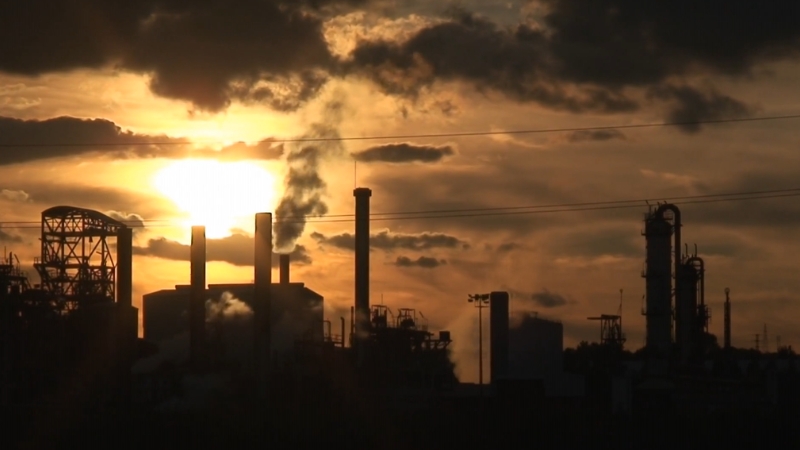
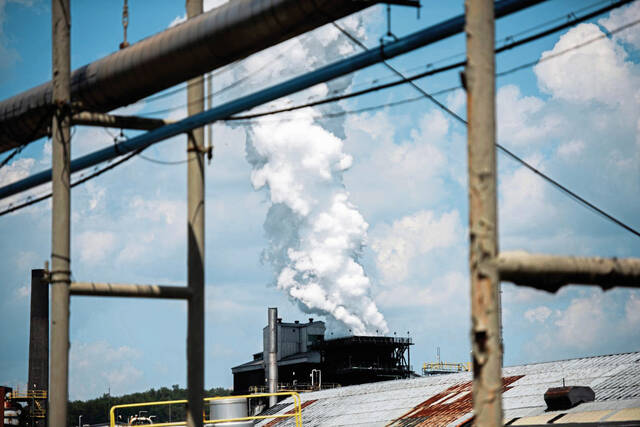
Recent episodes of severe smog in parts of India, including the capital Delhi, highlight the persistent challenge of air pollution caused by industrial emissions and crop-burning. Despite advancements under India’s National Clean Air Programme (NCAP), air pollution remains a significant threat to public health and environmental sustainability.
Addressing this issue aligns closely with several Sustainable Development Goals (SDGs), particularly SDG 3 (Good Health and Well-being), SDG 11 (Sustainable Cities and Communities), and SDG 13 (Climate Action).
Challenges in Air Quality Governance
Effective protection of public health requires enhanced coordination across multiple levels of government and sectors. Air pollution is influenced by diverse economic activities, meteorological conditions, and geographic factors, which are often managed by siloed institutions. Single-sector interventions, such as temporary halts in construction or vehicle restrictions, are insufficient for systemic change.
Our research team, including experts from the University of Toronto, Indian Institute of Technology Bombay, and environmental consultancy Respirer Living Sciences, conducted a comprehensive study to map air quality governance in India as an interconnected system. This approach identifies leverage points where governance shifts can maximize health benefits and support SDG targets.
Community Participation and Sustainable Monitoring
Developing Hyper-Local Monitoring
Community engagement is critical to sustainable air quality management (SDG 16: Peace, Justice and Strong Institutions). In Bengaluru, community groups have installed air quality monitors near sensitive locations such as schools and hospitals. These initiatives have enabled data-driven advocacy leading to court-mandated enforcement actions, demonstrating the importance of clear pathways for integrating community-generated data into official enforcement mechanisms.
Key recommendations include:
- Steady funding and capacity-building to enhance community monitoring literacy.
- Certification and quality assurance protocols for hyper-local monitoring to ensure data reliability for policy decisions.
- Integration of diverse data sources including satellite observations, reference-grade monitors, and low-cost sensors.
Examples from global cities, such as London’s Breathe London programme, illustrate how hyper-local monitoring under a quality-assurance framework can identify pollution hotspots and evaluate policy impacts effectively, supporting SDG 11 and SDG 13.
Regional Governance and Airshed Management
Governing the Airshed
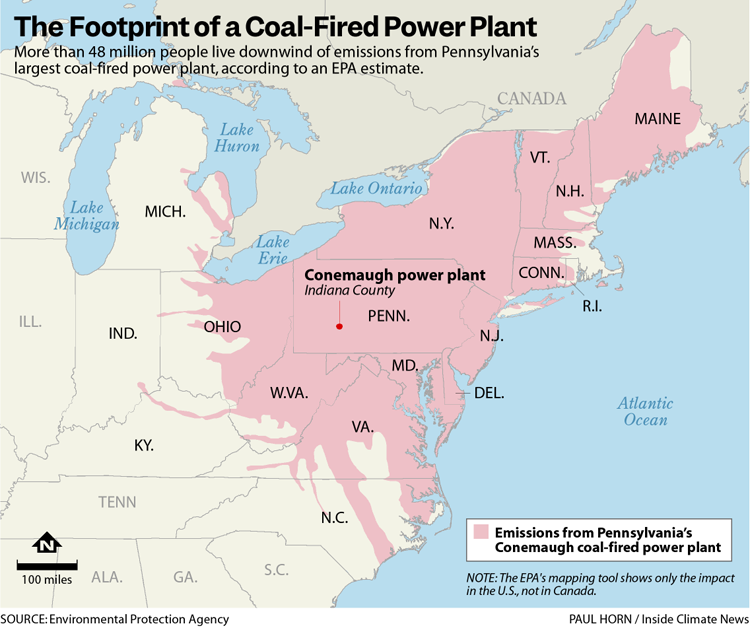
Air pollution transcends administrative boundaries, necessitating governance at the airshed scale—regions defined by local weather and geography that influence pollutant dispersion. Current NCAP efforts often focus on city-level actions, which are insufficient when pollution sources like coal-fired power plants operate outside city limits.
Effective airshed governance requires:
- Coordination across jurisdictions and government departments (e.g., power, transport, agriculture, industry, urban development).
- Establishment of shared data standards and dispute-resolution mechanisms.
- Development of sector-specific targets and timelines based on pollution inventories.
The Commission for Air Quality Management (CAQM) exemplifies an initiative to implement airshed-level management under NCAP, promoting cross-state collaboration and accountability.
This approach supports SDG 17 (Partnerships for the Goals) by fostering multi-sectoral and multi-level cooperation to improve air quality.
Reframing Objectives to Prioritize Public Health
Health-Centered Regulatory Goals
Expanding regulatory objectives to explicitly include public health protection enhances governance focus on reducing exposure to harmful pollutants. This shift aligns with SDG 3 by addressing the health impacts of air pollution, such as asthma and cardiovascular diseases.
“Air pollution isn’t an environmental statistic; it’s a public-health emergency that shows up in asthma, heart disease and hospital admissions. When we map air quality at the neighbourhood level and link it to health outcomes, clean air can move from a promise to a right — because communities can see what they’re breathing and what it means for their health, and that changes what polluters can get away with.” — Ronak Sutaria, CEO of Respirer Living Sciences
Prioritizing health also promotes equity (SDG 10: Reduced Inequalities) by recognizing that pollution exposure disproportionately affects vulnerable populations.
Aligning Clean Air with Climate and Economic Goals
Integrating clean air initiatives with climate action (SDG 13) presents opportunities for co-benefits. Although mitigation may involve upfront costs, these are typically offset by avoided health expenditures and increased productivity, contributing to SDG 8 (Decent Work and Economic Growth).
Systems thinking enables tailored governance solutions that reflect local airshed characteristics and socio-economic contexts, enhancing the effectiveness and sustainability of interventions.
Conclusion
Addressing air pollution in India requires a multi-dimensional governance approach that:
- Empowers communities through participatory monitoring and accountability mechanisms.
- Implements airshed-scale coordination across sectors and jurisdictions.
- Centers regulatory objectives on public health outcomes and equity.
- Integrates clean air efforts with climate and economic development goals.
Such strategies contribute directly to achieving the Sustainable Development Goals, ensuring healthier environments and improved quality of life for all citizens.
1. Which SDGs are addressed or connected to the issues highlighted in the article?
- SDG 3: Good Health and Well-being
- The article emphasizes air pollution as a public health emergency affecting asthma, heart disease, and hospital admissions.
- Focus on protecting public health through clean air initiatives.
- SDG 11: Sustainable Cities and Communities
- Discussion on urban air pollution in cities like Delhi and Bengaluru.
- Community participation in monitoring and enforcement of air quality.
- SDG 13: Climate Action
- Aligning clean-air action with climate goals is mentioned as an opportunity.
- SDG 6: Clean Water and Sanitation
- Implied through the mention of industrial pollution affecting regions like Kanpur on the banks of the Ganges River.
- SDG 17: Partnerships for the Goals
- The article highlights the need for coordination across governments, departments, and communities.
- Collaborative governance at airshed scale and multi-sectoral cooperation.
2. What specific targets under those SDGs can be identified based on the article’s content?
- SDG 3: Good Health and Well-being
- Target 3.9: Reduce the number of deaths and illnesses from hazardous chemicals and air, water and soil pollution and contamination.
- SDG 11: Sustainable Cities and Communities
- Target 11.6: Reduce the adverse per capita environmental impact of cities, including air quality.
- Target 11.b: Implement policies for inclusion, resource efficiency, and disaster risk reduction in urban planning.
- SDG 13: Climate Action
- Target 13.2: Integrate climate change measures into national policies, strategies and planning.
- SDG 17: Partnerships for the Goals
- Target 17.17: Encourage and promote effective public, public-private and civil society partnerships.
3. Are there any indicators mentioned or implied in the article that can be used to measure progress towards the identified targets?
- Air Quality Indicators
- Levels of particulate matter (PM2.5 and PM10) in the air, with a goal to reduce particulate matter by 20-30% as per the National Clean Air Programme.
- Satellite observations, reference-grade monitors, and low-cost sensors data streams for air pollution measurement.
- Street-level pollution hotspots identified through hyper-local monitoring.
- Health Outcome Indicators
- Incidence rates of asthma, heart disease, and hospital admissions related to air pollution exposure.
- Community exposure burdens and their distribution across population segments.
- Governance and Enforcement Indicators
- Number and effectiveness of court-mandated enforcement actions based on community-generated data.
- Certification and quality assurance protocols for air quality monitoring data.
- Degree of coordination across ministries and jurisdictions in airshed-level governance.
- Climate Action Indicators
- Integration of clean-air actions with climate mitigation policies.
- Reduction in emissions from key sectors like transport, industry, power, and household fuels.
4. Table: SDGs, Targets and Indicators
| SDGs | Targets | Indicators |
|---|---|---|
| SDG 3: Good Health and Well-being | 3.9: Reduce deaths and illnesses from hazardous chemicals and air, water and soil pollution and contamination. |
|
| SDG 11: Sustainable Cities and Communities |
|
|
| SDG 13: Climate Action | 13.2: Integrate climate change measures into national policies, strategies and planning. |
|
| SDG 17: Partnerships for the Goals | 17.17: Encourage and promote effective public, public-private and civil society partnerships. |
|
Source: theconversation.com
What is Your Reaction?
 Like
0
Like
0
 Dislike
0
Dislike
0
 Love
0
Love
0
 Funny
0
Funny
0
 Angry
0
Angry
0
 Sad
0
Sad
0
 Wow
0
Wow
0