























































Are Solar Farms Really Displacing Agricultural Land? – RWE
Report on Agrivoltaics and its Contribution to Sustainable Development Goals
Introduction: Synergistic Land Use for Sustainable Development
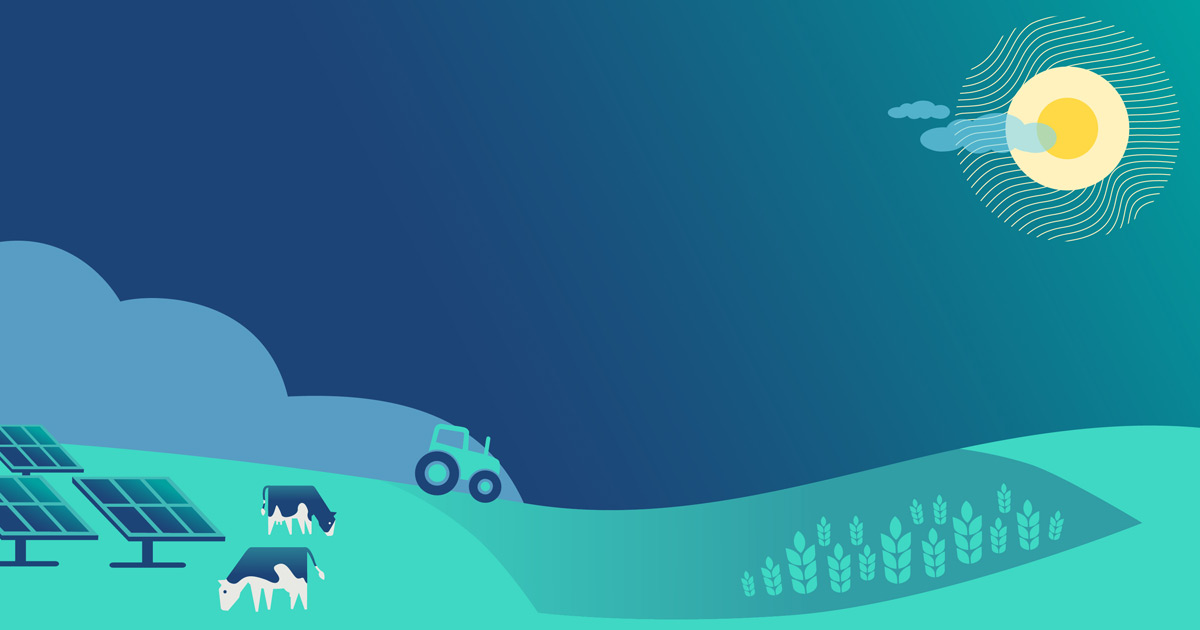
Agrivoltaics (Agri-PV) is a land-use model that combines solar photovoltaic energy generation with agricultural activities. This dual-use approach establishes photovoltaics as a synergistic partner to agriculture, addressing critical global challenges and contributing directly to the achievement of several United Nations Sustainable Development Goals (SDGs).
Enhancing Food Security and Climate Resilience (SDG 2 & SDG 13)
The agricultural sector faces significant threats from climate change-induced phenomena such as drought and extreme rainfall, which directly impacts food security (SDG 2: Zero Hunger). Agri-PV provides a crucial climate adaptation strategy (SDG 13: Climate Action) by enhancing the resilience of food production systems.
- Increased Crop Resilience: Solar panels shield crops from adverse weather conditions, including intense solar radiation, heavy precipitation, and hail, thereby mitigating yield losses.
- Water Conservation: The shade provided by the panels can reduce agricultural water consumption by lowering soil temperature and evaporation rates.
- Livestock Welfare: The infrastructure can be integrated with livestock farming, providing shaded grazing areas for animals such as sheep and cattle, as observed in the UK and France.
Promoting Clean Energy and Economic Growth (SDG 7 & SDG 8)
Agri-PV projects are instrumental in advancing the transition to renewable energy sources while fostering economic stability in rural communities.
- Contribution to SDG 7 (Affordable and Clean Energy): The model facilitates the expansion of solar energy production without competing for arable land, making it a key component of a sustainable energy strategy.
- Contribution to SDG 8 (Decent Work and Economic Growth): It provides farmers with stable, additional income streams from energy generation, diversifying revenue and strengthening the economic viability of agricultural operations.
Analysis of Sustainable Development Goals (SDGs) in the Article
1. Which SDGs are addressed or connected to the issues highlighted in the article?
-
SDG 2: Zero Hunger
- The article focuses on Agri-PV as a method to enhance food production and agriculture. It discusses protecting plants, increasing resilience against crop losses, and making agriculture more sustainable in the face of climate change, all of which are central to ensuring food security.
-
SDG 7: Affordable and Clean Energy
- The core technology discussed is photovoltaics (solar panels), a key source of renewable energy. The article promotes the dual use of land for agriculture and solar energy generation, directly contributing to the expansion of clean energy.
-
SDG 6: Clean Water and Sanitation
- The text explicitly states that “Agri-PV can also help reduce agricultural water consumption,” which directly relates to the sustainable management of water resources.
-
SDG 8: Decent Work and Economic Growth
- The article mentions that Agri-PV can “create stable additional income streams for farms.” This diversification enhances the economic viability and productivity of agricultural enterprises.
-
SDG 13: Climate Action
- The article frames the benefits of Agri-PV within the context of climate change, noting that “Food production itself suffers from drought and heavy rainfall caused by climate change.” It presents Agri-PV as both a mitigation strategy (through renewable energy) and an adaptation strategy by protecting crops from “extreme weather such as intense sunlight, heavy rain, and hail.”
2. What specific targets under those SDGs can be identified based on the article’s content?
-
Target 2.4: By 2030, ensure sustainable food production systems and implement resilient agricultural practices that increase productivity and production… and strengthen capacity for adaptation to climate change, extreme weather, drought, flooding and other disasters.
- The article describes how Agri-PV helps “increase resilience against crop losses” and “protect plants from extreme weather such as intense sunlight, heavy rain, and hail,” which are resilient agricultural practices that help adapt to climate change.
-
Target 7.2: By 2030, increase substantially the share of renewable energy in the global energy mix.
- The promotion of photovoltaics on agricultural land is a direct method of increasing the share of renewable solar energy in the overall energy mix.
-
Target 6.4: By 2030, substantially increase water-use efficiency across all sectors…
- The statement that Agri-PV can “help reduce agricultural water consumption” directly aligns with the goal of increasing water-use efficiency in the agricultural sector.
-
Target 8.2: Achieve higher levels of economic productivity through diversification, technological upgrading and innovation…
- Agri-PV is an innovative technological solution that diversifies farm revenue by producing both food and energy. The article highlights this by mentioning the creation of “stable additional income streams for farms.”
-
Target 13.1: Strengthen resilience and adaptive capacity to climate-related hazards and natural disasters in all countries.
- The article positions Agri-PV as a tool to strengthen the resilience of agriculture. It explicitly notes that the panels “protect plants from extreme weather” and help farms adapt to the impacts of climate change like “drought and heavy rainfall.”
3. Are there any indicators mentioned or implied in the article that can be used to measure progress towards the identified targets?
-
Indicator for Target 2.4: Reduction in crop losses due to extreme weather.
- The article implies this indicator by stating that Agri-PV increases “resilience against crop losses” and protects plants from “intense sunlight, heavy rain, and hail.” Measuring the difference in crop yield and loss rates on Agri-PV farms versus conventional farms would be a way to quantify this.
-
Indicator for Target 7.2: Area of agricultural land under dual use with photovoltaics.
- The article promotes the concept of “dual use” of land for solar energy and food production. The total acreage or installed capacity (in megawatts) of Agri-PV projects would serve as a direct indicator of progress in expanding renewable energy through this method.
-
Indicator for Target 6.4: Volume of agricultural water consumption saved.
- The claim that Agri-PV can “reduce agricultural water consumption” implies that a measurable indicator would be the amount of water saved per hectare on farms using this technology compared to those that do not.
-
Indicator for Target 8.2: Increase in farm income from non-agricultural sources.
- The article points to the creation of “stable additional income streams for farms.” This can be measured by tracking the percentage of a farm’s total income that is derived from energy sales, which indicates economic diversification and increased productivity.
-
Indicator for Target 13.1: Adoption of climate adaptation strategies in the agricultural sector.
- The implementation of Agri-PV systems, as described in the article, is itself an indicator of the adoption of strategies to strengthen resilience and adaptive capacity to climate-related hazards like extreme weather.
Summary Table of SDGs, Targets, and Indicators
| SDGs | Targets | Indicators |
|---|---|---|
| SDG 2: Zero Hunger | 2.4: Ensure sustainable food production systems and implement resilient agricultural practices. | Implied: Reduction in crop losses due to extreme weather events. |
| SDG 7: Affordable and Clean Energy | 7.2: Increase substantially the share of renewable energy in the global energy mix. | Implied: Area of land under Agri-PV systems or total installed capacity of Agri-PV. |
| SDG 6: Clean Water and Sanitation | 6.4: Substantially increase water-use efficiency across all sectors. | Implied: Measurable reduction in agricultural water consumption per hectare. |
| SDG 8: Decent Work and Economic Growth | 8.2: Achieve higher levels of economic productivity through diversification and innovation. | Implied: Percentage of farm income generated from electricity sales. |
| SDG 13: Climate Action | 13.1: Strengthen resilience and adaptive capacity to climate-related hazards. | Implied: Rate of adoption of Agri-PV as a climate adaptation strategy in agriculture. |
Source: rwe.com
What is Your Reaction?
 Like
0
Like
0
 Dislike
0
Dislike
0
 Love
0
Love
0
 Funny
0
Funny
0
 Angry
0
Angry
0
 Sad
0
Sad
0
 Wow
0
Wow
0