
















China’s No.1 central document in starting year of 15th Five-Year Plan sets agricultural modernization roadmap, turning rural potential into growth momentum – Global Times
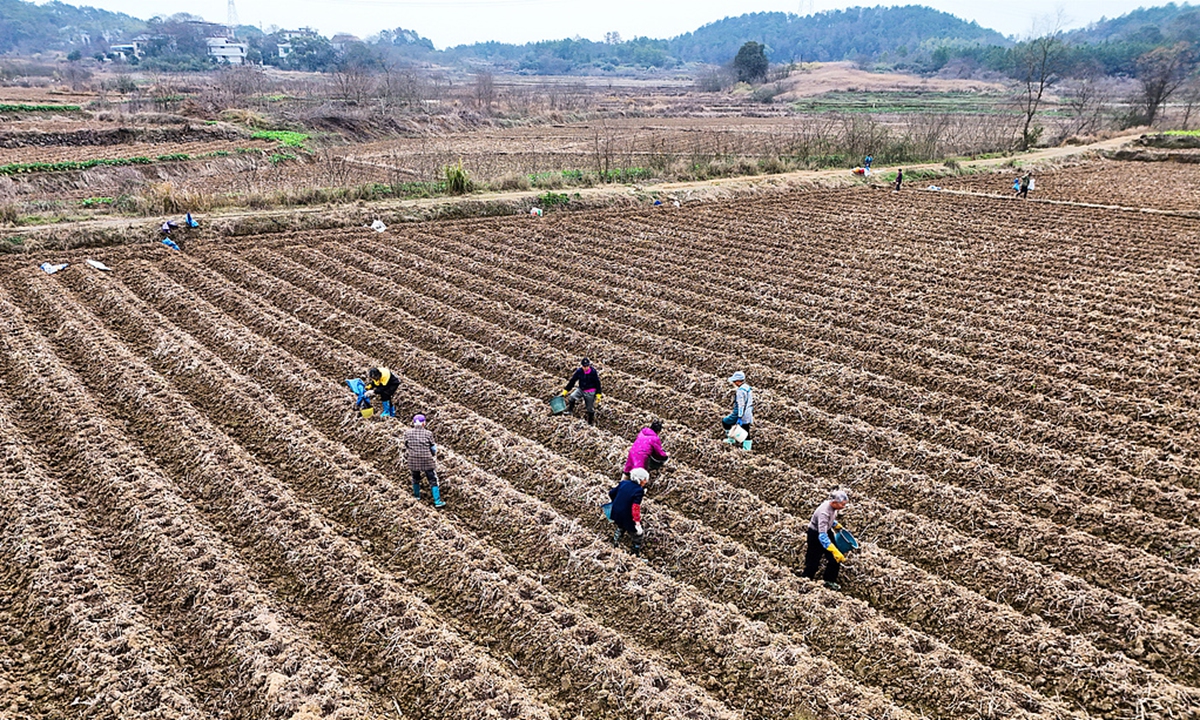
China’s 2026 Agricultural and Rural Modernization Plan: Advancing Sustainable Development Goals
Introduction
On February 2, 2026, China unveiled its “No.1 central document” for the year, outlining comprehensive strategies to advance agricultural and rural modernization and promote all-around rural revitalization. This policy document, issued at the start of the 15th Five-Year Plan period (2026-2030), emphasizes the role of agriculture and rural areas as key drivers of economic growth and high-quality development, aligning closely with several Sustainable Development Goals (SDGs).
Policy Overview and SDG Alignment
This marks the 14th consecutive year the No.1 central document has focused on agriculture and rural affairs since 2012. The 2026 document is structured into six main sections:
- Enhancing agricultural production capacity and efficiency
- Implementing normalized and targeted assistance
- Promoting steady income growth for farmers
- Advancing livable and business-friendly rural development
- Enhancing institutional innovation
- Strengthening the Party’s leadership over agriculture, rural areas, and farmers
These efforts directly contribute to achieving SDG 1 (No Poverty), SDG 2 (Zero Hunger), SDG 8 (Decent Work and Economic Growth), SDG 9 (Industry, Innovation, and Infrastructure), and SDG 11 (Sustainable Cities and Communities).
Key Priorities and Sustainable Development Goals
Boosting Food Security through Technology (SDG 2: Zero Hunger; SDG 9: Industry, Innovation, and Infrastructure)
- The document prioritizes national food security by setting a grain output target of approximately 700 million tons, ensuring self-sufficiency and sustainable agricultural production.
- New measures include stabilizing grain and edible oil production, enhancing a 50-million-ton grain capacity program, and promoting integrated use of farmland, seeds, machinery, and farming techniques.
- Technological innovation is emphasized, including bio-breeding, artificial intelligence, digital technologies, drones, the Internet of Things, and robotics to increase crop yields efficiently.
- China’s agricultural science and technology progress contribution rate exceeds 64%, with over 95% of planted areas using independently bred crop varieties.
Implementing Normalized and Targeted Assistance (SDG 1: No Poverty; SDG 10: Reduced Inequalities)
- The document introduces systematic arrangements for normalized and targeted assistance to prevent poverty relapse and support vulnerable rural populations.
- Measures include improving policy systems, enhancing monitoring precision, strengthening industrial and employment support, and providing differentiated assistance to underdeveloped regions.
- Assistance is integrated into the broader rural revitalization strategy, maintaining fiscal stability and resource allocation.
Promoting Steady Income Growth for Farmers (SDG 8: Decent Work and Economic Growth; SDG 10: Reduced Inequalities)
- Coordinated policies on prices, subsidies, and insurance aim to stabilize and increase farmers’ incomes.
- Support for county-level industries and employment stabilization for migrant workers is emphasized to foster sustainable rural economies.
Advancing Livable and Business-Friendly Rural Development (SDG 11: Sustainable Cities and Communities; SDG 12: Responsible Consumption and Production)
- Efforts focus on creating rural environments that are both livable and conducive to business development, supporting sustainable community growth.
Enhancing Institutional Innovation and Leadership (SDG 16: Peace, Justice, and Strong Institutions)
- Strengthening institutional frameworks and Party leadership ensures effective governance and policy implementation in agriculture and rural sectors.
Strategic Importance and Economic Implications
The 15th Five-Year Plan period is identified as a critical stage for laying the foundation for socialist modernization. The document calls for addressing weak links in agriculture and rural areas to build China’s agricultural strength, supporting SDG 9 (Industry, Innovation, and Infrastructure) and SDG 17 (Partnerships for the Goals).
Experts highlight that boosting rural incomes and development capacity is essential for expanding domestic demand and supporting a unified national market, contributing to SDG 8 (Decent Work and Economic Growth) and SDG 10 (Reduced Inequalities).
Conclusion
China’s 2026 No.1 central document sets ambitious benchmarks for agricultural and rural modernization through systemic reforms and technological innovation. By aligning with multiple Sustainable Development Goals, the plan aims to ensure food security, reduce poverty, promote sustainable rural development, and foster inclusive economic growth during the 15th Five-Year Plan period.
1. Sustainable Development Goals (SDGs) Addressed or Connected
- SDG 2: Zero Hunger – The article emphasizes food security, boosting grain output, and improving agricultural productivity.
- SDG 1: No Poverty – The focus on normalized and targeted assistance to prevent falling back into poverty and consolidate poverty alleviation achievements.
- SDG 8: Decent Work and Economic Growth – Promoting steady income growth for farmers, fostering county-level industries, and stabilizing employment for migrant workers.
- SDG 9: Industry, Innovation and Infrastructure – Use of technology such as AI, drones, Internet of Things, and robotics to modernize agriculture.
- SDG 11: Sustainable Cities and Communities – Advancing livable and business-friendly rural development contributing to balanced urban-rural development.
- SDG 12: Responsible Consumption and Production – Promoting integrated use of farmland, seeds, machinery, and farming techniques to raise yields efficiently.
- SDG 17: Partnerships for the Goals – Strengthening institutional innovation and policy coordination for rural revitalization and agricultural modernization.
2. Specific Targets Under Those SDGs
- SDG 2 Targets:
- Target 2.1: End hunger and ensure access to safe, nutritious, and sufficient food all year round (food security and grain output target of 700 million tons).
- Target 2.3: Double agricultural productivity and incomes of small-scale food producers (boosting per-unit yields and farmers’ income growth).
- Target 2.a: Increase investment in rural infrastructure, agricultural research, and technology (promotion of bio-breeding, AI, drones, IoT, robotics).
- SDG 1 Targets:
- Target 1.2: Reduce at least by half the proportion of people living in poverty (normalized and targeted assistance to prevent poverty relapse).
- Target 1.4: Ensure equal rights to economic resources and access to basic services (policy stability in fiscal input and financial support).
- SDG 8 Targets:
- Target 8.3: Promote development-oriented policies that support productive activities and decent job creation (fostering county-level industries and employment stabilization).
- Target 8.5: Achieve full and productive employment and decent work for all (employment for migrant workers).
- SDG 9 Targets:
- Target 9.5: Enhance scientific research and upgrade technological capabilities (use of advanced agricultural technologies).
- SDG 11 Targets:
- Target 11.a: Support positive economic, social and environmental links between urban, peri-urban and rural areas (livable and business-friendly rural development).
- SDG 12 Targets:
- Target 12.2: Achieve sustainable management and efficient use of natural resources (integrated use of farmland and farming techniques).
- SDG 17 Targets:
- Target 17.17: Encourage and promote effective public, public-private and civil society partnerships (institutional innovation and policy coordination).
3. Indicators Mentioned or Implied to Measure Progress
- Food Production Indicator: Grain output target of around 1.4 trillion jin (700 million tons) as a benchmark for food security.
- Agricultural Productivity Indicator: Contribution rate of agricultural science and technology progress exceeding 64%, and independently bred crop varieties covering more than 95% of planted areas.
- Income Growth Indicator: Steady income growth for farmers through coordinated policies on prices, subsidies, and insurance.
- Poverty Alleviation Indicator: Monitoring precision and timeliness of normalized and targeted assistance to prevent relapse into poverty.
- Technology Adoption Indicator: Expansion of applications of drones, Internet of Things, robotics, and promotion of breakthrough crop varieties.
- Employment Indicator: Stabilizing employment for migrant workers and fostering county-level industries.
- Policy Implementation Indicator: Fiscal input, financial support, and resource allocation stability for rural revitalization.
4. Table: SDGs, Targets and Indicators
| SDGs | Targets | Indicators |
|---|---|---|
| SDG 2: Zero Hunger |
|
|
| SDG 1: No Poverty |
|
|
| SDG 8: Decent Work and Economic Growth |
|
|
| SDG 9: Industry, Innovation and Infrastructure |
|
|
| SDG 11: Sustainable Cities and Communities |
|
|
| SDG 12: Responsible Consumption and Production |
|
|
| SDG 17: Partnerships for the Goals |
|
|
Source: globaltimes.cn
What is Your Reaction?
 Like
1
Like
1
 Dislike
0
Dislike
0
 Love
0
Love
0
 Funny
0
Funny
0
 Angry
0
Angry
0
 Sad
0
Sad
0
 Wow
1
Wow
1