
















Belém COP30 delivers climate finance boost and a pledge to plan fossil fuel transition – UN News
Report on COP30 Outcomes and Alignment with Sustainable Development Goals
I. Overview of Key Decisions
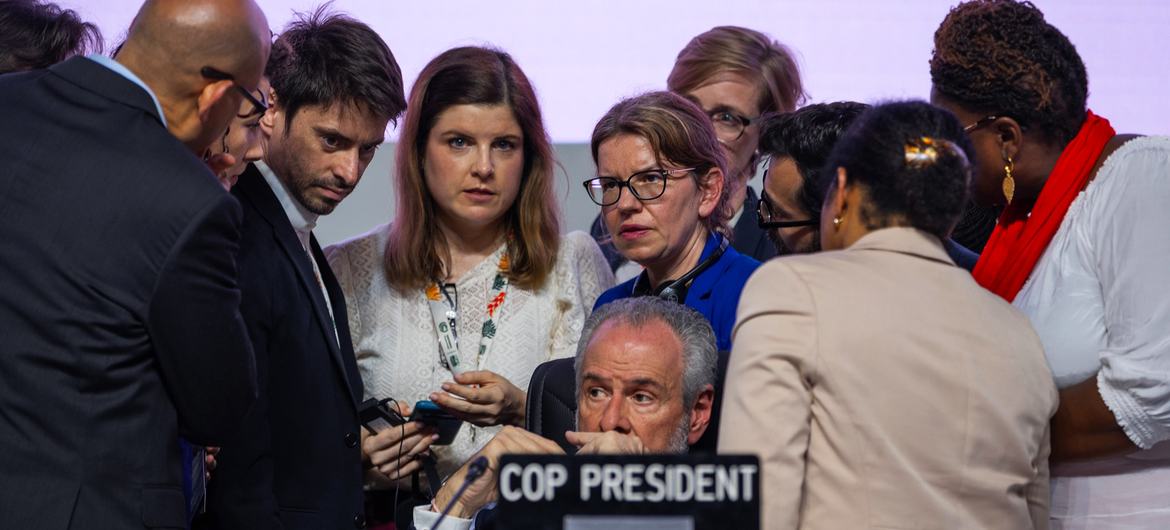
The final decision text from the COP30 climate conference emphasizes solidarity and investment, establishing ambitious financial targets to advance global climate goals. However, it defers explicit language on the energy transition, particularly the phasing out of fossil fuels. This omission is a significant point of concern, as the combustion of fossil fuels is the primary driver of global warming, directly impacting the achievement of SDG 13 (Climate Action). While a draft text included a fossil fuel phase-out, the adopted outcome references the COP28 ‘UAE Consensus’, which calls for “transitioning away from fossil fuels.”
Scientific warnings presented at the conference underscored the urgency of this transition, highlighting that failure to achieve zero fossil fuel use by 2040-2045 could lead to catastrophic temperature increases, threatening progress on SDG 14 (Life Below Water) through coral reef loss and SDG 15 (Life on Land) via the collapse of the Amazon rainforest.
II. Financial Commitments and Climate Action (SDG 13 & SDG 17)
The adopted text outlines a robust financial framework aimed at accelerating the implementation of the Paris Agreement and supporting the Sustainable Development Goals. Key financial commitments include:
- Mobilization of at least $1.3 trillion per year by 2035 for climate action, directly supporting the targets of SDG 13.
- A commitment to triple adaptation finance, enhancing resilience for vulnerable nations in line with SDG 13.
- The operationalization of the loss and damage fund agreed at COP28, a critical mechanism for global partnership and solidarity as envisioned in SDG 17 (Partnerships for the Goals).
III. New Initiatives and Strategic Roadmaps
COP30 launched several key initiatives and roadmaps designed to translate commitments into tangible outcomes, fostering international cooperation in line with SDG 17.
- Global Implementation Accelerator: An initiative to assist countries in delivering their Nationally Determined Contributions (NDCs) and adaptation plans, closing the gap between ambition and action for SDG 13.
- The Belém Mission to 1.5°C: A collaborative mission to help countries align their national climate action plans with the 1.5°C temperature goal.
- Roadmap to Halt and Reverse Deforestation: A dedicated plan to protect vital ecosystems, directly contributing to SDG 15 (Life on Land).
- Roadmap for a Just Energy Transition: A forthcoming plan to guide the transition away from fossil fuels in a just, orderly, and equitable manner, mobilizing resources to support SDG 7 (Affordable and Clean Energy) and SDG 10 (Reduced Inequalities).
IV. Thematic Action Areas and SDG Integration
The conference advanced a broad action agenda, with voluntary commitments directly supporting a range of Sustainable Development Goals.
A. Information Integrity and Institutional Strength (SDG 16)
- For the first time, a COP decision acknowledged the need to combat climate disinformation. This commitment to promote information integrity and counter false narratives is a significant step toward safeguarding public trust and ensuring science-based policy, contributing to SDG 16 (Peace, Justice and Strong Institutions).
B. Protecting Ecosystems and Communities (SDG 15 & SDG 10)
- Tropical Forests Forever Fund: This fund raised $5.5 billion to support SDG 15 (Life on Land). Crucially, it advances SDG 10 (Reduced Inequalities) by mandating that at least 20% of its resources are directed to Indigenous Peoples and local communities.
C. Climate, Health, and Well-being (SDG 3)
- Belém Health Action Plan: The first global initiative targeting climate-related health threats was launched with $300 million. This plan is a direct contribution to achieving SDG 3 (Good Health and Well-being) in the face of a changing climate.
D. Sustainable Energy and Infrastructure (SDG 7 & SDG 11)
- UNEZA Alliance: Public utility companies pledged $66 billion annually for renewable energy and $82 billion for transmission and storage, a substantial private sector commitment to SDG 7 (Affordable and Clean Energy).
- Cities and Regions: A coalition representing 25,000 buildings reported cutting over 850,000 tons of CO₂, demonstrating progress toward SDG 11 (Sustainable Cities and Communities).
V. Conclusion: Upholding Multilateralism for Sustainable Development
Despite geopolitical challenges, COP30 reaffirmed the central role of multilateral climate cooperation (SDG 17) in addressing the global climate crisis (SDG 13). The final Mutirão text declares the global shift toward low-emissions, climate-resilient development as “irreversible.” It recognizes the economic and social co-benefits of climate action, including job creation (SDG 8) and improved public health (SDG 3). While the conference did not deliver the desired explicit commitment on a fossil fuel phase-out, it established critical financial mechanisms and strategic initiatives that strengthen the framework for achieving the Paris Agreement and the Sustainable Development Goals.
Analysis of SDGs, Targets, and Indicators in the Article
-
Which SDGs are addressed or connected to the issues highlighted in the article?
The article discusses various outcomes and commitments from the COP30 climate conference, which directly and indirectly connect to several Sustainable Development Goals (SDGs). The primary focus is on climate action, but it also touches upon energy, health, ecosystems, finance, and partnerships.
- SDG 3: Good Health and Well-being: The article mentions the launch of the “Belém Health Action Plan,” the first global initiative specifically targeting climate-related health threats.
- SDG 7: Affordable and Clean Energy: The core debate around “transitioning away from fossil fuels” and the mention of investments in renewable energy outpacing fossil fuels directly relate to this goal. The UNEZA Alliance’s pledge for renewable energy funding further reinforces this connection.
- SDG 8: Decent Work and Economic Growth: The text refers to developing a “just transition mechanism” and recognizes the “economic and social benefits of climate action, from growth and job creation.”
- SDG 11: Sustainable Cities and Communities: The article highlights a commitment from a coalition of cities, regions, and companies that reported significant cuts in CO₂ emissions from buildings.
- SDG 13: Climate Action: This is the central theme of the article. The entire discussion about COP30, limiting temperature rise to 1.5°C, reducing emissions, adaptation finance, and national climate action plans (NDCs) falls under this goal.
- SDG 15: Life on Land: The article mentions plans to create a roadmap to “halt and reverse deforestation” and the establishment of the “Tropical Forests Forever Fund,” which directly addresses the protection of terrestrial ecosystems like the Amazon rainforest.
- SDG 16: Peace, Justice and Strong Institutions: The decision to tackle “climate disinformation” and the pledge to “promote information integrity” connect to the goal of ensuring public access to information and building effective, accountable institutions.
- SDG 17: Partnerships for the Goals: The article is replete with examples of global partnerships, including the mobilization of finance ($1.3 trillion per year), the operationalization of the loss and damage fund, the Global Implementation Accelerator, and various multi-stakeholder alliances and funds.
-
What specific targets under those SDGs can be identified based on the article’s content?
Based on the issues discussed, several specific SDG targets can be identified:
- Target 3.d: Strengthen the capacity of all countries, in particular developing countries, for early warning, risk reduction and management of national and global health risks. This is addressed by the “Belém Health Action Plan” targeting climate-related health threats.
- Target 7.2: By 2030, increase substantially the share of renewable energy in the global energy mix. The call to transition from fossil fuels and the fact that renewable energy investments are outpacing fossil fuels directly support this target.
- Target 8.4: Improve progressively, through 2030, global resource efficiency in consumption and production and endeavour to decouple economic growth from environmental degradation. The development of a “just transition mechanism” and the focus on the economic benefits of climate action align with this.
- Target 11.6: By 2030, reduce the adverse per capita environmental impact of cities. The action by a coalition of cities to cut over 850,000 tons of CO₂ from buildings is a direct contribution to this target.
- Target 13.2: Integrate climate change measures into national policies, strategies and planning. The launch of initiatives to help countries deliver on their nationally determined contributions (NDCs) is a clear example.
- Target 13.a: Implement the commitment undertaken by developed-country parties to the UNFCCC to a goal of mobilizing jointly $100 billion annually by 2020… and to operationalize the Green Climate Fund. The new, more ambitious financial target of mobilizing “$1.3 trillion per year by 2035” builds directly on this principle.
- Target 15.2: By 2020, promote the implementation of sustainable management of all types of forests, halt deforestation, restore degraded forests and substantially increase afforestation and reforestation globally. The plan for a roadmap to “halt and reverse deforestation” and the “Tropical Forests Forever Fund” are directly aimed at this target.
- Target 16.10: Ensure public access to information and protect fundamental freedoms, in accordance with national legislation and international agreements. The commitment to “promote information integrity and counter false narratives” on climate change supports this target by ensuring the public has access to science-based information.
- Target 17.3: Mobilize additional financial resources for developing countries from multiple sources. The mobilization of $1.3 trillion per year, the $5.5 billion raised by the Tropical Forests Forever Fund, and the $300 million for the health plan are all examples.
-
Are there any indicators mentioned or implied in the article that can be used to measure progress towards the identified targets?
Yes, the article contains several specific quantitative and qualitative indicators that can be used to measure progress:
- Financial Mobilization: The target to mobilize “at least $1.3 trillion per year by 2035 for climate action” is a key financial indicator. Others include the “$5.5 billion” raised for the Tropical Forests Forever Fund and the “$300 million” from philanthropic organizations for the Belém Health Action Plan.
- Renewable Energy Investment: The pledge by the UNEZA Alliance of “$66 billion annually for renewable energy and $82 billion for transmission and storage” serves as a concrete indicator for investment in clean energy infrastructure. The ratio of “investments in renewable energy now outpace fossil fuels two to one” is another important market indicator.
- Emissions Reduction: The reported cut of “over 850,000 tons of CO₂ in 2024” by a coalition of cities and companies is a direct indicator of mitigation efforts. The overarching goal of keeping the global temperature rise to 1.5°C is the ultimate indicator of success for climate action.
- Forest Conservation Funding: The article specifies that “at least 20 per cent of resources” from the Tropical Forests Forever Fund will go “directly to Indigenous Peoples and local communities,” providing a specific indicator for equitable benefit-sharing in conservation efforts.
- Policy and Implementation: The creation of two new roadmaps (one for halting deforestation and another for transitioning from fossil fuels) and the launch of the “Global Implementation Accelerator” are qualitative indicators of progress in policy development and execution.
-
Create a table with three columns titled ‘SDGs, Targets and Indicators” to present the findings from analyzing the article.
SDGs Targets Indicators SDG 3: Good Health and Well-being 3.d: Strengthen capacity for early warning, risk reduction and management of global health risks. Launch of the Belém Health Action Plan with $300 million in funding to target climate-related health threats. SDG 7: Affordable and Clean Energy 7.2: Increase substantially the share of renewable energy in the global energy mix. Commitment to transition away from fossil fuels; UNEZA Alliance pledge of $66 billion annually for renewable energy; Investment in renewables outpacing fossil fuels two to one. SDG 8: Decent Work and Economic Growth 8.4: Decouple economic growth from environmental degradation. Development of a just transition mechanism; Recognition of job creation benefits from climate action. SDG 11: Sustainable Cities and Communities 11.6: Reduce the adverse per capita environmental impact of cities. A coalition of cities, regions, and companies reported cutting over 850,000 tons of CO₂ in 2024. SDG 13: Climate Action 13.2: Integrate climate change measures into national policies, strategies and planning. Launch of the Global Implementation Accelerator to help countries deliver on NDCs; Goal to hold temperature rise to 1.5°C. SDG 15: Life on Land 15.2: Promote sustainable management of all types of forests, halt deforestation, and restore degraded forests. Creation of a roadmap to halt and reverse deforestation; Tropical Forests Forever Fund raised $5.5 billion; 20% of fund resources go to Indigenous Peoples. SDG 16: Peace, Justice and Strong Institutions 16.10: Ensure public access to information and protect fundamental freedoms. Commitment to promote information integrity and counter false narratives that undermine science-based action. SDG 17: Partnerships for the Goals 17.3: Mobilize additional financial resources for developing countries from multiple sources. Mobilizing at least $1.3 trillion per year by 2035 for climate action; Tripling adaptation finance; Operationalizing the loss and damage fund.
Source: news.un.org
What is Your Reaction?
 Like
0
Like
0
 Dislike
0
Dislike
0
 Love
0
Love
0
 Funny
0
Funny
0
 Angry
0
Angry
0
 Sad
0
Sad
0
 Wow
0
Wow
0