




































Hainan Free Trade Port makes significant progress in carbon capture, utilization and storage – news.cgtn.com
Hainan Free Trade Port Advances Carbon Capture and Liquefaction Technology
Introduction
China’s Hainan Free Trade Port (FTP) has made a significant technological breakthrough in its commitment to green and low-carbon development, aligning closely with the United Nations Sustainable Development Goals (SDGs), particularly SDG 7 (Affordable and Clean Energy), SDG 9 (Industry, Innovation, and Infrastructure), and SDG 13 (Climate Action).
Carbon Capture and Liquefaction Facility in Chengmai
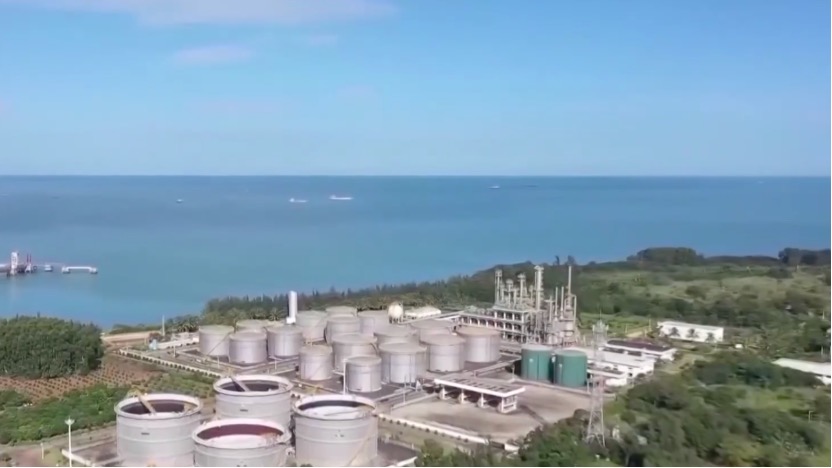
The carbon capture and liquefaction facility operated by China National Petroleum Corporation (CNPC) in Chengmai County, southern Hainan Province, has commenced operations and is functioning smoothly. This development marks a crucial milestone in the industrialization of Carbon Capture, Utilization, and Storage (CCUS) technology within the region.
Technological Achievements and Environmental Impact
-
Carbon Capture and Liquefaction Process
- The facility captures, purifies, and liquefies carbon dioxide from associated gas in oilfields.
- It currently produces over 100 tonnes of liquid carbon dioxide daily.
-
Advancements in Carbon Storage
- CNPC is exploring advanced carbon storage technologies to enhance CCUS industrialization.
- Continuous optimization of the capture process and comprehensive monitoring systems ensure long-term stable carbon dioxide storage.
-
Environmental and Economic Benefits
- 360,000 tonnes of carbon dioxide have been stored through pilot experiments.
- Oil and gas production increased by 150,000 tonnes concurrently.
- This carbon storage is equivalent to offsetting the annual carbon emissions of 150,000 cars.
Contribution to Sustainable Development Goals
- SDG 7 – Affordable and Clean Energy: The project supports the development of a safe, low-carbon energy system in Hainan FTP.
- SDG 9 – Industry, Innovation, and Infrastructure: The industrialization of CCUS technology demonstrates innovation and infrastructure advancement.
- SDG 13 – Climate Action: By capturing and storing significant amounts of carbon dioxide, the facility contributes directly to climate change mitigation efforts.
- SDG 15 – Life on Land: The initiative supports the construction of a world-class ecological civilization pilot zone, promoting sustainable land use and ecosystem preservation.
Conclusion
The successful operation of the carbon capture and liquefaction facility in Hainan FTP represents a vital step towards sustainable industrial development and ecological civilization. It provides robust scientific and industrial support for the region’s green transformation, exemplifying practical implementation of the Sustainable Development Goals.
1. Sustainable Development Goals (SDGs) Addressed
- SDG 7: Affordable and Clean Energy
- The article discusses the development of a low-carbon energy system through carbon capture and storage technologies, contributing to clean energy solutions.
- SDG 9: Industry, Innovation and Infrastructure
- The technological breakthrough in carbon capture, utilization, and storage (CCUS) represents innovation in industrial processes and infrastructure.
- SDG 13: Climate Action
- The carbon capture and liquefaction facility directly addresses climate change mitigation by reducing carbon dioxide emissions.
- SDG 15: Life on Land
- By contributing to ecological civilization and reducing carbon emissions, the project supports ecosystem preservation and sustainable land use.
2. Specific Targets Under the Identified SDGs
- SDG 7 – Target 7.2: Increase substantially the share of renewable energy in the global energy mix.
- The article’s focus on low-carbon energy systems aligns with increasing clean energy sources.
- SDG 9 – Target 9.5: Enhance scientific research, upgrade the technological capabilities of industrial sectors.
- The breakthrough in CCUS technology and industrialization reflects progress towards this target.
- SDG 13 – Target 13.2: Integrate climate change measures into national policies, strategies, and planning.
- The facility’s operation and carbon storage contribute to climate action strategies.
- SDG 15 – Target 15.3: Combat desertification, restore degraded land and soil.
- While not explicitly mentioned, the ecological civilization pilot zone implies sustainable land management.
3. Indicators Mentioned or Implied in the Article
- Indicator for SDG 7.2: Proportion of energy from renewable sources.
- Implied through the development of a low-carbon energy system.
- Indicator for SDG 9.5: Research and development expenditure as a proportion of GDP; number of patents related to clean technologies.
- Implied by the technological breakthrough and industrialization of CCUS.
- Indicator for SDG 13.2: Greenhouse gas emissions per capita; carbon dioxide stored or reduced.
- The article explicitly mentions storing 360,000 tonnes of carbon dioxide and offsetting emissions equivalent to 150,000 cars annually.
- Indicator for SDG 15.3: Proportion of land that is degraded over total land area.
- Implied by the goal of establishing an ecological civilization pilot zone.
4. Table of SDGs, Targets, and Indicators
| SDGs | Targets | Indicators |
|---|---|---|
| SDG 7: Affordable and Clean Energy | 7.2 Increase substantially the share of renewable energy in the global energy mix | Proportion of energy from renewable sources (implied) |
| SDG 9: Industry, Innovation and Infrastructure | 9.5 Enhance scientific research and upgrade technological capabilities of industrial sectors | R&D expenditure as % of GDP; number of clean technology patents (implied) |
| SDG 13: Climate Action | 13.2 Integrate climate change measures into policies and planning | Tonnes of CO₂ stored; greenhouse gas emissions per capita (explicit) |
| SDG 15: Life on Land | 15.3 Combat desertification and restore degraded land | Proportion of degraded land area (implied) |
Source: news.cgtn.com
What is Your Reaction?
 Like
0
Like
0
 Dislike
0
Dislike
0
 Love
0
Love
0
 Funny
0
Funny
0
 Angry
0
Angry
0
 Sad
0
Sad
0
 Wow
0
Wow
0