































Biology bird cam delivers entertainment, learning opportunities – University of Wisconsin-Whitewater
University of Wisconsin-Whitewater Nature Cam Initiative: A Report on Educational and Environmental Contributions
Project Overview and Alignment with Sustainable Development Goals
In May 2025, the University of Wisconsin-Whitewater (UW-Whitewater) Department of Biology launched a “nature cam” livestream initiative. Spearheaded by Professor Susan Devries and situated in the Kettle Moraine State Forest, the project establishes a vital link between technology, education, and environmental stewardship. The initiative’s core objectives are directly aligned with several United Nations Sustainable Development Goals (SDGs), focusing on providing quality education, protecting terrestrial ecosystems, and fostering community engagement.
- Objective 1: To provide accessible, innovative educational tools that support lifelong learning opportunities, directly contributing to SDG 4 (Quality Education).
- Objective 2: To monitor and document local avian biodiversity, promoting awareness and conservation efforts in line with SDG 15 (Life on Land).
- Objective 3: To make nature and local wildlife more accessible to the public, including K-12 schools, fostering a connection to natural heritage as supported by SDG 11 (Sustainable Cities and Communities).
Contributions to SDG 4: Quality Education
The nature cam serves as a significant educational asset, advancing the goal of inclusive and equitable quality education. Its application spans multiple learning levels, from local K-12 classrooms to university-level research.
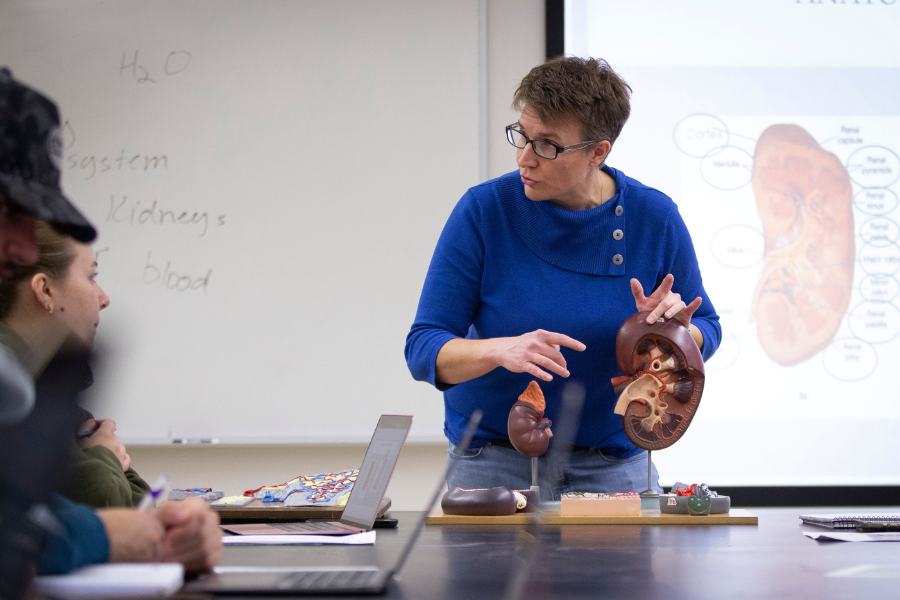
- Curriculum Integration: The livestream is actively used in local K-12 schools to foster an early appreciation for nature and is employed by UW-Whitewater professors as a practical teaching tool.
- Hands-On Learning: The platform enables students to engage in experiential learning remotely. Key skills developed include:
- Bird identification and classification.
- Methods for quantifying animal behavior.
- Future Research Opportunities: The department plans to integrate the livestream into its thriving Undergraduate Research Program. This will provide students with invaluable hands-on experience in ecological research, preparing them for successful careers and contributing to a skilled workforce.
Advancements for SDG 15: Life on Land
The project is a practical implementation of efforts to protect, restore, and promote the sustainable use of terrestrial ecosystems. By focusing on local bird populations, the initiative provides crucial data and raises public awareness about biodiversity.
- Biodiversity Monitoring: To date, the livestream has successfully recorded and documented more than 40 distinct bird species, creating a valuable record of local fauna.
- Ecological Survey Tool: Professor Devries has identified the livestream’s potential as a non-invasive survey tool for scientific research. Future student-led projects could use the footage to:
- Track seasonal species distribution.
- Monitor year-over-year population fluctuations.
- Study behavioral patterns in a natural habitat.
- Public Awareness: By showcasing the region’s rich avian life, the cam fosters a greater public appreciation for the importance of protecting local habitats and biodiversity.
Implementation and Future Directions
The project was established following best-practice guidelines from the Cornell Lab of Ornithology, demonstrating a commitment to scientific rigor and partnership (SDG 17: Partnerships for the Goals). While currently managed by faculty, a key future goal is to involve students directly in the project’s operational and content creation aspects.
Project Status
- Viewership: The channel has attracted over 100 subscribers and accumulated more than 4,000 hours of watch time.
- Management: The biology department faculty, including Professor Devries, currently manage the livestream and provide all necessary resources, such as bird seed.
- Student Integration Plan: A structured plan is in place to train students in the management of the livestream, ensuring they are well-equipped before taking on responsibilities. This will transition the project into a student-involved research and educational platform.
- Financial Sustainability: The project’s continuation and its capacity to support the university’s educational mission are supported by faculty contributions and public donations.
Analysis of Sustainable Development Goals in the Article
1. Which SDGs are addressed or connected to the issues highlighted in the article?
-
SDG 4: Quality Education
- The article extensively discusses the educational purpose of the nature cam. It is used as a teaching tool at the University of Wisconsin-Whitewater for “valuable hands-on learning opportunities for students.” It helps university students learn to “identify birds and how to quantify animal behavior.” Furthermore, its use extends to “local K-12 schools… to foster a love of nature in their students,” and it serves the general public by making nature more accessible and educational.
-
SDG 15: Life on Land
- The project is centered on observing and documenting local wildlife, specifically birds, in the Kettle Moraine State Forest. The article states the livestream has “recorded more than 40 distinct bird species to date.” It also highlights the potential for the cam to be used as a “survey tool, clueing researchers in to what species inhabit the area during each season” and to “monitor species populations from year to year.” This directly relates to monitoring and protecting biodiversity and terrestrial ecosystems.
-
SDG 17: Partnerships for the Goals
- The initiative demonstrates collaboration and knowledge sharing. The university’s biology department followed “guidelines provided by the acclaimed Cornell Lab of Ornithology at Cornell University.” The project also fosters a partnership between the university and the community, including local K-12 schools that use the livestream and the public viewers who “are more than welcome to identify a visitor new to the feeder.”
2. What specific targets under those SDGs can be identified based on the article’s content?
-
SDG 4: Quality Education
- Target 4.4: By 2030, substantially increase the number of youth and adults who have relevant skills, including technical and vocational skills, for employment, decent jobs and entrepreneurship. The article mentions the university’s goal is to help students acquire skills to “be successful in the workforce” and gain “hands-on research experience” through programs like this.
- Target 4.7: By 2030, ensure that all learners acquire the knowledge and skills needed to promote sustainable development, including, among others, through education for sustainable development. The nature cam is used in K-12 schools “to foster a love of nature” and helps the public “learn a little more about the local bird populations,” which promotes an appreciation for biodiversity and sustainable lifestyles.
-
SDG 15: Life on Land
- Target 15.5: Take urgent and significant action to reduce the degradation of natural habitats, halt the loss of biodiversity and, by 2020, protect and prevent the extinction of threatened species. The project contributes directly to the foundational work of this target by monitoring biodiversity. The article states the cam can be used as a “survey tool” and to “monitor species populations from year to year,” which is essential for understanding and halting biodiversity loss.
-
SDG 17: Partnerships for the Goals
- Target 17.17: Encourage and promote effective public, public-private and civil society partnerships, building on the experience and resourcing strategies of partnerships. The project exemplifies a partnership between an academic institution (UW-Whitewater), other expert institutions (Cornell Lab of Ornithology), local educational bodies (K-12 schools), and civil society (the public viewers and donors).
3. Are there any indicators mentioned or implied in the article that can be used to measure progress towards the identified targets?
-
For SDG 4 Targets:
- Indicator for Target 4.4: The article implies a future indicator: the number of undergraduate students using the livestream for research projects. It states, “Eventually, students will be able to use the livestream in their undergraduate research projects.”
- Indicators for Target 4.7: The article mentions several direct and proxy indicators:
- The number of local K-12 schools using the livestream.
- The number of YouTube channel subscribers (“over 100 subscribers”).
- The total hours of watch time (“more than 4,000 hours of watchtime”) as a measure of public engagement and informal education.
-
For SDG 15 Targets:
- Indicators for Target 15.5: The article provides direct indicators for monitoring biodiversity:
- The number of distinct species recorded (“more than 40 distinct bird species to date”).
- The data collected on species populations over time, as the article suggests the cam could be used to “monitor species populations from year to year.”
- Indicators for Target 15.5: The article provides direct indicators for monitoring biodiversity:
4. Table of SDGs, Targets, and Indicators
| SDGs | Targets | Indicators |
|---|---|---|
| SDG 4: Quality Education | Target 4.4: Increase the number of youth and adults with relevant skills for employment. | Number of students involved in undergraduate research projects using the livestream. |
| SDG 4: Quality Education | Target 4.7: Ensure all learners acquire knowledge for sustainable development. | Number of K-12 schools using the livestream; Channel subscribers (100+); Watch time (4,000+ hours). |
| SDG 15: Life on Land | Target 15.5: Halt the loss of biodiversity. | Number of distinct bird species identified (40+); Data on species populations monitored year-to-year. |
| SDG 17: Partnerships for the Goals | Target 17.17: Encourage and promote effective partnerships. | Collaboration between UW-Whitewater, Cornell Lab of Ornithology, local K-12 schools, and the public. |
Source: uww.edu
What is Your Reaction?
 Like
0
Like
0
 Dislike
0
Dislike
0
 Love
0
Love
0
 Funny
0
Funny
0
 Angry
0
Angry
0
 Sad
0
Sad
0
 Wow
0
Wow
0