Blue Origin Seeks Permit To Discharge Wastewater Into Indian River – TalkOfTitusville.com

Report on Blue Origin’s Industrial Wastewater Discharge Permit Application
Executive Summary
This report details the application submitted by Blue Origin to the Florida Department of Environmental Protection (DEP) on November 18, 2025, for a permit to discharge industrial wastewater. The proposed discharge of up to 0.49 million gallons per day (MGD) into the environmentally sensitive Indian River Lagoon raises significant considerations related to several United Nations Sustainable Development Goals (SDGs), particularly SDG 6 (Clean Water and Sanitation), SDG 9 (Industry, Innovation, and Infrastructure), SDG 12 (Responsible Consumption and Production), and SDG 14 (Life Below Water). The application outlines the nature of the wastewater, proposed treatment and monitoring protocols, and regulatory limitations designed to mitigate environmental impact.
Permit Application Details and Industrial Context (SDG 9)
The permit application reflects the intersection of industrial development and environmental stewardship, a core theme of SDG 9: Industry, Innovation, and Infrastructure. The development of advanced manufacturing facilities like Blue Origin’s complex is crucial for economic growth and technological innovation. However, Target 9.4 calls for upgrading infrastructure and retrofitting industries to make them sustainable. This permit process is a critical regulatory mechanism for ensuring that such industrial advancement does not compromise environmental integrity.
Key Application Information
- Applicant: Blue Origin
- Regulatory Body: Florida Department of Environmental Protection (DEP)
- Permit File: FL0A00007-002-IW7A
- Location: Blue Origin OLS Manufacturing Complex, Merritt Island, Florida
- Proposed Total Daily Discharge: Up to 0.49 MGD
- Discharge Path: Wastewater will be directed to a 402,981 sq ft onsite stormwater pond before flowing into the Ransom Road Ditch, which leads to the Indian River.
Wastewater Management and Responsible Production (SDG 6 & SDG 12)
The proposed wastewater management plan is central to achieving SDG 6 (Clean Water and Sanitation), specifically Target 6.3, which aims to improve water quality by reducing pollution and increasing wastewater treatment. It also directly addresses SDG 12 (Responsible Consumption and Production) by focusing on the environmentally sound management of industrial waste (Target 12.4).
Sources of Wastewater
The wastewater originates from several operational processes within the manufacturing complex:
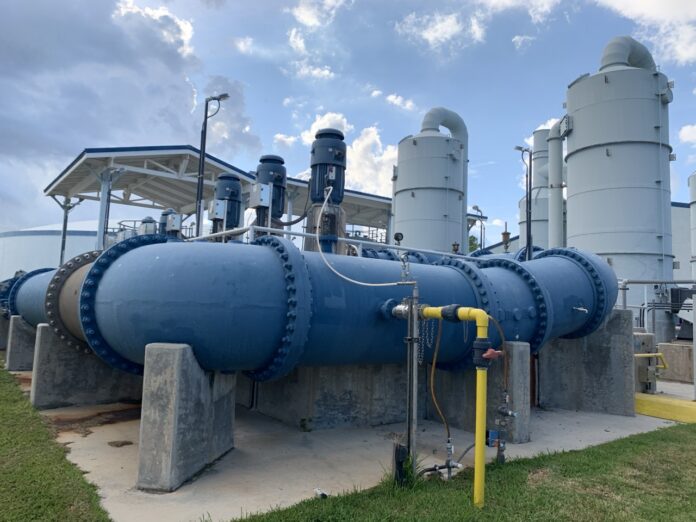
- Process Wastewater (up to 0.467 MGD): Generated from component testing and cleaning, including tank proofing and rinsing. This stream also includes intermittent high-flow discharges from preventative maintenance activities like carbon-filter rinsing and storage tank purges.
- Non-Process Wastewater (up to 0.015 MGD): Consists of cooling tower “blowdown” from the chiller plant, which contains concentrated minerals from evaporation.
Environmental Protection Measures and Life Below Water (SDG 14)
The permit’s conditions are critical for protecting the Indian River Lagoon, a vital coastal ecosystem. This aligns directly with SDG 14: Life Below Water, which seeks to prevent marine pollution (Target 14.1) and protect marine and coastal ecosystems (Target 14.2). The lagoon’s pre-existing environmental stress makes the enforcement of stringent discharge limits particularly important.
Regulatory Prohibitions
The draft permit explicitly prohibits the discharge of wastewater containing components that:
- Settle to form putrescent or nuisance deposits.
- Float as debris, scum, or oil in amounts that form a nuisance.
- Produce nuisance-level color, odor, taste, or turbidity.
- Are acutely toxic.
- Contain carcinogenic, mutagenic, or teratogenic substances harmful to humans or local wildlife.
- Pose a serious danger to public health, safety, or welfare.
Effluent Limitations and Monitoring
To ensure compliance and protect water quality, the permit establishes specific limits and monitoring frequencies for key parameters:
- Flow: Monitored daily, with a maximum limit of 0.49 MGD.
- pH: Monitored daily, to be maintained between 6.0 and 9.0 s.u.
- Oil and Grease: Monitored daily, with a daily maximum limit of 5.0 mg/L.
- Total Nitrogen: Monitored quarterly, with an annual average maximum of 3.0 mg/L.
- Total Phosphorus (as P): Monitored quarterly, with an annual average maximum of 1.0 mg/L.
Governance and Public Participation (SDG 17)
The regulatory process, including the provision for public input, exemplifies SDG 17: Partnerships for the Goals. Effective environmental governance requires collaboration between government agencies (DEP), the private sector (Blue Origin), and civil society. The public comment period provides a formal mechanism for stakeholder engagement to ensure transparency and accountability in decisions affecting shared natural resources.
Public Input Process
- The DEP has issued a Notice of Draft Permit and intends to approve it pending public feedback.
- The public has a 30-day period, ending December 18, 2025, to submit written comments or request a public meeting.
- All application materials are available for public review at the DEP’s Central District Office in Orlando.
Analysis of Sustainable Development Goals in the Article
1. Which SDGs are addressed or connected to the issues highlighted in the article?
-
SDG 6: Clean Water and Sanitation
- The core issue of the article is Blue Origin’s request to discharge industrial wastewater into the Indian River Lagoon. This directly relates to water quality, pollution, and the management of water resources.
-
SDG 14: Life Below Water
- The Indian River Lagoon is described as an “environmentally sensitive area.” Discharging wastewater, even if treated, can impact marine ecosystems. The permit’s limitations on pollutants like nitrogen and phosphorus are meant to protect aquatic life from nutrient pollution.
-
SDG 12: Responsible Consumption and Production
- The article details an industrial process that generates wastewater. The permit process and the proposed treatment facility represent an effort to manage industrial waste in an environmentally sound manner, which is a key aspect of this goal.
-
SDG 9: Industry, Innovation, and Infrastructure
- The article discusses the operation of an industrial wastewater treatment facility at a manufacturing complex. This relates to building resilient infrastructure and promoting sustainable industrialization by ensuring that industrial processes incorporate environmentally sound technologies and practices.
-
SDG 16: Peace, Justice, and Strong Institutions
- The role of the Florida Department of Environmental Protection (DEP) in issuing a draft permit, making documents public, and providing a period for public comment demonstrates the function of an effective and transparent institution responsible for environmental governance.
2. What specific targets under those SDGs can be identified based on the article’s content?
-
Target 6.3: By 2030, improve water quality by reducing pollution, eliminating dumping and minimizing release of hazardous chemicals and materials, halving the proportion of untreated wastewater and substantially increasing recycling and safe reuse globally.
- The article is centered on a permit to manage the release of industrial wastewater. The treatment process and the specific limitations on pollutants are direct actions aimed at improving water quality by reducing pollution from an industrial source.
-
Target 14.1: By 2025, prevent and significantly reduce marine pollution of all kinds, in particular from land-based activities, including marine debris and nutrient pollution.
- The discharge flows into the Indian River, a coastal water body. The permit specifically sets limits for Total Nitrogen (3.0 mg/L) and Total Phosphorus (1.0 mg/L), which are key components of nutrient pollution originating from land-based industrial activities.
-
Target 12.4: By 2020, achieve the environmentally sound management of chemicals and all wastes throughout their life cycle… and significantly reduce their release to air, water and soil to minimize their adverse impacts on human health and the environment.
- The entire permit process described is a mechanism for the environmentally sound management of industrial wastewater (a waste product). The prohibitions against discharging substances that are toxic, carcinogenic, or create a nuisance directly align with minimizing adverse environmental impacts.
-
Target 9.4: By 2030, upgrade infrastructure and retrofit industries to make them sustainable, with all countries taking action in accordance with their respective capabilities.
- The article discusses the operation of an “industrial wastewater treatment facility” using methods like carbon filtration and reverse osmosis. This represents an investment in infrastructure designed to make an industrial operation more environmentally sustainable.
-
Target 16.6: Develop effective, accountable and transparent institutions at all levels.
- The DEP’s process, as described, is an example of institutional transparency. The article mentions the publication of a “Notice of Draft Permit,” the availability of the application for public review, and a 30-day period for written comments or requests for a public meeting.
3. Are there any indicators mentioned or implied in the article that can be used to measure progress towards the identified targets?
-
Indicators for Targets 6.3 and 14.1:
- The “Limitations and Monitoring” table provides explicit, measurable indicators. Progress can be tracked by monitoring the levels of specific pollutants in the discharged water.
- Flow: Daily maximum of 0.49 MGD.
- pH: Maintained between 6 and 9 s.u.
- Oil and Grease: Daily maximum limit of 5.0 mg/L.
- Total Nitrogen: Annual average limit of 3.0 mg/L.
- Total Phosphorus: Annual average limit of 1.0 mg/L.
- The “Limitations and Monitoring” table provides explicit, measurable indicators. Progress can be tracked by monitoring the levels of specific pollutants in the discharged water.
-
Indicator for Target 12.4:
- The existence and enforcement of the permit (file FL0A00007-002-IW7A) itself serves as an indicator of a regulatory framework for the sound management of industrial waste. The list of prohibitions (e.g., no acutely toxic, carcinogenic, or nuisance-creating substances) provides qualitative indicators for compliance.
-
Indicator for Target 9.4:
- The implementation of the described wastewater treatment technologies (carbon filtration, reverse osmosis) and the installation of monitoring equipment (continuous flow meter, flow-proportional sampler) are indicators of the adoption of cleaner and environmentally sound technologies in an industrial setting.
-
Indicator for Target 16.6:
- The public notice and comment process is a direct indicator of institutional transparency. The number of public comments submitted and public meetings held in response to the notice could be used as metrics to measure public participation and institutional accountability. The article specifies a 30-day deadline for public input.
4. Summary Table of SDGs, Targets, and Indicators
| SDGs, Targets and Indicators | Corresponding Targets | Specific Indicators Identified in the Article |
|---|---|---|
| SDG 6: Clean Water and Sanitation | Target 6.3: Improve water quality by reducing pollution and minimizing the release of hazardous materials. |
|
| SDG 14: Life Below Water | Target 14.1: Prevent and significantly reduce marine pollution from land-based activities, including nutrient pollution. |
|
| SDG 12: Responsible Consumption and Production | Target 12.4: Achieve the environmentally sound management of chemicals and all wastes. |
|
| SDG 9: Industry, Innovation, and Infrastructure | Target 9.4: Upgrade infrastructure and retrofit industries to make them sustainable. |
|
| SDG 16: Peace, Justice, and Strong Institutions | Target 16.6: Develop effective, accountable and transparent institutions. |
|
Source: talkoftitusville.com
What is Your Reaction?
 Like
0
Like
0
 Dislike
0
Dislike
0
 Love
0
Love
0
 Funny
0
Funny
0
 Angry
0
Angry
0
 Sad
0
Sad
0
 Wow
0
Wow
0