Boat spotted fishing in marine reserve – RNZ

Report on Marine Reserve Breaches and Alignment with Sustainable Development Goals
Recent incidents of illegal fishing within protected marine reserves off the coast of Abel Tasman National Park highlight critical challenges and responses related to the United Nations Sustainable Development Goals (SDGs), particularly SDG 14 (Life Below Water). Data indicates a seasonal increase in such offences, necessitating enhanced enforcement and public cooperation to protect marine ecosystems.
Violations Impacting SDG 14: Life Below Water
Two significant breaches have been recorded, directly undermining efforts to conserve and sustainably use marine resources as outlined in SDG 14. These actions contravene Target 14.5, which calls for the conservation of at least 10 per cent of coastal and marine areas.
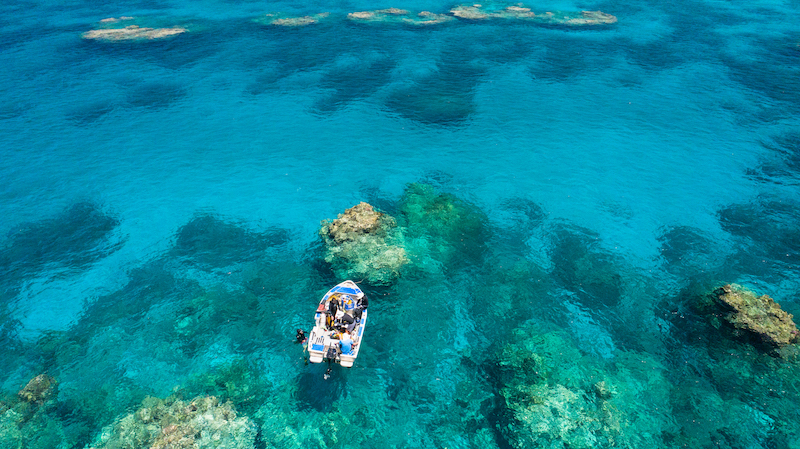
- Tonga Island Marine Reserve: On 16 November, a vessel was observed engaging in illegal fishing activities. This action threatens the biodiversity and ecological integrity the reserve is designed to protect.
- Vessel Description: 6.5-metre black Stabicraft with a distinctive blue trim.
- Time of Offence: Approximately 12:45 PM.
- Violation: Occupants were witnessed catching fish, an activity strictly prohibited to allow marine life to regenerate.
- Horoirangi Marine Reserve: On 5 November, a vessel was detected exhibiting suspicious behaviour, monitored by newly installed surveillance technology.
- Vessel Description: 14-metre white launch.
- Activity: Anchored for 90 minutes, considered unusual for this protected area.
- Significance: Such activity raises concerns about potential unauthorised actions, including illegal fishing or disturbance of the marine habitat.
Institutional Response and Multi-Stakeholder Partnerships (SDG 16 & SDG 17)
The Department of Conservation (DOC) is leading the response, reflecting the principles of SDG 16 (Peace, Justice and Strong Institutions) by enforcing environmental laws. Furthermore, the strategy incorporates SDG 17 (Partnerships for the Goals) through collaborative efforts.
- Investigation and Public Appeal: DOC has issued a public appeal for information to identify the vessels and individuals involved. This encourages community stewardship and accountability. Confidential reporting is assured to facilitate cooperation.
- Enhanced Surveillance: The use of monitoring cameras in the Horoirangi Marine Reserve demonstrates a commitment to leveraging technology for effective governance and protection of natural resources.
- Formation of Coastwatch: A new Coastwatch group has been established, creating a powerful partnership between:
- Central government agencies
- Local government agencies
- Local residents
This multi-stakeholder collaboration is essential for the successful implementation of conservation goals.
Public Engagement for Marine Conservation
Public vigilance is crucial for the protection of marine reserves and the achievement of SDG 14. Citizens are urged to report any suspected illegal activities to the DOC HOT hotline (0800 362 468).
Information valuable for enforcement includes:
- Detailed descriptions of vessels and individuals involved.
- Precise location and time of the incident.
- Photographic or video evidence of the alleged activity.
Analysis of SDGs, Targets, and Indicators
1. Which SDGs are addressed or connected to the issues highlighted in the article?
The article primarily addresses issues related to two Sustainable Development Goals:
- SDG 14: Life Below Water: This is the most direct and significant SDG connected to the article. The entire text focuses on the protection of marine life within designated marine reserves, the prohibition of fishing in these areas, and the negative impact of illegal activities on marine ecosystems. The incidents described in the Tonga Island Marine Reserve and the Horoirangi Marine Reserve are clear examples of threats to life below water.
- SDG 16: Peace, Justice and Strong Institutions: This goal is relevant because the article discusses the legal framework and enforcement mechanisms designed to protect marine reserves. It highlights the role of a government institution, the Department of Conservation (DOC), in enforcing rules (“Fishing is banned in marine reserves”). It also describes efforts to strengthen enforcement through public reporting (0800 DOC HOT), inter-agency cooperation, and community involvement (Coastwatch group), which are all aspects of building effective and accountable institutions.
2. What specific targets under those SDGs can be identified based on the article’s content?
Based on the article’s content, the following specific targets can be identified:
-
SDG 14: Life Below Water
- Target 14.2: “By 2020, sustainably manage and protect marine and coastal ecosystems to avoid significant adverse impacts…” The existence of the Tonga Island and Horoirangi Marine Reserves, and the rules against fishing, damaging marine life, and pollution, are direct actions aimed at protecting these specific coastal ecosystems from adverse impacts. The illegal fishing described is a direct threat to achieving this target.
- Target 14.4: “By 2020, effectively regulate harvesting and end overfishing, illegal, unreported and unregulated fishing…” The article’s central theme is the occurrence of illegal fishing (“A boat has been seen fishing in a marine reserve”). The efforts by the Department of Conservation to identify and penalize the offenders are attempts to regulate and end such illegal activities.
- Target 14.5: “By 2020, conserve at least 10 per cent of coastal and marine areas…” Marine reserves are a key tool for conserving coastal and marine areas. The article is set within two established marine reserves, which contribute to this conservation target. The enforcement actions discussed are crucial for ensuring these conserved areas are genuinely protected.
-
SDG 16: Peace, Justice and Strong Institutions
- Target 16.6: “Develop effective, accountable and transparent institutions at all levels.” The Department of Conservation (DOC) is presented as the primary institution responsible for managing and enforcing the rules of the marine reserves. Its public appeal for information and the provision of a contact number (CLE-10534) demonstrate attempts at accountability and transparency in its enforcement operations.
- Target 16.7: “Ensure responsive, inclusive, participatory and representative decision-making at all levels.” The article mentions the launch of a “new Coastwatch group comprising staff from several central and local government agencies and local residents.” This is a clear example of a participatory approach, involving multiple stakeholders and the local community in the monitoring and protection of the marine reserves.
3. Are there any indicators mentioned or implied in the article that can be used to measure progress towards the identified targets?
Yes, the article mentions or implies several indicators that can be used to measure progress:
-
Indicators for SDG 14 Targets
- For Target 14.4 (End illegal fishing): The article explicitly refers to “newly released data on marine reserve rule breaches” and notes that “offences spike during summer.” This implies the existence of a key indicator: the number and frequency of reported illegal fishing incidents or rule breaches within marine protected areas. This data is being collected and used to understand trends.
- For Target 14.5 (Conserve marine areas): The existence and naming of the “Tonga Island Marine Reserve” and “Horoirangi Marine Reserve” serve as qualitative evidence for the official indicator 14.5.1: “Coverage of protected areas in relation to marine areas.” The article confirms these areas exist and are under management.
-
Indicators for SDG 16 Targets
- For Target 16.6 (Effective institutions): The article implies indicators related to institutional effectiveness. These include:
- The use of monitoring technology, such as the “recently installed camera which monitors the marine reserve.”
- The number of public reports of illegal activity received through channels like the 0800 DOC HOT line, which measures public trust and engagement with the institution.
- For Target 16.7 (Participatory decision-making): A direct indicator is the existence and activity of multi-stakeholder partnerships. The formation of the “new Coastwatch group” is a tangible measure of progress towards inclusive and participatory monitoring and enforcement.
- For Target 16.6 (Effective institutions): The article implies indicators related to institutional effectiveness. These include:
4. Table of SDGs, Targets, and Indicators
| SDGs | Targets | Indicators Identified in the Article |
|---|---|---|
| SDG 14: Life Below Water | 14.2: Sustainably manage and protect marine and coastal ecosystems. | The existence of rules prohibiting damage to marine life and pollution within the named marine reserves. |
| 14.4: End illegal, unreported and unregulated fishing. | Data on the number and frequency of “marine reserve rule breaches,” which is noted to “spike during summer.” | |
| 14.5: Conserve coastal and marine areas. | The existence of designated protected areas (Tonga Island Marine Reserve, Horoirangi Marine Reserve). | |
| SDG 16: Peace, Justice and Strong Institutions | 16.6: Develop effective, accountable and transparent institutions. | Use of monitoring technology (surveillance cameras); establishment of public reporting hotlines (0800 DOC HOT). |
| 16.7: Ensure responsive, inclusive, and participatory decision-making. | The formation of a multi-stakeholder “Coastwatch group” including government agencies and local residents. |
Source: rnz.co.nz
What is Your Reaction?
 Like
0
Like
0
 Dislike
0
Dislike
0
 Love
0
Love
0
 Funny
0
Funny
0
 Angry
0
Angry
0
 Sad
0
Sad
0
 Wow
0
Wow
0