

























Celaris advances construction of Arequipa’s largest wind farm in Peru – Strategic Energy Europe
Caravelí Wind Farm Project: A Report on Sustainable Development Contributions
Project Overview and Status
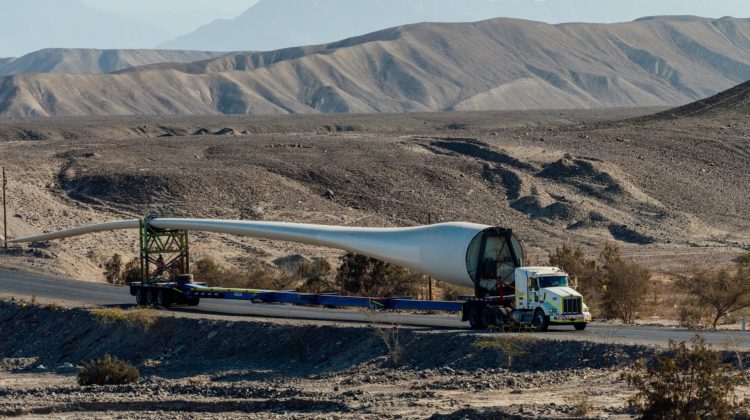
The Caravelí wind project, developed by Celaris Energy, has achieved 56% completion. As a key component of the company’s 100% non-conventional renewable energy platform, it is positioned as one of southern Peru’s most significant utility-scale wind generation investments. All 37 state-of-the-art wind turbines have arrived in-country, marking a critical milestone for what will become the largest wind power facility in the Arequipa region.
Alignment with Sustainable Development Goals (SDGs)
The project makes direct and measurable contributions to several United Nations Sustainable Development Goals (SDGs), particularly in the areas of energy, climate, infrastructure, and economic growth.
-
SDG 7: Affordable and Clean Energy
- The facility will have an installed capacity of 218 MW, generating over 600 GWh annually to power hundreds of thousands of Peruvian households with clean electricity.
- It substantially increases the share of renewable energy in Peru’s national electricity mix, directly supporting the objectives of Target 7.2.
- The project enhances energy competitiveness and diversifies the national energy portfolio away from conventional sources.
-
SDG 13: Climate Action
- By generating electricity with zero greenhouse gas emissions, the project directly supports Peru’s long-term decarbonization goals and contributes to global climate change mitigation efforts.
- Operations will be certified under the International Renewable Energy Certificate (I-REC) standard, providing a globally recognized guarantee of the electricity’s 100% renewable origin and traceability, reinforcing commitment to Target 13.2.
-
SDG 9: Industry, Innovation, and Infrastructure
- The project represents a USD 240 million investment in developing modern, sustainable, and resilient energy infrastructure (Target 9.1).
- It required highly specialized technical capabilities and detailed planning to overcome the logistical challenge of transporting oversized turbine components across more than 342 kilometers, demonstrating innovation in large-scale project execution.
- The use of state-of-the-art wind turbines promotes technological upgrading within the national energy sector (Target 9.4).
-
SDG 8: Decent Work and Economic Growth
- The significant financial investment stimulates economic activity and creates jobs throughout the construction and operational phases.
- By providing reliable and sustainable infrastructure, the project delivers long-term economic, social, and environmental value, fostering a foundation for sustained economic development in the region.
Project Metrics and Milestones
- Total Investment: Approximately USD 240 million.
- Installed Capacity: 218 MW.
- Annual Energy Generation: Over 600 GWh.
- Key Milestone: Successful arrival and transport of 37 wind turbines from China and Mexico to the project site.
- Location: Lomas district, province of Caravelí, Arequipa region, Peru.
Analysis of Sustainable Development Goals (SDGs) in the Article
1. Which SDGs are addressed or connected to the issues highlighted in the article?
-
SDG 7: Affordable and Clean Energy
- The article’s central theme is the Caravelí wind project, a utility-scale investment in non-conventional renewable energy. It explicitly mentions the project’s role in Peru’s “clean energy transition” and strengthening the country’s “clean energy portfolio.”
-
SDG 9: Industry, Innovation and Infrastructure
- The project is described as one of Peru’s “most significant utility-scale wind power investments” and a form of “large-scale renewable energy infrastructure.” The article highlights the development of “modern, sustainable infrastructure” with an investment of approximately USD 240 million.
-
SDG 13: Climate Action
- The article states that the project contributes directly to “Peru’s long-term decarbonization objectives.” It also mentions that the energy produced is certified to be “free of greenhouse gas emissions,” directly addressing climate change mitigation.
2. What specific targets under those SDGs can be identified based on the article’s content?
-
Under SDG 7 (Affordable and Clean Energy):
- Target 7.2: By 2030, increase substantially the share of renewable energy in the global energy mix. The article directly supports this by describing the project as expanding the “share of renewable energy” and accelerating the “diversification of the national electricity mix.”
- Target 7.a: By 2030, enhance international cooperation to facilitate access to clean energy research and technology… and promote investment in energy infrastructure and clean energy technology. The project represents a “USD 240 million” investment in clean energy infrastructure.
-
Under SDG 9 (Industry, Innovation and Infrastructure):
- Target 9.1: Develop quality, reliable, sustainable and resilient infrastructure… to support economic development and human well-being. The Caravelí project is presented as “modern, sustainable infrastructure capable of delivering long-term economic, social, and environmental value.”
- Target 9.4: By 2030, upgrade infrastructure and retrofit industries to make them sustainable, with increased resource-use efficiency and greater adoption of clean and environmentally sound technologies. The wind farm is a clear example of adopting clean technology in the energy sector.
-
Under SDG 13 (Climate Action):
- Target 13.2: Integrate climate change measures into national policies, strategies and planning. The project’s alignment with “Peru’s long-term decarbonization objectives” shows an integration of climate action into national energy development.
3. Are there any indicators mentioned or implied in the article that can be used to measure progress towards the identified targets?
-
For SDG 7 Targets:
- Installed renewable energy capacity: The article specifies the wind farm will have an “installed capacity of 218 MW.”
- Renewable energy production: The project is expected to generate “more than 600 GWh per year.”
- Investment in clean energy: A direct financial indicator is the “investment of approximately USD 240 million.”
-
For SDG 9 Targets:
- Investment in sustainable infrastructure: The “USD 240 million” investment figure serves as an indicator for developing sustainable infrastructure.
- Scale of infrastructure development: The project is described as the “largest wind power facility in the Arequipa region,” indicating a significant upgrade to regional infrastructure.
-
For SDG 13 Targets:
- Greenhouse gas emission reduction: The article implies a direct reduction in emissions by stating the energy produced is “free of greenhouse gas emissions.” The use of the “International Renewable Energy Certificate (I-REC)” is a mechanism to track and verify this, serving as a qualitative indicator of commitment to transparent, emission-free generation.
4. Summary Table of SDGs, Targets, and Indicators
| SDGs | Targets | Indicators |
|---|---|---|
| SDG 7: Affordable and Clean Energy |
7.2: Increase the share of renewable energy in the energy mix.
7.a: Promote investment in energy infrastructure and clean energy technology. |
– Installed capacity of 218 MW. – Generation of more than 600 GWh per year. – Investment of approximately USD 240 million. |
| SDG 9: Industry, Innovation and Infrastructure |
9.1: Develop quality, reliable, sustainable and resilient infrastructure.
9.4: Upgrade infrastructure and adopt clean and environmentally sound technologies. |
– Development of “modern, sustainable infrastructure.” – Investment of USD 240 million in infrastructure. – Construction of the “largest wind power facility in the Arequipa region.” |
| SDG 13: Climate Action | 13.2: Integrate climate change measures into national policies and planning. |
– Contribution to “Peru’s long-term decarbonization objectives.” – Generation of electricity that is “free of greenhouse gas emissions.” – Use of the International Renewable Energy Certificate (I-REC) standard. |
Source: strategicenergy.eu
What is Your Reaction?
 Like
0
Like
0
 Dislike
0
Dislike
0
 Love
0
Love
0
 Funny
0
Funny
0
 Angry
0
Angry
0
 Sad
0
Sad
0
 Wow
0
Wow
0