CLAS Alum Advances Social Equity in Connecticut – UConn Today
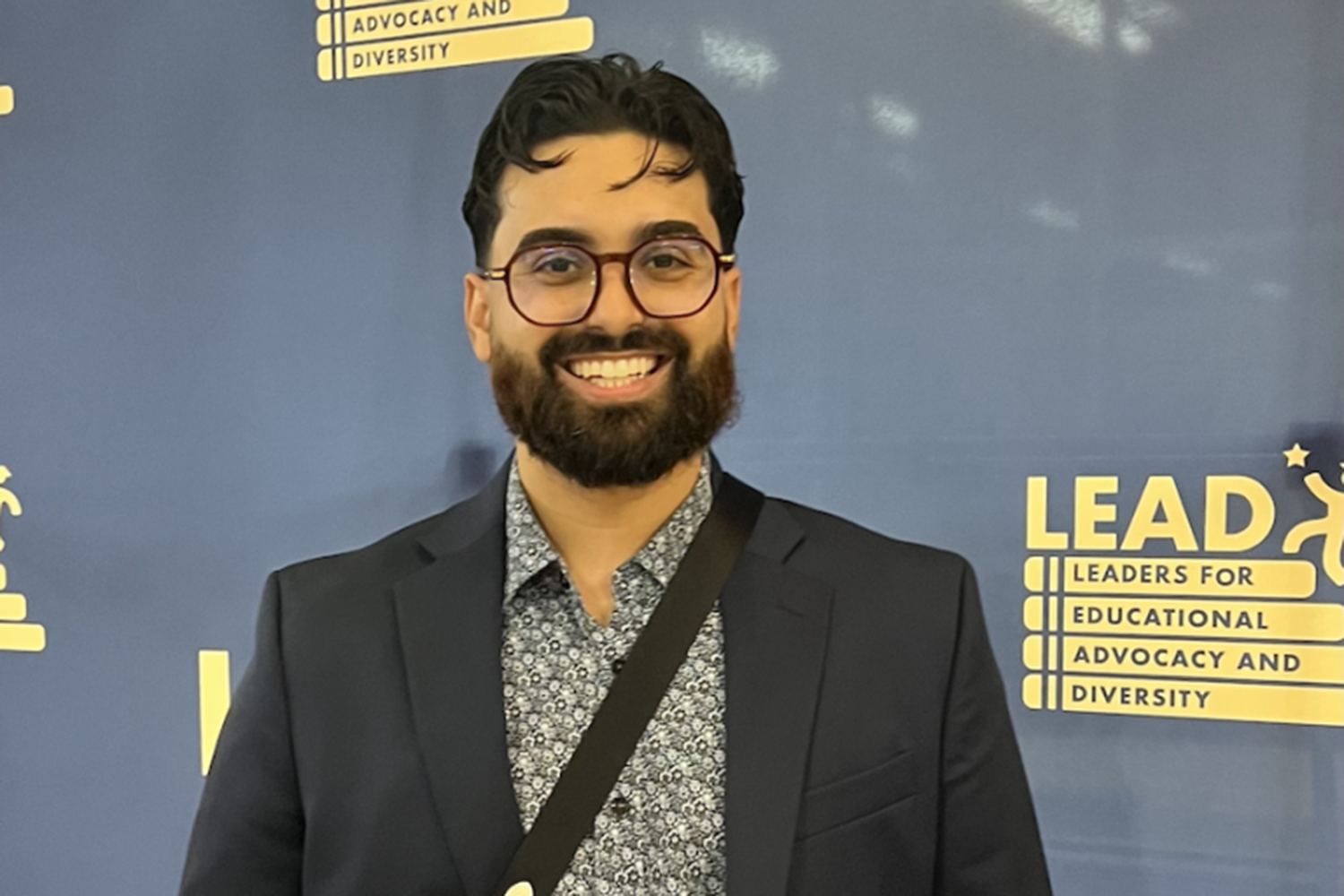
Report on Caesar Valentín’s Contributions to Sustainable Development Goals through Public Service
Executive Summary
This report details the academic and professional career of Caesar Valentín, a University of Connecticut alumnus, whose work in public service directly aligns with several United Nations Sustainable Development Goals (SDGs). Through roles in state government and policy analysis, Valentín has focused on social equity, community reinvestment, and institutional justice. His efforts contribute significantly to SDG 10 (Reduced Inequalities), SDG 16 (Peace, Justice and Strong Institutions), SDG 8 (Decent Work and Economic Growth), and SDG 11 (Sustainable Cities and Communities).
Academic Foundation for Sustainable Development
Mr. Valentín’s educational background provided an interdisciplinary framework for addressing complex social and economic issues, a foundational element for achieving the SDGs.
- Degrees Earned:
- Bachelor of Arts in Political Science and Philosophy, with a minor in Human Rights (2020).
- Master of Public Administration (MPA) (2022).
- Master of Arts in International Studies (2022).
- Educational Impact: This combination of practical policy knowledge and conceptual understanding of community experiences equipped him to analyze and shape policies that impact vulnerable populations, directly supporting the ethos of the SDGs. This comprehensive education aligns with the principles of SDG 4 (Quality Education) by providing the skills necessary to contribute to societal development.
Policy Research and Analysis in Support of Social Justice
Valentín’s graduate research focused on creating equitable systems and rectifying historical injustices, a core component of SDG 16 (Peace, Justice and Strong Institutions).
- Graduate Thesis: His thesis, Can Connecticut Get It Right?, analyzed cannabis legalization as a mechanism for reinvestment in communities disproportionately harmed by previous drug policies. This work advocates for a regulated system that uses tax revenue to promote community development, targeting SDG 10 (Reduced Inequalities).
- Institutional Research: As a graduate assistant, he contributed to research for the Connecticut Social Equity Council through the Institute for Municipal and Regional Policy (IMRP), helping to build the informational groundwork for an equitable adult-use cannabis market.
Professional Career and Implementation of SDGs
Mr. Valentín’s professional roles have involved the direct implementation of policies and programs that advance sustainable development objectives.
Department of Administrative Services (DAS)
In his role as an Equal Employment Opportunity Specialist, Valentín’s work promoted fair labor practices and institutional accountability, contributing to SDG 8 (Decent Work and Economic Growth) and SDG 10 (Reduced Inequalities).
- Prepared affirmative action plans for multiple state agencies.
- Led investigations into workplace discrimination to ensure fair and equitable treatment.
Connecticut Social Equity Council
As a Success and Strategy Analyst, Valentín’s current work is centered on building a fair and equitable market, directly addressing several SDGs through targeted programs.
- Program Development: He was instrumental in launching the Reimagine and Revitalize (R²) Program, which will distribute $36 million to communities disproportionately impacted by past policies. This initiative is a direct action towards:
- SDG 1 (No Poverty): By injecting capital into historically disadvantaged areas.
- SDG 10 (Reduced Inequalities): By rectifying systemic economic disparities.
- SDG 11 (Sustainable Cities and Communities): By funding local revitalization efforts.
- Policy Enhancement: His team has improved internal policies and clarified social equity plan requirements to ensure the state’s cannabis market is fair and inclusive, strengthening institutional integrity in line with SDG 16.
Conclusion: Commitment to Future Sustainable Development
Caesar Valentín’s career path demonstrates a profound commitment to public service as a vehicle for achieving sustainable and equitable development. His work exemplifies how targeted policy and dedicated institutional roles can advance the Sustainable Development Goals at a state and community level. His intention to mentor future public policy professionals further supports SDG 4 (Quality Education) by helping to develop the next generation of leaders committed to creating lasting, positive impact.
Analysis of Sustainable Development Goals in the Article
1. Which SDGs are addressed or connected to the issues highlighted in the article?
-
SDG 4: Quality Education
- The article extensively details Caesar Valentín’s educational journey, including his undergraduate degree, two master’s degrees (MPA and MA in International Studies) through UConn’s “4+1 Fast-Track program.” It also highlights how his education provided him with the “managerial, policy, and analytical skills” necessary for his career in public service. His desire to become a mentor in the Alumni Mentoring Program to “guide the next generation” also connects to this goal.
-
SDG 8: Decent Work and Economic Growth
- The article discusses the creation of a “regulated system” for the adult-use cannabis market in Connecticut. Valentín’s work aims to help “build a fairer, more equitable market,” which relates to promoting sustainable economic growth. Furthermore, his role as an “equal employment opportunity specialist” where he “prepared affirmative action plans” and “led investigations into workplace discrimination” directly addresses the goal of achieving decent work for all.
-
SDG 10: Reduced Inequalities
- This is a central theme of the article. Valentín’s work is focused on social equity, specifically through the “reinvestment in communities most affected by the war on drugs.” The R² Program, which distributes funds to “disproportionately impacted communities,” is a direct effort to reduce inequalities. His previous work on affirmative action plans and investigating workplace discrimination also aligns with this goal.
-
SDG 11: Sustainable Cities and Communities
- The article mentions the “R² Program, Reimagine and Revitalize,” which will distribute “$36 million over three years to disproportionately impacted communities.” This initiative, aimed at reinvesting tax revenue to revitalize specific urban and local areas, directly supports the goal of making communities more inclusive, safe, resilient, and sustainable.
-
SDG 16: Peace, Justice and Strong Institutions
- Valentín’s entire career is in public service, working within state agencies like the Department of Administrative Services (DAS) and the Social Equity Council. His work involves policy analysis, improving “internal policies,” and coordinating a “new legislative working group.” This contributes to building effective, accountable, and inclusive institutions at the state level. His efforts to ensure a “fairer, more equitable market” and investigate discrimination contribute to promoting a just society.
2. What specific targets under those SDGs can be identified based on the article’s content?
-
Under SDG 4 (Quality Education):
- Target 4.3: Ensure equal access for all women and men to affordable and quality technical, vocational and tertiary education, including university. The article highlights Valentín’s access to and completion of multiple advanced degrees at UConn.
- Target 4.4: Substantially increase the number of youth and adults who have relevant skills, including technical and vocational skills, for employment, decent jobs and entrepreneurship. The article states that the MPA program provides “managerial, policy, and analytical skills to lead government or nonprofits.”
-
Under SDG 8 (Decent Work and Economic Growth):
- Target 8.3: Promote development-oriented policies that support productive activities and decent job creation. The work of the Social Equity Council in establishing a “regulated system” for the cannabis market is an example of such a policy.
- Target 8.5: Achieve full and productive employment and decent work for all…and equal pay for work of equal value. Valentín’s role as an “equal employment opportunity specialist” and his work on “affirmative action plans” directly support this target.
-
Under SDG 10 (Reduced Inequalities):
- Target 10.2: Empower and promote the social, economic and political inclusion of all. The core mission of the Social Equity Council to reinvest in “communities most affected by the war on drugs” is a direct application of this target.
- Target 10.3: Ensure equal opportunity and reduce inequalities of outcome, including by eliminating discriminatory policies and practices. Valentín’s work investigating “workplace discrimination” and helping to build a “fairer, more equitable market” aligns with this target.
-
Under SDG 11 (Sustainable Cities and Communities):
- Target 11.3: Enhance inclusive and sustainable urbanization and capacity for participatory, integrated and sustainable human settlement planning and management. The R² Program, which distributes funds for community revitalization, is a practical example of investing in sustainable community planning.
-
Under SDG 16 (Peace, Justice and Strong Institutions):
- Target 16.6: Develop effective, accountable and transparent institutions at all levels. Valentín’s work within state agencies to improve “internal policies” and clarify “social equity plan requirements” contributes to strengthening these institutions.
- Target 16.b: Promote and enforce non-discriminatory laws and policies for sustainable development. His role in preparing “affirmative action plans” and investigating discrimination is a direct enforcement of non-discriminatory policies.
3. Are there any indicators mentioned or implied in the article that can be used to measure progress towards the identified targets?
-
For SDG 4:
- The existence of specialized higher education tracks like the “4+1 Fast-Track program.”
- The establishment of formal mentorship structures like the “Alumni Mentoring Program.”
-
For SDG 8 and 10:
- The number of “affirmative action plans” prepared for state agencies.
- The number of “investigations into workplace discrimination” conducted.
- The establishment of a state-level “Social Equity Council” to oversee market equity.
-
For SDG 11 and 10:
- The total amount of funding allocated for community reinvestment through the “R² Program” ($36 million over three years).
- The number of “disproportionately impacted communities” targeted by the reinvestment program.
-
For SDG 16:
- The creation of a “legislative working group” to examine market conditions and policy.
- The development and clarification of “social equity plan requirements” for the cannabis industry.
4. Table of SDGs, Targets, and Indicators
| SDGs | Targets | Indicators (Mentioned or Implied in the Article) |
|---|---|---|
| SDG 4: Quality Education | 4.4: Increase the number of youth and adults who have relevant skills for employment. | Existence of specialized programs (e.g., MPA, 4+1 Fast-Track) providing managerial, policy, and analytical skills. |
| SDG 8: Decent Work and Economic Growth | 8.5: Achieve full and productive employment and decent work for all. | Preparation of “affirmative action plans”; conducting “investigations into workplace discrimination.” |
| SDG 10: Reduced Inequalities | 10.2: Empower and promote the social, economic and political inclusion of all. | Establishment of the “Social Equity Council”; creation of programs for “disproportionately impacted communities.” |
| SDG 11: Sustainable Cities and Communities | 11.3: Enhance inclusive and sustainable urbanization and capacity for…sustainable human settlement planning. | Launch of the “R² Program, Reimagine and Revitalize,” distributing $36 million for community reinvestment. |
| SDG 16: Peace, Justice and Strong Institutions | 16.6: Develop effective, accountable and transparent institutions at all levels. | Improvement of “internal policies” within state agencies; clarification of “social equity plan requirements.” |
| SDG 16: Peace, Justice and Strong Institutions | 16.b: Promote and enforce non-discriminatory laws and policies. | Work as an “equal employment opportunity specialist” to investigate discrimination and prepare affirmative action plans. |
Source: today.uconn.edu
What is Your Reaction?
 Like
0
Like
0
 Dislike
0
Dislike
0
 Love
0
Love
0
 Funny
0
Funny
0
 Angry
0
Angry
0
 Sad
0
Sad
0
 Wow
0
Wow
0