












































;Resize=620#)










CO280 proves biogenic CO2 capture in pulp and paper – gasworld

Report on Carbon Capture Pilot Project and its Alignment with Sustainable Development Goals
Project Overview and Objectives
A pilot project has been successfully completed to validate the performance of advanced carbon capture technology within the pulp and paper industry. The project’s primary objective was to demonstrate a viable pathway for decarbonization, directly supporting global climate and sustainability targets.
- Lead Entity: CO280 Solutions, a carbon dioxide removal company.
- Location: A pulp mill in the US Gulf Coast.
- Core Mission: To retrofit existing industrial facilities with modular carbon capture units to capture and permanently store biogenic CO2, thereby mitigating climate impact.
Technological Validation and Performance
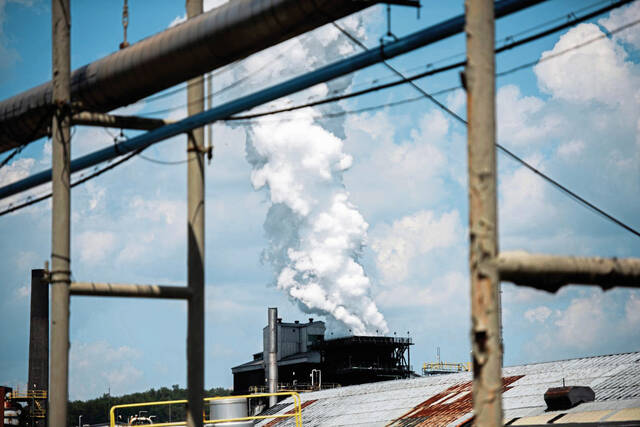
The project utilized a mobile test unit featuring liquid amine technology to capture biogenic CO2 from recovery boiler stack emissions. The results confirm the technology’s readiness for industrial-scale application.
- Technology Provider: SLB Capturi.
- Operational Duration: The unit operated for over 4,000 hours.
- Performance Metrics:
- A consistent capture rate efficiency of 95% was achieved.
- The unit was designed with a daily capture capacity of three tonnes of CO2.
Contribution to Sustainable Development Goals (SDGs)
This initiative makes significant contributions to several key United Nations Sustainable Development Goals (SDGs) by integrating climate action with industrial innovation.
-
SDG 13: Climate Action
The project’s fundamental purpose is to take urgent action to combat climate change and its impacts.
- It directly mitigates greenhouse gas emissions by capturing biogenic CO2 before it enters the atmosphere.
- The focus on permanent storage provides a durable carbon removal solution, essential for long-term climate goals.
-
SDG 9: Industry, Innovation, and Infrastructure
The project fosters resilient infrastructure and promotes inclusive and sustainable industrialization by deploying innovative technology.
- It demonstrates the successful retrofitting of existing industrial infrastructure with clean technology, enhancing sustainability without requiring new construction.
- The modular design represents an innovation that can accelerate the decarbonization of the pulp and paper sector globally.
-
SDG 12: Responsible Consumption and Production
By addressing emissions from a major manufacturing sector, the project supports the transition to sustainable patterns of production.
- It provides a model for decoupling economic activity in the paper industry from environmental degradation.
- The high efficiency of the capture process ensures a significant reduction in the carbon footprint of pulp and paper products.
-
SDG 17: Partnerships for the Goals
The success of the pilot was built on a strategic partnership, highlighting the importance of collaboration in achieving the SDGs.
- The collaboration between CO280 Solutions and SLB Capturi combines specialized expertise in carbon removal and capture technology to deliver a comprehensive solution.
Sustainable Development Goals (SDGs) Addressed
-
SDG 9: Industry, Innovation, and Infrastructure
- The article discusses the implementation of an innovative technology, “liquid amine technology,” to capture carbon dioxide. This involves retrofitting existing industrial infrastructure—specifically, a pulp mill—with “modular carbon capture units.” This directly aligns with fostering innovation and upgrading industrial infrastructure to be more sustainable.
-
SDG 12: Responsible Consumption and Production
- The project focuses on managing industrial waste emissions. By capturing “biogenic carbon dioxide from recovery boiler stack emissions,” the technology promotes the environmentally sound management of waste, preventing its release into the atmosphere. This is a key aspect of sustainable production patterns.
-
SDG 13: Climate Action
- The primary purpose of the project is to mitigate climate change. The technology is designed to “capture and permanently store biogenic CO2,” which is a direct action to combat climate change and its impacts by reducing greenhouse gas concentrations in the atmosphere.
Specific Targets Identified
-
Target 9.4
- By 2030, upgrade infrastructure and retrofit industries to make them sustainable, with increased resource-use efficiency and greater adoption of clean and environmentally sound technologies and industrial processes. The article provides a clear example of this target in action, as CO280 Solutions “retrofits existing pulp and paper mills with modular carbon capture units,” which is a clean and environmentally sound technology.
-
Target 12.4
- By 2020, achieve the environmentally sound management of chemicals and all wastes throughout their life cycle… and significantly reduce their release to air, water and soil to minimize their adverse impacts on human health and the environment. The project directly addresses this by managing CO2, a waste gas, and preventing its release into the air. The “consistent capture rate efficiency of 95%” demonstrates a significant reduction in emissions.
-
Target 13.2
- Integrate climate change measures into national policies, strategies and planning. While the article describes a corporate project, the successful validation of this carbon capture technology is a tangible climate change mitigation measure that can be integrated into broader industrial and national strategies for decarbonization.
Indicators for Measuring Progress
-
CO2 Emission Reduction Efficiency
- The article explicitly states that the pilot project achieved a “consistent capture rate efficiency of 95%.” This is a direct indicator of the technology’s effectiveness in reducing CO2 emissions from the industrial process, which is relevant for measuring progress towards Target 9.4 and 12.4.
-
Volume of CO2 Captured
- The article mentions that the unit was “designed to capture three tonnes of CO2 a day.” This quantitative data serves as a direct indicator of the amount of greenhouse gas emissions being mitigated, which is crucial for tracking progress under SDG 13.
-
Operational Viability of Technology
- The fact that the mobile test unit “has run for over 4,000 hours” is an implied indicator of the technology’s reliability and readiness for broader implementation. This demonstrates the operational capacity to carry out climate change mitigation measures, supporting Target 13.2.
Summary Table: SDGs, Targets, and Indicators
| SDGs | Targets | Indicators |
|---|---|---|
| SDG 9: Industry, Innovation, and Infrastructure | Target 9.4: Upgrade infrastructure and retrofit industries to make them sustainable… with greater adoption of clean and environmentally sound technologies. | The retrofitting of a pulp mill with a modular carbon capture unit. |
| SDG 12: Responsible Consumption and Production | Target 12.4: Achieve the environmentally sound management of… all wastes… and significantly reduce their release to air. | A “consistent capture rate efficiency of 95%” for CO2 stack emissions. |
| SDG 13: Climate Action | Target 13.2: Integrate climate change measures into… strategies and planning. | The successful pilot of a technology designed to “capture three tonnes of CO2 a day,” demonstrating a viable climate mitigation measure. |
Source: gasworld.com
What is Your Reaction?
 Like
0
Like
0
 Dislike
0
Dislike
0
 Love
0
Love
0
 Funny
0
Funny
0
 Angry
0
Angry
0
 Sad
0
Sad
0
 Wow
0
Wow
0