
















DC Ganderbal inaugurates SAANS campaign to protect children from Pneumonia – Greater Kashmir
Report on the Launch of the SAANS Campaign in Ganderbal District
Introduction
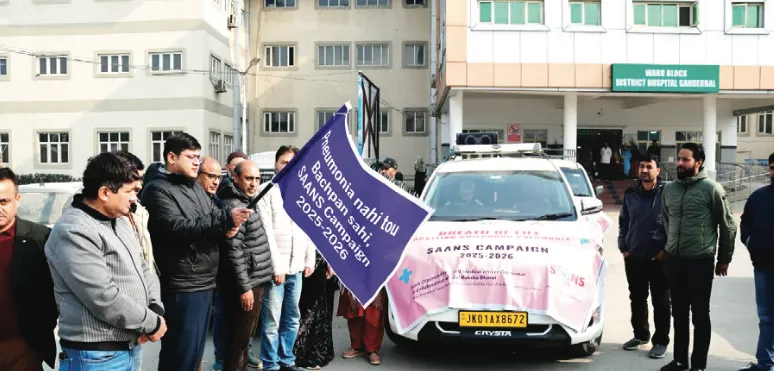
On November 22, the Ganderbal district administration launched the Social Awareness and Actions to Neutralise Pneumonia Successfully (SAANS) campaign for the 2025-2026 period. This initiative, inaugurated by Deputy Commissioner Jatin Kishore, represents a significant local effort to combat childhood pneumonia. The campaign is a direct contribution to the global agenda for sustainable development, particularly focusing on health outcomes for children.
Alignment with Sustainable Development Goals (SDGs)
The SAANS campaign is strategically aligned with several key United Nations Sustainable Development Goals:
- SDG 3: Good Health and Well-being: The primary goal of the campaign is to reduce childhood mortality from pneumonia, directly addressing SDG Target 3.2, which aims to end preventable deaths of newborns and children under five years of age.
- SDG 10: Reduced Inequalities: By deploying frontline health workers and mobile outreach units, the initiative seeks to ensure that vital health information and services reach all families and children across the district, including those in remote or underserved communities.
- SDG 17: Partnerships for the Goals: The launch event demonstrated a multi-stakeholder partnership, bringing together various government departments (Health, ICDS) and civil society organizations (Bal Raksha Bharat) to achieve a common public health objective.
Campaign Objectives and Strategy
A presentation during the launch outlined the campaign’s multi-pronged strategy, which focuses on achieving its objectives through a community-centric approach. The core strategies include:
- Prevention: Proactive measures to prevent the onset of childhood pneumonia.
- Awareness: Educating communities on the signs, symptoms, and dangers of pneumonia.
- Timely Care: Ensuring prompt diagnosis and access to appropriate medical treatment.
- Community Participation: Actively involving local communities to build a sustainable and effective public health response.
Key Stakeholders and Partnerships
The launch was attended by key officials, underscoring the collaborative effort required to meet SDG targets. Participants included:
- Deputy Commissioner Ganderbal, Jatin Kishore
- District Programme Officer ICDS, Bureeda Majid
- Chief Medical Officer Ganderbal, Dr BA Khan
- District Health Officer and Block Medical Officers
- Head Bal Raksha Bharat
The Deputy Commissioner acknowledged the dedication of health workers, highlighting their role as the backbone of public health initiatives essential for achieving SDG 3 at the grassroots level.
Implementation and Community Outreach
To ensure maximum impact and wide outreach, the campaign has initiated several key implementation actions:
- Mobile Awareness Vehicles: The DC flagged off “SAANS moving Vehicles” designed for extensive audience engagement at the community level.
- Frontline Worker Mobilization: Accredited Social Health Activists (ASHAs) will serve as the primary point of contact, engaging directly with families and children.
- Localized Communication: The campaign will utilize a versatile platform with localized audio messages to ensure communication is effective and culturally relevant, thereby enhancing community engagement and health literacy.
Analysis of the Article in Relation to Sustainable Development Goals
1. Which SDGs are addressed or connected to the issues highlighted in the article?
The primary Sustainable Development Goal (SDG) addressed in the article is:
- SDG 3: Good Health and Well-being
- The article focuses on the launch of the “Social Awareness and Actions to Neutralise Pneumonia Successfully (SAANS)” campaign. This is a public health initiative explicitly designed to “combat childhood Pneumonia” and “reduce childhood mortality.” These objectives are central to ensuring healthy lives and promoting well-being for all at all ages, particularly for children, which is a core component of SDG 3.
2. What specific targets under those SDGs can be identified based on the article’s content?
Based on the article’s focus, the following specific SDG target can be identified:
- Target 3.2: End preventable deaths of newborns and children under 5 years of age.
- The article states that the SAANS campaign is an initiative to “reduce childhood mortality.” Pneumonia is a leading cause of preventable death in children under the age of five. By launching a campaign specifically to “combat childhood Pneumonia,” the initiative directly contributes to the goal of ending preventable deaths in this age group, aligning perfectly with Target 3.2.
3. Are there any indicators mentioned or implied in the article that can be used to measure progress towards the identified targets?
While the article does not mention a specific numerical indicator, it implies the primary indicator used to measure progress for the identified target:
- Indicator 3.2.1: Under-5 mortality rate.
- The stated goal of the SAANS campaign is to “reduce childhood mortality.” The success of this public health initiative would be measured by a decrease in the number of deaths of children under five, particularly those caused by pneumonia. Therefore, the Under-5 mortality rate is the key implied indicator for tracking progress towards Target 3.2 in the context of this campaign.
4. Table of SDGs, Targets, and Indicators
| SDGs | Targets | Indicators |
|---|---|---|
| SDG 3: Good Health and Well-being | Target 3.2: By 2030, end preventable deaths of newborns and children under 5 years of age. | Indicator 3.2.1: Under-5 mortality rate (Implied by the article’s stated goal to “reduce childhood mortality”). |
Source: greaterkashmir.com
What is Your Reaction?
 Like
0
Like
0
 Dislike
0
Dislike
0
 Love
0
Love
0
 Funny
0
Funny
0
 Angry
0
Angry
0
 Sad
0
Sad
0
 Wow
0
Wow
0