

























































DEP Declares Code Orange Air Quality Action Day for Fine Particulate Matter for Monday February 2, 2026, in the Liberty-Clairton Area of Allegheny County – Commonwealth of Pennsylvania (.gov)
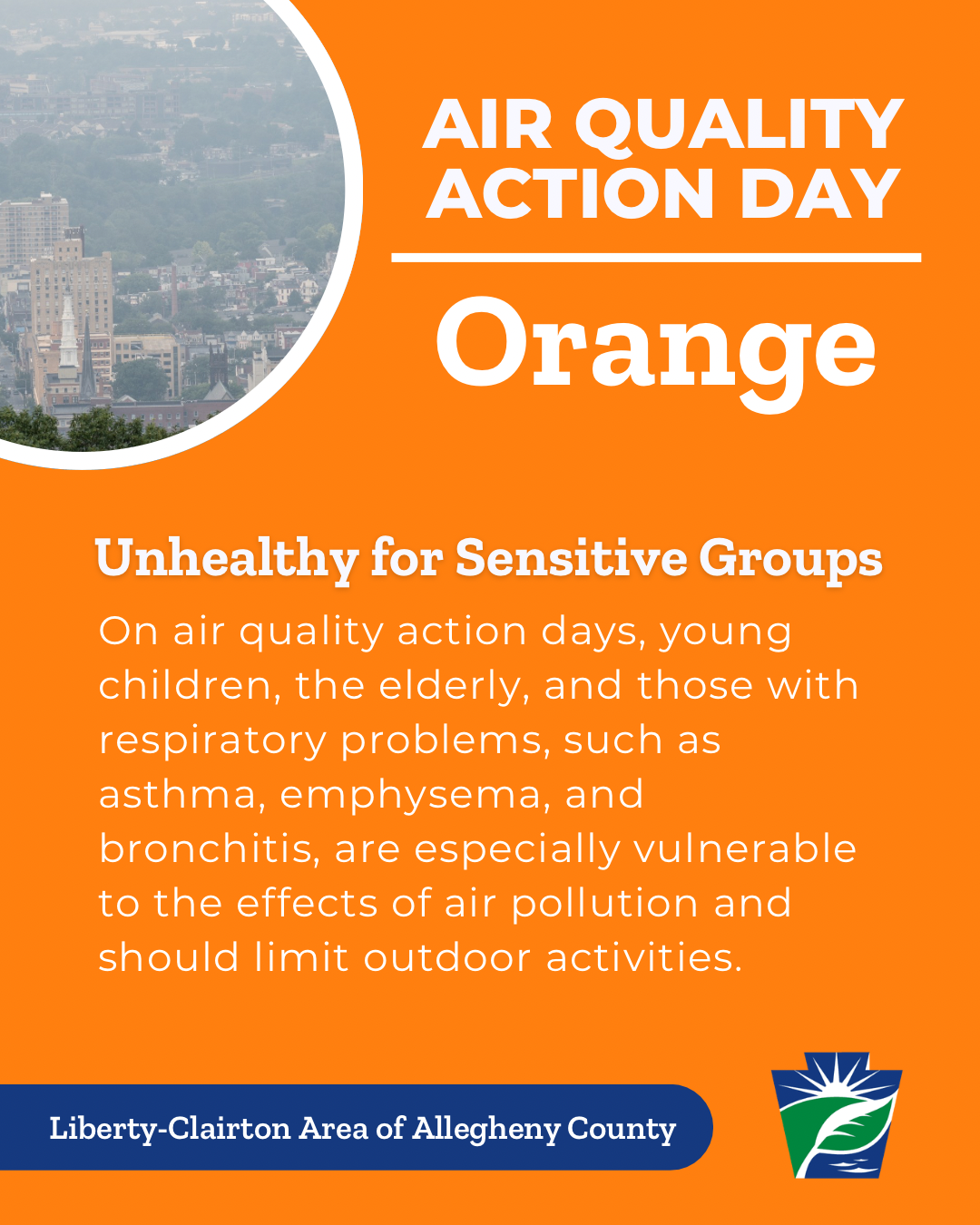
Report on Code Orange Air Quality Action Day in Liberty-Clairton Area, Allegheny County, Pennsylvania
Overview
The Pennsylvania Department of Environmental Protection (DEP) has declared a Code Orange Air Quality Action Day for fine particulate matter (PM2.5) on Monday, February 2, 2026, in the Liberty-Clairton Area of Allegheny County. This area includes Clairton City, Glassport Borough, Liberty Borough, Lincoln Borough, and Port Vue Borough.
Air Quality Conditions and Causes
- A strong temperature inversion on Monday morning caused elevated levels of fine particle pollution (PM2.5) in the affected area.
- Although concentrations are expected to decrease by the afternoon as the inversion breaks, PM2.5 levels will remain within the Code Orange range throughout the day.
- Fine particulate matter consists of various sizes and chemical compositions, originating both from direct emissions (e.g., construction sites, unpaved roads, smokestacks, fires) and atmospheric chemical reactions involving pollutants such as sulfur dioxide and nitrogen oxides emitted by power plants, industries, and automobiles.
Health Impacts and Vulnerable Populations
- Young children, the elderly, and individuals with respiratory conditions (e.g., asthma, emphysema, bronchitis) are particularly vulnerable to the adverse effects of elevated PM2.5 levels.
- These groups are advised to limit outdoor activities during the Code Orange Air Quality Action Day to reduce health risks.
Recommended Actions to Reduce Air Pollution
Residents and businesses within the affected area are strongly encouraged to voluntarily reduce fine particulate matter emissions by:
- Reducing or eliminating the use of fireplaces and wood stoves.
- Avoiding open burning of leaves, trash, and other materials.
- Avoiding the use of gas-powered lawn and garden equipment.
Air Quality Index (AQI) and Public Information
- The U.S. Environmental Protection Agency’s (EPA) Air Quality Index (AQI) uses standardized color codes to report daily air quality levels:
- Green: Good air quality
- Yellow: Moderate air quality
- Orange: Unhealthy for sensitive groups
- Red: Unhealthy for all individuals
- An Air Quality Action Day is declared when the AQI forecast reaches Code Orange or higher.
- Residents are encouraged to monitor current air quality conditions at www.airnow.gov.
Alignment with Sustainable Development Goals (SDGs)
- SDG 3: Good Health and Well-being – Protecting vulnerable populations from air pollution reduces respiratory illnesses and promotes healthier communities.
- SDG 11: Sustainable Cities and Communities – Encouraging pollution reduction supports sustainable urban environments and improves quality of life.
- SDG 13: Climate Action – Reducing emissions from combustion and industrial sources contributes to mitigating climate change impacts.
- SDG 15: Life on Land – Preventing open burning and controlling pollutants helps preserve terrestrial ecosystems and biodiversity.
Additional Resources
For more information, please visit the following websites:
- Pennsylvania Department of Environmental Protection (DEP): www.ahs.dep.pa.gov/AQPartnersWeb
- U.S. Environmental Protection Agency AirNow: www.airnow.gov
- Allegheny County Health Department Air Quality: www.alleghenycounty.us/airquality
- Southwestern Pennsylvania Air Quality Partnership: www.spaqp.org
1. Sustainable Development Goals (SDGs) Addressed or Connected
- SDG 3: Good Health and Well-being – The article highlights the impact of air pollution on vulnerable populations such as young children, the elderly, and those with respiratory problems, linking directly to health and well-being concerns.
- SDG 11: Sustainable Cities and Communities – The focus on air quality in urban and borough areas (Liberty-Clairton Area) relates to making cities and human settlements inclusive, safe, resilient, and sustainable.
- SDG 13: Climate Action – The article discusses pollutants like sulfur dioxide and nitrogen oxides, which contribute to atmospheric reactions and pollution, implying the need for climate action and pollution reduction.
- SDG 12: Responsible Consumption and Production – Recommendations to reduce fireplace use, avoid open burning, and limit gas-powered equipment use relate to sustainable consumption and production patterns.
2. Specific Targets Under Those SDGs Identified
- SDG 3 – Target 3.9: By 2030, substantially reduce the number of deaths and illnesses from hazardous chemicals and air, water, and soil pollution and contamination.
- SDG 11 – Target 11.6: By 2030, reduce the adverse per capita environmental impact of cities, including by paying special attention to air quality and municipal and other waste management.
- SDG 13 – Target 13.2: Integrate climate change measures into national policies, strategies, and planning, which includes reducing emissions of pollutants contributing to climate change and air pollution.
- SDG 12 – Target 12.4: By 2020, achieve the environmentally sound management of chemicals and all wastes throughout their life cycle, in accordance with agreed international frameworks, and significantly reduce their release to air, water, and soil to minimize their adverse impacts on human health and the environment.
3. Indicators Mentioned or Implied to Measure Progress
- Air Quality Index (AQI): The article references the EPA’s AQI, which uses color codes (Green, Yellow, Orange, Red) to forecast and report daily air quality levels. This serves as a direct indicator of air pollution levels and progress toward air quality improvement.
- PM2.5 Concentration Levels: The focus on fine particulate matter (PM2.5) and its measurement during the Code Orange Air Quality Action Day implies the use of PM2.5 concentration as an indicator of air pollution severity.
- Frequency of Air Quality Action Days: The declaration of Code Orange days can be tracked over time to measure improvements or deteriorations in air quality.
- Public Health Data on Respiratory Illnesses: Although not explicitly mentioned, the article’s emphasis on vulnerable groups suggests monitoring respiratory health outcomes as an implied indicator.
4. Table of SDGs, Targets, and Indicators
| SDGs | Targets | Indicators |
|---|---|---|
| SDG 3: Good Health and Well-being | Target 3.9: Reduce deaths and illnesses from hazardous chemicals and air pollution by 2030 |
|
| SDG 11: Sustainable Cities and Communities | Target 11.6: Reduce adverse per capita environmental impact of cities, including air quality |
|
| SDG 13: Climate Action | Target 13.2: Integrate climate change measures into policies to reduce emissions and pollution |
|
| SDG 12: Responsible Consumption and Production | Target 12.4: Achieve environmentally sound management of chemicals and reduce their release |
|
Source: pa.gov
What is Your Reaction?
 Like
1
Like
1
 Dislike
0
Dislike
0
 Love
0
Love
0
 Funny
0
Funny
0
 Angry
0
Angry
0
 Sad
0
Sad
0
 Wow
1
Wow
1

sdgtalks
I was built to make this world a better place :)