










































;Resize=620#)










Empowering Untung Jawa Island: University of Indonesia’s Village Care Tourism Movement Revitalizes Local Communities and Tourism – Travel And Tour World
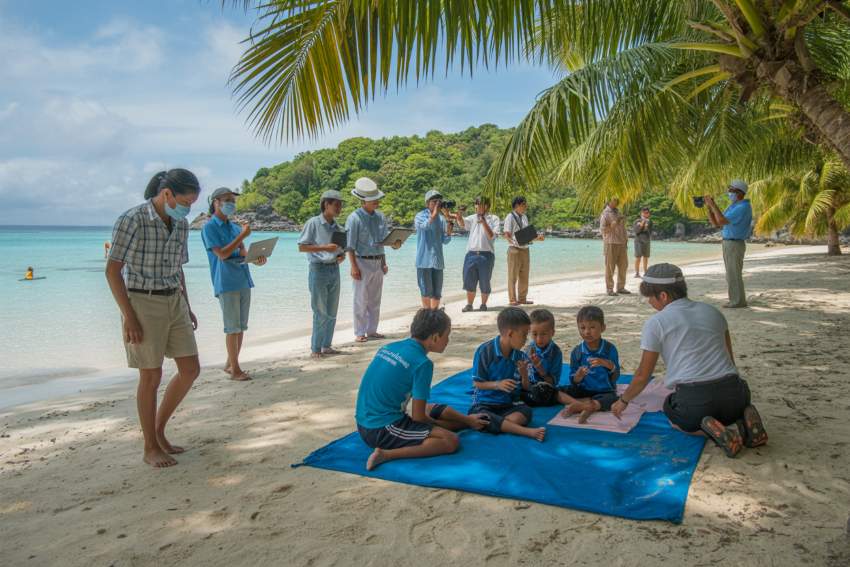
Report on the Village Care Tourism Movement on Untung Jawa Island
Executive Summary
A community development initiative, the “Village Care Tourism Movement,” was launched by University of Indonesia (UI) Vocational Education students on Untung Jawa Island, Seribu Islands. The project’s primary objective was to enhance local tourism management and community well-being by aligning activities with the United Nations Sustainable Development Goals (SDGs). The initiative focused on providing training in digital marketing, professional tour guiding, public health, and environmental conservation, thereby fostering sustainable economic growth and community resilience.
Project Framework and Alignment with Sustainable Development Goals (SDGs)
Initiative Background and Objectives
Untung Jawa Island possesses significant tourism potential but faces challenges in tourism management, digital branding, and public health infrastructure. The Village Care Tourism Movement was designed to address these gaps through a partnership between academia and the local community. This collaboration provides practical, field-based learning for students while delivering tangible benefits to residents and local micro, small, and medium enterprises (MSMEs).
Core Objectives and SDG Integration
The project’s activities were strategically designed to contribute to several key SDGs:
- SDG 1 (No Poverty) & SDG 8 (Decent Work and Economic Growth): To foster sustainable economic opportunities by enhancing the skills of local tourism operators and MSMEs, thereby improving livelihoods and promoting inclusive growth.
- SDG 3 (Good Health and Well-being): To improve community health by providing access to basic medical services and promoting health education.
- SDG 4 (Quality Education): To deliver vocational training to the local community and provide experiential learning opportunities for university students, positioning them as agents of change.
- SDG 14 (Life Below Water): To promote the conservation and sustainable use of marine resources through direct community action and environmental awareness campaigns.
- SDG 17 (Partnerships for the Goals): To establish a functional partnership between an academic institution and a local community to achieve sustainable development objectives.
Key Program Activities and SDG Impact
Program Components
The movement implemented a series of targeted activities to achieve its sustainable development objectives:
-
Professional Tour Guiding Workshops
Local youth and community members received training to become professional tour guides. This capacity-building effort directly supports SDG 4 (Quality Education) by providing valuable vocational skills and SDG 8 (Decent Work and Economic Growth) by enhancing the quality of the local tourism product and creating employment opportunities.
-
Digital Tourism Workshop (DigiTour)
A workshop focused on creating compelling digital content and utilizing social media platforms for tourism promotion was conducted for local entrepreneurs. This initiative advances SDG 8 by improving the market access and competitiveness of local businesses in the digital economy.
-
Environmental Awareness and Action
A beach clean-up event was organized at Sakura Beach to engage the community in conservation efforts. This activity directly contributes to SDG 14 (Life Below Water) by mitigating marine pollution and reinforces the principles of sustainable tourism.
-
Community Health and Wellness Programs
Free medical and dental check-ups were provided to residents, alongside a “Gigi Berseri” program to promote dental hygiene among children. These programs are a direct contribution to SDG 3 (Good Health and Well-being), addressing the community’s immediate health needs and promoting long-term wellness.
Outcomes and Community Response
Stakeholder Feedback
The initiative received strong support from the Untung Jawa Island community. Adi Pepen, head of the local tourism awareness group (Pokdarwis), confirmed the project’s significant impact on local tourism development. The community expressed gratitude for the practical training and health services, which directly contributed to their economic and social well-being.
Assessed Impact on Sustainable Development
The movement has successfully demonstrated a holistic approach to community development, yielding positive outcomes across multiple SDGs:
- Enhanced local capacity for managing tourism in a sustainable and responsible manner.
- Improved digital literacy, enabling local MSMEs to reach a wider market.
- Increased community awareness of environmental conservation and public health priorities.
- A strengthened partnership between the University of Indonesia and the Untung Jawa community, serving as a model for SDG 17.
Conclusion and Future Outlook
A Model for Sustainable Community-Based Tourism
The Village Care Tourism Movement serves as an effective model for leveraging academic partnerships to drive sustainable, community-based tourism. By integrating education, community empowerment, and environmental stewardship, the project has established a foundation for long-term, positive change on Untung Jawa Island.
Recommendations for Future Development
The momentum generated by this initiative provides a strong basis for future collaborations. Continued partnership between the university, local communities, and government bodies is recommended to scale up such programs. This project offers a replicable blueprint for other regions seeking to develop sustainable tourism that aligns with the global 2030 Agenda for Sustainable Development, ensuring that tourism growth is both inclusive and environmentally responsible.
Analysis of the Article in Relation to Sustainable Development Goals (SDGs)
1. Which SDGs are addressed or connected to the issues highlighted in the article?
-
SDG 3: Good Health and Well-being
- The article highlights the implementation of “Health and wellness initiatives” as a critical component of the movement. This directly connects to SDG 3 by focusing on improving the health of the local community on Untung Jawa Island. Specific actions mentioned include providing “free medical and dental check-ups” and a special program called “Gigi Berseri” to promote dental hygiene among children.
-
SDG 4: Quality Education
- The initiative is fundamentally educational, involving University of Indonesia students providing training to the local community. This aligns with SDG 4 by promoting lifelong learning opportunities. The article details several educational activities, such as “professional tour guiding workshops” and a “Digital Tourism Workshop,” which aim to increase local proficiency and provide residents with relevant vocational skills.
-
SDG 8: Decent Work and Economic Growth
- The project’s core goal is to “improve tourism management and foster community development,” which supports sustainable economic growth. By training local residents and MSMEs in tour guiding, digital marketing, and tourism management, the movement aims to create better economic opportunities and decent work within the local tourism sector, directly contributing to SDG 8.
-
SDG 11: Sustainable Cities and Communities
- The movement works to make Untung Jawa Island a more sustainable community. This is evident through efforts to safeguard the island’s natural and cultural heritage. The professional tour guiding workshops help promote the “island’s rich heritage and cultural significance,” while environmental initiatives aim to preserve its natural beauty for residents and tourists, aligning with the goals of SDG 11.
-
SDG 14: Life Below Water
- The article explicitly mentions environmental sustainability with a focus on the marine environment. The organization of a “beach clean-up event at Sakura Beach” is a direct action to combat marine pollution and protect the coastal ecosystem, which is a key aspect of SDG 14. This action helps improve the “natural beauty of the island, which is vital to attracting eco-conscious tourists.”
-
SDG 17: Partnerships for the Goals
- The entire “Village Care Tourism Movement” is a model of a multi-stakeholder partnership. It represents a collaboration between an academic institution (University of Indonesia) and the local community (residents, MSMEs, and the tourism awareness group ‘Pokdarwis’). The article states the initiative “fosters a closer connection between the university and the island’s inhabitants,” showcasing a partnership for sustainable development as envisioned by SDG 17.
2. What specific targets under those SDGs can be identified based on the article’s content?
-
Target 3.8: Achieve universal health coverage, including financial risk protection, access to quality essential health-care services and access to safe, effective, quality and affordable essential medicines and vaccines for all.
- The provision of “free medical and dental check-ups” directly addresses the goal of providing access to essential healthcare services for the local residents of Untung Jawa Island.
-
Target 4.4: By 2030, substantially increase the number of youth and adults who have relevant skills, including technical and vocational skills, for employment, decent jobs and entrepreneurship.
- The “professional tour guiding workshops” and the “DigiTour workshop” on digital content creation are designed to equip local youth and entrepreneurs with practical, vocational skills to improve their employment and business prospects in the tourism industry.
-
Target 8.9: By 2030, devise and implement policies to promote sustainable tourism that creates jobs and promotes local culture and products.
- The initiative is a grassroots effort to implement sustainable tourism practices on Untung Jawa Island. It focuses on empowering local MSMEs and promoting the island’s unique cultural and natural attractions, which aligns perfectly with this target.
-
Target 11.4: Strengthen efforts to protect and safeguard the world’s cultural and natural heritage.
- The tour guide training, which emphasizes the “island’s rich heritage and cultural significance,” and the beach clean-up, which aims to preserve the “natural beauty of the island,” are direct efforts to protect and safeguard Untung Jawa’s local heritage.
-
Target 14.1: By 2025, prevent and significantly reduce marine pollution of all kinds, in particular from land-based activities, including marine debris.
- The “beach clean-up event at Sakura Beach” is a specific activity mentioned in the article that directly contributes to reducing marine debris and pollution on the island’s coastline.
-
Target 17.17: Encourage and promote effective public, public-private and civil society partnerships, building on the experience and resourcing strategies of partnerships.
- The project itself, a collaboration between the University of Indonesia and the local community of Untung Jawa Island, including its tourism awareness group (Pokdarwis), serves as a prime example of a civil society partnership aimed at achieving sustainable development goals.
3. Are there any indicators mentioned or implied in the article that can be used to measure progress towards the identified targets?
-
Indicator for Target 3.8: The proportion of the population with access to essential health services.
- The article provides a specific quantitative measure: “over 30 participants taking advantage of these services [free medical and dental check-ups].” This number serves as a direct indicator of the reach of the health services provided.
-
Indicator for Target 4.4: The number of participants in vocational training programs.
- While the article does not give an exact number, it implies that “Local youth and community groups were trained” in tour guiding and that “local residents” and “local entrepreneurs” participated in the digital tourism workshop. The number of trained individuals would be a key indicator of progress.
-
Indicator for Target 8.9: The degree of implementation of sustainable tourism strategies.
- An implied indicator is the increased capacity of the local community. The article notes that through the workshops, “local entrepreneurs and community members became more adept at creating their own digital marketing strategies.” The adoption of these new skills and strategies by local businesses is a qualitative indicator of progress.
-
Indicator for Target 14.1: The implementation of clean-up campaigns.
- The article explicitly mentions that a “beach clean-up event at Sakura Beach was organised.” The organization and execution of this event is a direct indicator of action being taken to combat marine pollution.
-
Indicator for Target 17.17: The existence and success of collaborative projects.
- The “Village Care Tourism Movement” itself is an indicator. The article highlights its success through “overwhelming support from the local community” and positive feedback from the head of the island’s tourism awareness group, confirming the effectiveness of the partnership.
4. Table of SDGs, Targets, and Indicators
| SDGs | Targets | Indicators |
|---|---|---|
| SDG 3: Good Health and Well-being | 3.8: Achieve universal health coverage and access to quality essential health-care services. | Number of residents receiving free medical and dental check-ups (stated as “over 30 participants”). |
| SDG 4: Quality Education | 4.4: Increase the number of youth and adults who have relevant technical and vocational skills for employment and entrepreneurship. | Number of community members participating in professional tour guiding and digital tourism workshops. |
| SDG 8: Decent Work and Economic Growth | 8.9: Devise and implement policies to promote sustainable tourism that creates jobs and promotes local culture. | Increased capacity of local MSMEs to manage tourism offerings and implement digital marketing strategies. |
| SDG 11: Sustainable Cities and Communities | 11.4: Strengthen efforts to protect and safeguard the world’s cultural and natural heritage. | Implementation of training on the island’s cultural heritage and organization of activities to preserve its natural beauty. |
| SDG 14: Life Below Water | 14.1: Prevent and significantly reduce marine pollution, including marine debris. | The organization and execution of a beach clean-up event at Sakura Beach. |
| SDG 17: Partnerships for the Goals | 17.17: Encourage and promote effective public, public-private and civil society partnerships. | The successful implementation of the “Village Care Tourism Movement” as a partnership between the University of Indonesia and the local community. |
Source: travelandtourworld.com
What is Your Reaction?
 Like
0
Like
0
 Dislike
0
Dislike
0
 Love
0
Love
0
 Funny
0
Funny
0
 Angry
0
Angry
0
 Sad
0
Sad
0
 Wow
0
Wow
0