










































FranklinWH a battery partner in Vermont Electric Co-Op’s expanded energy storage program – Vermont Business Magazine

Strategic Partnership to Advance Sustainable Development Goals in Vermont
Introduction
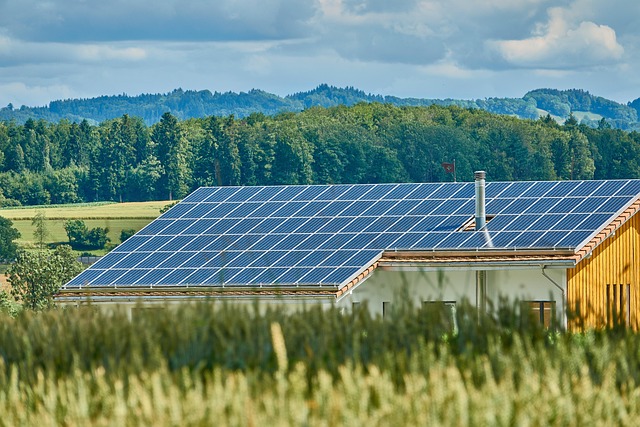
A new partnership has been formed between FranklinWH Energy Storage Inc. and the Vermont Electric Co-op (VEC) to expand a residential battery storage program. This initiative is designed to enhance energy resilience and directly supports the advancement of several United Nations Sustainable Development Goals (SDGs) within the state.
- Partners: FranklinWH Energy Storage Inc., Vermont Electric Co-op (VEC), and Texture.
- Objective: To broaden access to residential energy storage solutions, thereby stabilizing the local energy grid and promoting decarbonization.
- SDG Focus: The program is aligned with SDG 7 (Affordable and Clean Energy), SDG 9 (Industry, Innovation, and Infrastructure), SDG 11 (Sustainable Cities and Communities), SDG 13 (Climate Action), and SDG 17 (Partnerships for the Goals).
Alignment with SDG 7: Affordable and Clean Energy
Enhancing Access to Modern Energy Solutions
The program directly addresses SDG Target 7.1 by improving access to affordable, reliable, and modern energy services for Vermont homeowners. By participating, customers can manage energy costs and secure a reliable power supply.
Promoting Renewable Energy Integration
This initiative is crucial for achieving SDG Target 7.2, which aims to increase the share of renewable energy. Home battery systems contribute to grid stability, particularly during periods of high demand, which facilitates the integration of intermittent renewable energy sources into the state’s energy mix.
Contribution to SDG 9, 11, and 13: Sustainable Infrastructure, Communities, and Climate Action
Building Resilient Infrastructure and Fostering Innovation (SDG 9)
The collaboration represents a significant step toward upgrading local energy infrastructure, in line with SDG Target 9.4. By decentralizing energy storage, the program enhances the resilience and sustainability of the community’s energy systems.
- The inclusion of multiple approved manufacturers, starting with FranklinWH, fosters innovation and competition in the clean energy sector.
- The partnership model itself is an innovation in community-based energy management.
Creating Sustainable and Resilient Communities (SDG 11)
By empowering homeowners with energy independence, the program strengthens community resilience against grid disruptions. This supports the objectives of SDG 11 to make human settlements inclusive, safe, resilient, and sustainable.
Supporting Decarbonization and Climate Action (SDG 13)
The program is a direct measure to combat climate change and its impacts, aligning with SDG 13. By providing stored energy during peak demand, the reliance on carbon-intensive power plants is reduced, contributing to Vermont’s overall decarbonization targets.
Program Implementation and Collaborative Framework (SDG 17)
Partnership Model for the Goals
This initiative exemplifies SDG 17 by demonstrating an effective public-private partnership. The collaboration between VEC, a cooperative utility, and FranklinWH, a private technology firm, is essential for achieving the shared goal of a sustainable energy future.
Timeline and Logistics
- VEC, in collaboration with program partner Texture, expanded its Flexible Load battery storage program to include additional manufacturers.
- FranklinWH Energy Storage Inc. was announced as one of the first approved manufacturers in the expanded program.
- The new program enrollment is scheduled to launch during the week of October 27th, 2025.
- Customers with qualified systems will provide energy to the grid during high-demand periods as scheduled by VEC.
Analysis of Sustainable Development Goals (SDGs) in the Article
1. Which SDGs are addressed or connected to the issues highlighted in the article?
The article on the partnership between FranklinWH and Vermont Electric Co-op (VEC) for a residential energy storage program connects to several Sustainable Development Goals (SDGs). The primary focus on clean energy, infrastructure, and community resilience directly aligns with the following goals:
- SDG 7: Affordable and Clean Energy: The core of the article is about expanding access to clean energy solutions through residential battery storage, which enhances energy reliability and supports the clean energy grid.
- SDG 9: Industry, Innovation, and Infrastructure: The partnership represents an innovation in energy management and an upgrade to the existing energy infrastructure, making it more resilient and sustainable.
- SDG 11: Sustainable Cities and Communities: The program aims to create energy resilience for homeowners and is described as a “community-based energy innovation,” contributing to more sustainable and resilient communities.
- SDG 13: Climate Action: The article explicitly mentions that the program will help Vermont achieve its “decarbonization” goals, which is a key component of climate action.
2. What specific targets under those SDGs can be identified based on the article’s content?
Based on the details provided, several specific SDG targets can be identified:
-
SDG 7: Affordable and Clean Energy
- Target 7.1: By 2030, ensure universal access to affordable, reliable and modern energy services. The article highlights VEC’s goal to offer homeowners “better access to reliable, cost-saving energy management and storage solutions,” directly addressing energy reliability and accessibility.
- Target 7.2: By 2030, increase substantially the share of renewable energy in the global energy mix. Battery storage systems, like those from FranklinWH, are crucial for stabilizing the grid, which allows for a greater integration of intermittent renewable energy sources. The goal of “decarbonization” implies a shift towards renewables.
- Target 7.b: By 2030, expand infrastructure and upgrade technology for supplying modern and sustainable energy services. The program itself is an expansion of VEC’s energy infrastructure, incorporating “next-generation home energy management and storage solution” technology from partners like FranklinWH.
-
SDG 9: Industry, Innovation, and Infrastructure
- Target 9.1: Develop quality, reliable, sustainable and resilient infrastructure. The partnership aims to “stabilize the grid during high demand times” and help Vermonters achieve “energy independence and resilience,” which are hallmarks of resilient infrastructure.
- Target 9.4: By 2030, upgrade infrastructure and retrofit industries to make them sustainable. The program involves upgrading residential energy infrastructure with modern battery technology to support a “clean energy journey” and “decarbonization.”
-
SDG 11: Sustainable Cities and Communities
- Target 11.b: By 2020, substantially increase the number of cities and human settlements adopting and implementing integrated policies and plans towards inclusion, resource efficiency, mitigation and adaptation to climate change, disaster risk reduction and resilience. The program provides homeowners with “resilience” through battery storage, which contributes to community-wide resilience against power outages and grid instability.
-
SDG 13: Climate Action
- Target 13.2: Integrate climate change measures into national policies, strategies and planning. VEC’s program is a local-level strategy that directly supports Vermont’s broader goals of “decarbonization,” thereby integrating climate action into regional energy planning.
3. Are there any indicators mentioned or implied in the article that can be used to measure progress towards the identified targets?
The article does not mention official SDG indicators, but it implies several metrics that could be used to measure the program’s success and progress towards the identified targets:
-
Indicators for SDG 7 (Affordable and Clean Energy)
- Number of participating households: The enrollment of customers in the new program would be a direct measure of increased access to modern and reliable energy management solutions.
- Energy capacity provided to the grid: The amount of energy that installed systems “provide to help stabilize the grid during high demand times” can be measured to quantify the program’s impact on grid reliability.
-
Indicators for SDG 9 (Industry, Innovation, and Infrastructure)
- Number of approved battery manufacturers: The article states that FranklinWH is “one of the first approved manufacturers” and that “additional manufacturers expected to follow.” This number indicates the growth and diversification of the technological infrastructure.
- Number of installed residential energy storage systems: This metric would track the physical expansion and upgrade of the energy infrastructure at the residential level.
-
Indicators for SDG 11 (Sustainable Cities and Communities)
- Geographic distribution of installations: Tracking where the systems are installed across Vermont can measure the reach of “community-based energy innovation” and the enhancement of resilience across different communities.
-
Indicators for SDG 13 (Climate Action)
- Contribution to decarbonization goals: While not directly measurable from the article, the program’s contribution to Vermont’s “decarbonization” goals could be estimated through reduced reliance on fossil-fuel peaker plants during high demand, enabled by the battery storage network.
4. Summary Table of SDGs, Targets, and Indicators
| SDGs | Targets | Indicators (Implied from Article) |
|---|---|---|
| SDG 7: Affordable and Clean Energy |
|
|
| SDG 9: Industry, Innovation, and Infrastructure |
|
|
| SDG 11: Sustainable Cities and Communities |
|
|
| SDG 13: Climate Action |
|
|
Source: vermontbiz.com
What is Your Reaction?
 Like
0
Like
0
 Dislike
0
Dislike
0
 Love
0
Love
0
 Funny
0
Funny
0
 Angry
0
Angry
0
 Sad
0
Sad
0
 Wow
0
Wow
0