























































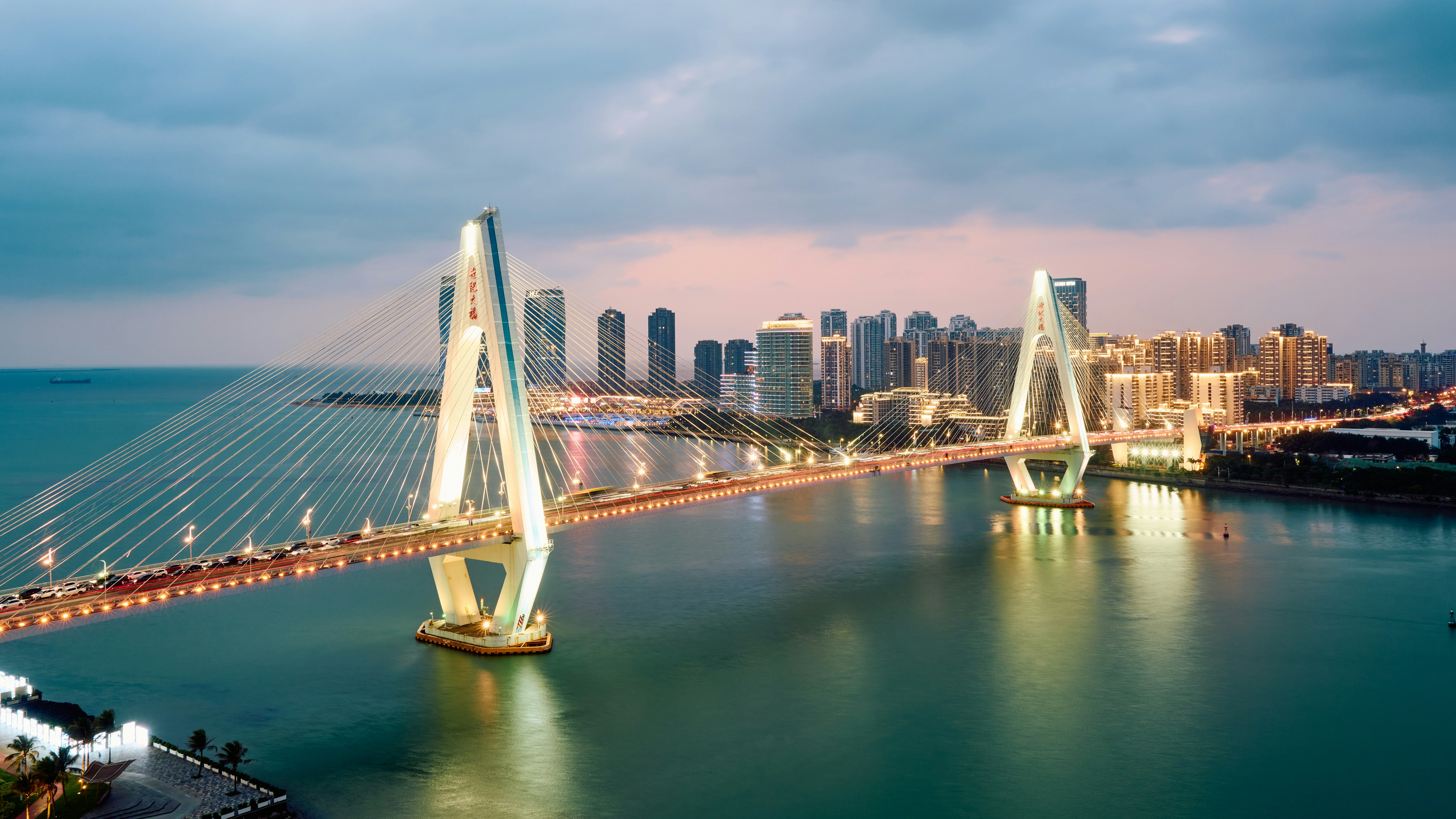
Hainan’s pitch as a bridge into China’s vast market – fDi Intelligence
Report on Hainan’s Free Trade Port and its Alignment with Sustainable Development Goals
1.0 Introduction: A New Model for Sustainable Economic Development
- Hainan province is being established as the world’s largest special economic zone (SEZ), serving as a pilot for liberalized trade, investment, and talent flows.
- This initiative, culminating in the launch of a Free Trade Port (FTP), is designed to create a sustainable economic model that supports both national and international development objectives, particularly the Sustainable Development Goals (SDGs).
2.0 Economic Framework and Contribution to SDG 8
2.1 Core Policies for Economic Growth
The Hainan FTP introduces several key policies designed to foster economic growth and create decent work, directly addressing the targets of SDG 8 (Decent Work and Economic Growth).
- Special Customs Operation: A “special customs operation” will commence on December 18, establishing zero tariffs for thousands of eligible imported goods across the entire 34,000 sq km territory.
- Value-Added Tariff Exemption: Goods with at least 30% of their value added within Hainan will be granted tariff-free access to the mainland Chinese market, promoting local production and value chain development.
-
Preferential Tax System: To attract investment and talent, the FTP offers reduced tax rates:
- A 15% corporate tax rate for companies in encouraged industries, aligning with the OECD’s effective minimum.
- A 15% income tax rate for eligible talent.
2.2 Performance and Economic Impact
- From 2018 to 2023, Hainan attracted more foreign investment than in the preceding 30 years combined.
- During the same period, trade in both goods and services experienced growth of nearly one-third, indicating strong progress towards sustained economic growth.
3.0 Fostering Innovation and Sustainable Industrialization (SDG 9 & SDG 3)
The FTP’s strategy focuses on developing key industries that promote innovation, build resilient infrastructure, and enhance well-being, contributing to SDG 9 (Industry, Innovation, and Infrastructure) and SDG 3 (Good Health and Well-being).
3.1 Targeted Industrial Parks
- The development plan includes 13 industrial parks targeting a diverse range of sectors.
- Key industries include advanced manufacturing, space, energy, logistics, and education, which are crucial for sustainable industrialization and innovation.
3.2 Advancements in Healthcare
- The Boao Lecheng zone, China’s sole medical tourism pilot area, exemplifies the commitment to SDG 3.
- Since its establishment in 2013, the zone has introduced over 450 types of foreign pharmaceuticals and medical devices not yet listed in China, improving access to advanced healthcare and promoting well-being.
4.0 Strengthening Global Partnerships for Sustainable Development (SDG 17)
The Hainan FTP is positioned as a critical node for international cooperation, embodying the principles of SDG 17 (Partnerships for the Goals).
- A Bridge for International Trade: The FTP aims to function as a strategic link for foreign companies entering the Chinese market and for Chinese enterprises expanding globally.
-
‘First Line, Second Line’ Model: This customs model facilitates international trade flows while managing integration with the mainland economy.
- First Line: Manages goods entering Hainan from international markets, with 74% of goods becoming tariff-free.
- Second Line: Manages goods moving from Hainan to the rest of mainland China.
- The FTP’s launch is intended to drive a new phase of international business cooperation and support the reshaping of global trade for sustainable development.
5.0 Challenges to Sustainable Implementation
While the FTP presents significant opportunities, its long-term success and contribution to sustainable development face several challenges.
- Economic Headwinds: The initiative launches amid a broader economic slowdown, a slump in the property sector, and declining foreign direct investment in traditional industries.
- Infrastructure and Development: The presence of incomplete real estate projects, including the Ocean Flower Island and a stalled PwC campus, highlights the risks associated with large-scale development and the need for sustainable urban planning in line with SDG 11 (Sustainable Cities and Communities).
- Investor Confidence: Many companies are adopting a “wait and see” approach, pending a full assessment of the FTP’s operational effectiveness post-launch.
Analysis of Sustainable Development Goals (SDGs) in the Article
1. Which SDGs are addressed or connected to the issues highlighted in the article?
- SDG 3: Good Health and Well-being – The article mentions the development of a medical tourism pilot zone, indicating a focus on healthcare services and access to medical innovations.
- SDG 8: Decent Work and Economic Growth – The core theme of the article is the establishment of the Hainan free trade port (FTP) to stimulate economic growth, attract foreign investment, and boost trade.
- SDG 9: Industry, Innovation, and Infrastructure – The article details the creation of a massive special economic zone, the development of 13 industrial parks, and the establishment of new customs and port infrastructure to foster industrialization and innovation.
- SDG 17: Partnerships for the Goals – The initiative is fundamentally about strengthening global partnerships through the liberalization of trade, investment, and talent flows, aiming to integrate Hainan more deeply into the global economy.
2. What specific targets under those SDGs can be identified based on the article’s content?
-
SDG 3: Good Health and Well-being
- Target 3.b: Support the research and development of vaccines and medicines for the communicable and non-communicable diseases that primarily affect developing countries, provide access to affordable essential medicines and vaccines.
Explanation: The article highlights the Boao Lecheng medical tourism pilot zone, which “has already introduced more than 450 types of pharmaceuticals and medical devices from foreign markets not yet to be listed in China.” This directly supports access to new medical technologies and medicines.
- Target 3.b: Support the research and development of vaccines and medicines for the communicable and non-communicable diseases that primarily affect developing countries, provide access to affordable essential medicines and vaccines.
-
SDG 8: Decent Work and Economic Growth
- Target 8.1: Sustain per-capita economic growth in accordance with national circumstances and, in particular, at least 7 per cent gross domestic product growth per annum in the least developed countries.
Explanation: The entire Hainan FTP initiative is designed to “boost the next phase of development” and act as a “new drive” for the economy. The article notes that between 2018 and 2023, “Trade in goods and services both grew by almost a third,” indicating a focus on accelerating economic growth. - Target 8.2: Achieve higher levels of economic productivity through diversification, technological upgrading and innovation, including through a focus on high-value added and labour-intensive sectors.
Explanation: The article mentions that Hainan’s target industries include “advanced manufacturing, space and energy,” and it aims to emulate Shenzhen’s transformation into a “pre-eminent global tech hub.” The policy granting tariff-free access for goods with “30 per cent of added value in Hainan” directly encourages high-value-added activities. - Target 8.3: Promote development-oriented policies that support productive activities, decent job creation, entrepreneurship, creativity and innovation, and encourage the formalization and growth of micro-, small- and medium-sized enterprises.
Explanation: The creation of the FTP with preferential policies like a “15 per cent corporate tax rate” for encouraged industries is a development-oriented policy designed to attract companies and foster entrepreneurship and innovation.
- Target 8.1: Sustain per-capita economic growth in accordance with national circumstances and, in particular, at least 7 per cent gross domestic product growth per annum in the least developed countries.
-
SDG 9: Industry, Innovation, and Infrastructure
- Target 9.2: Promote inclusive and sustainable industrialization and, by 2030, significantly raise industry’s share of employment and gross domestic product, in line with national circumstances, and double its share in least developed countries.
Explanation: The establishment of the 34,000 sq km FTP, which includes “13 existing industrial parks” targeting sectors from logistics to advanced manufacturing, is a direct effort to promote and expand industrialization. - Target 9.a: Facilitate sustainable and resilient infrastructure development in developing countries through enhanced financial, technological and technical support.
Explanation: The article describes the “first line, second line” model which relies on new infrastructure, including eight “first-line” ports and ten “second-line” ports, to manage the flow of goods. This represents a significant infrastructure development project to support the new economic zone.
- Target 9.2: Promote inclusive and sustainable industrialization and, by 2030, significantly raise industry’s share of employment and gross domestic product, in line with national circumstances, and double its share in least developed countries.
-
SDG 17: Partnerships for the Goals
- Target 17.5: Adopt and implement investment promotion regimes for least developed countries.
Explanation: While China is not an LDC, the principles of this target are reflected in Hainan’s efforts. The FTP is a massive investment promotion regime, evidenced by the fact that Hainan “attracted more foreign investment than it had in the previous 30 years combined” between 2018 and 2023. - Target 17.10: Promote a universal, rules-based, open, non-discriminatory and equitable multilateral trading system under the World Trade Organization, including through the conclusion of negotiations under its Doha Development Agenda.
Explanation: The core of the Hainan FTP is the “liberalisation of trade” and the creation of a “special customs operation with zero tariffs for the import of thousands of eligible goods.” This policy promotes a more open and non-discriminatory trading environment within the zone.
- Target 17.5: Adopt and implement investment promotion regimes for least developed countries.
3. Are there any indicators mentioned or implied in the article that can be used to measure progress towards the identified targets?
- Foreign Direct Investment (FDI) inflows: The article explicitly states that “Between 2018 and 2023, Hainan attracted more foreign investment than it had in the previous 30 years combined.” This is a direct indicator for measuring the success of investment promotion policies (Target 17.5).
- Growth in trade volume: The statement that “Trade in goods and services both grew by almost a third” serves as a key performance indicator for economic growth and trade liberalization efforts (Targets 8.1 and 17.10).
- Percentage of goods with zero tariffs: The article specifies that “74 per cent of goods imported into Hainan from outside mainland China will be subject to zero tariffs.” This is a quantifiable indicator of trade openness (Target 17.10).
- Local value-added requirement: The policy that “Goods with 30 per cent of added value in Hainan will also be granted tariff-free access into the rest of mainland China” is an indicator used to measure the development of local productive capacity and high-value-added industries (Target 8.2).
- Preferential tax rates: The “15 per cent corporate tax rates” and “15 per cent income tax rate” for eligible talent are specific policy indicators designed to attract businesses and skilled workers, contributing to economic growth (Target 8.3).
- Number of new medical products introduced: The fact that the medical zone has introduced “more than 450 types of pharmaceuticals and medical devices” is a direct indicator of progress in providing access to advanced healthcare solutions (Target 3.b).
4. Summary Table of SDGs, Targets, and Indicators
| SDGs | Targets | Indicators |
|---|---|---|
| SDG 3: Good Health and Well-being | 3.b: Support R&D and access to affordable essential medicines and vaccines. | Number of new pharmaceuticals and medical devices introduced (over 450 in Boao Lecheng zone). |
| SDG 8: Decent Work and Economic Growth | 8.1: Sustain per-capita economic growth. | Growth rate of trade in goods and services (grew by almost a third). |
| 8.2: Achieve higher levels of economic productivity through diversification and innovation. | Percentage of local value-added for tariff exemption (30%). | |
| 8.3: Promote development-oriented policies that support productive activities and entrepreneurship. | Preferential corporate tax rates (15%). | |
| SDG 9: Industry, Innovation, and Infrastructure | 9.2: Promote inclusive and sustainable industrialization. | Number of industrial parks (13). |
| 9.a: Facilitate sustainable and resilient infrastructure development. | Number of “first-line” (8) and “second-line” (10) ports being utilized. | |
| SDG 17: Partnerships for the Goals | 17.5: Adopt and implement investment promotion regimes. | Volume of foreign investment attracted (more in 2018-2023 than previous 30 years). |
| 17.10: Promote an open, non-discriminatory and equitable multilateral trading system. | Percentage of imported goods with zero tariffs (74%). |
Source: fdiintelligence.com
What is Your Reaction?
 Like
0
Like
0
 Dislike
0
Dislike
0
 Love
0
Love
0
 Funny
0
Funny
0
 Angry
0
Angry
0
 Sad
0
Sad
0
 Wow
0
Wow
0