













































Help Shape Kingman’s Water, Sewer & Sanitation Future – Signals AZ

Report on Municipal Utility Commission Vacancy and Alignment with Sustainable Development Goals
Introduction: Advancing Sustainable Urban Development in Kingman
The City of Kingman has announced a strategic opportunity for public participation in its governance framework by opening applications for a vacancy on the Municipal Utility Commission (MUC). This position is integral to advancing the city’s commitment to sustainable development, particularly in the management of essential public services. The appointment aligns with the principles of creating effective, accountable, and inclusive institutions, a cornerstone of Sustainable Development Goal 16 (Peace, Justice, and Strong Institutions), by empowering residents to contribute to long-term infrastructure planning.
Role and Responsibilities of the Municipal Utility Commission
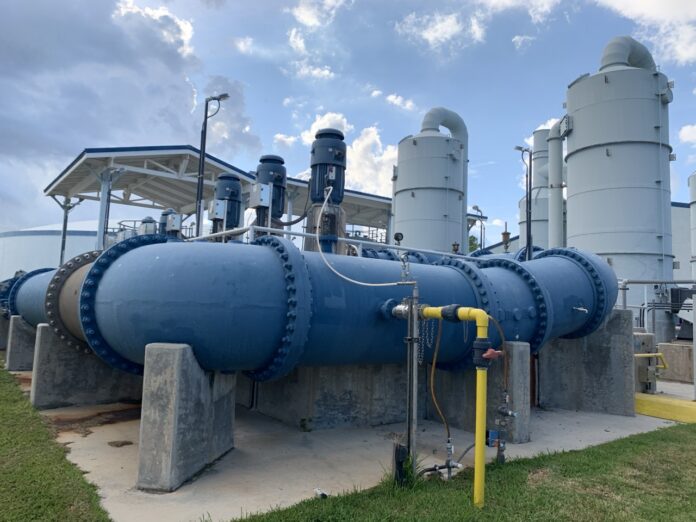
The MUC serves as a critical advisory body to the Kingman City Council, ensuring that the city’s utility systems are managed in a manner that is both responsible and forward-thinking. The Commission’s mandate directly supports the creation of resilient and sustainable communities as outlined in Sustainable Development Goal 11 (Sustainable Cities and Communities). Key responsibilities include:
- Providing expert recommendations on policies and regulations concerning water, sewer, and sanitation systems.
- Evaluating capital improvement proposals to ensure they contribute to resilient and sustainable infrastructure, in line with Sustainable Development Goal 9 (Industry, Innovation, and Infrastructure).
- Reviewing utility rate schedules and bond issues to secure the financial sustainability of essential services.
- Coordinating with the Planning and Zoning Commission to integrate utility management with broader urban development strategies, fostering a holistic approach to sustainable growth.
Direct Contributions to Sustainable Development Goals (SDGs)
The work of the MUC is fundamentally linked to the achievement of several key SDGs. By guiding the city’s utility infrastructure, the Commission plays a direct role in shaping a sustainable future for Kingman.
- SDG 6: Clean Water and Sanitation: The Commission’s primary focus is to ensure the availability and sustainable management of water and sanitation for all residents. Its oversight of water, sewer, and sanitation systems is central to achieving this goal at the municipal level.
- SDG 11: Sustainable Cities and Communities: The MUC’s review of infrastructure projects and its coordination with planning bodies are essential for making Kingman a safe, resilient, and sustainable city.
- SDG 12: Responsible Consumption and Production: Through its influence on utility policies, the Commission can promote efficient water use and effective waste management, contributing to more sustainable consumption patterns within the community.
Candidate Profile and Application Process
The City of Kingman seeks an individual dedicated to the principles of sustainable development and public service. The ideal candidate will possess an interest in public policy, urban planning, and utility management, and will be committed to contributing to the city’s long-term resilience and sustainability. The appointment provides a platform for active participation in local governance, directly influencing progress towards the SDGs.
Key Dates and Application Details
- Position: Member, Municipal Utility Commission (MUC)
- Term End Date: December 31, 2028
- Application Deadline: December 31, 2025
- Appointment Date: January 20, 2026
- Meeting Schedule: Fourth Thursday of each month at 5:30 p.m.
Applications can be submitted online at https://serve.cityofkingman.gov or by contacting the City Clerk’s Office at (928) 753-8102.
SDGs Addressed in the Article
Sustainable Development Goals (SDGs) related to the City of Kingman’s Municipal Utility Commission
-
SDG 6: Clean Water and Sanitation
This is the most directly relevant SDG, as the article states the Municipal Utility Commission (MUC) is the “advisory and review body for all things related to water, sewer, and sanitation systems.” Its responsibilities directly align with ensuring the availability and sustainable management of water and sanitation.
-
SDG 11: Sustainable Cities and Communities
The article focuses on a municipal body within the “City of Kingman” responsible for essential urban infrastructure. The MUC’s role in reviewing “capital improvement proposals” and ensuring utility systems are “planned and developed responsibly” contributes to making the city’s infrastructure sustainable and resilient.
-
SDG 16: Peace, Justice and Strong Institutions
The article describes a transparent and participatory process for governance. By advertising a vacancy on a public commission and inviting residents to apply, the City of Kingman is demonstrating a commitment to building effective, accountable, and inclusive institutions at the local level.
Specific SDG Targets Identified
Detailed analysis of SDG targets based on the article’s content
-
Target 6.b: Support and strengthen the participation of local communities in improving water and sanitation management.
- Explanation: The entire article is an announcement calling for applications from residents to fill a vacancy on the MUC. This is a direct mechanism for strengthening community participation. The text highlights this is an “opportunity is ideal for residents who care about Kingman’s water, sewer, and sanitation systems and want to help guide future infrastructure decisions,” which explicitly links community involvement to water and sanitation management.
-
Target 11.3: By 2030, enhance inclusive and sustainable urbanization and capacity for participatory, integrated and sustainable human settlement planning and management in all countries.
- Explanation: The MUC’s function is a clear example of participatory and integrated planning. The article states the commission “maintains close coordination with the Planning and Zoning Commission” and reviews “capital improvement proposals,” demonstrating an integrated approach to urban development. The call for public applications ensures the process is participatory.
-
Target 16.7: Ensure responsive, inclusive, participatory and representative decision-making at all levels.
- Explanation: The process described in the article—a public call for applications, a defined application deadline, and a formal appointment by the City Council—is a model for participatory decision-making at the municipal level. The MUC serves as an advisory body, providing recommendations to the elected City Council, which ensures that decision-making is responsive to both expert review and community input.
-
Target 6.1: By 2030, achieve universal and equitable access to safe and affordable drinking water for all.
- Explanation: While not explicitly stating a goal of universal access, the MUC’s responsibility to review “rate schedules” is directly related to the affordability of water services for the city’s residents, which is a key component of this target.
Indicators for Measuring Progress
Implied indicators for tracking progress towards the identified targets
-
Existence of a formal mechanism for public participation in water and sanitation governance.
- Explanation: The article itself is evidence of this indicator. The Municipal Utility Commission is an established body, and the public application process to “fill a vacancy” is a formal, repeatable procedure. This serves as a qualitative indicator of progress towards Targets 6.b and 16.7.
-
Number of public positions on utility management bodies filled by local residents.
- Explanation: The article announces an effort to fill one such position. The successful appointment of a resident would be a direct and measurable indicator of community participation. The number of applications received could also serve as a proxy indicator for the level of community engagement.
-
Regular review of utility rate structures.
- Explanation: The article mentions that the MUC “reviews… rate schedules.” This review process is an indicator that the city has a system in place to assess the affordability and financial sustainability of its water and sanitation services, which is relevant to Target 6.1.
-
Formal coordination between utility management and urban planning bodies.
- Explanation: The article states that the MUC “maintains close coordination with the Planning and Zoning Commission.” This established inter-commission coordination is a strong indicator of integrated planning, as called for in Target 11.3.
Summary Table of SDGs, Targets, and Indicators
| SDGs | Targets | Indicators |
|---|---|---|
| SDG 6: Clean Water and Sanitation |
|
|
| SDG 11: Sustainable Cities and Communities |
|
|
| SDG 16: Peace, Justice and Strong Institutions |
|
|
Source: signalsaz.com
What is Your Reaction?
 Like
0
Like
0
 Dislike
0
Dislike
0
 Love
0
Love
0
 Funny
0
Funny
0
 Angry
0
Angry
0
 Sad
0
Sad
0
 Wow
0
Wow
0