















































House fire, construction near sensor leads to poor air quality reading in Northwest Georgia, Chattanooga – Chattanooga Times Free Press

Localized Air Quality Anomaly in Northwest Georgia: A Sustainable Development Goals Perspective
Executive Summary
A recent air quality event in Northwest Georgia, where monitoring systems recorded unhealthy particulate levels, highlights critical challenges and mechanisms related to several Sustainable Development Goals (SDGs). The incident, though highly localized and temporary, underscores the importance of robust environmental monitoring for safeguarding public health (SDG 3), ensuring sustainable urban environments (SDG 11), and understanding the interplay of human activity and climate factors (SDG 13).
Incident Analysis and Impact on SDG 3: Good Health and Well-being
Event Details
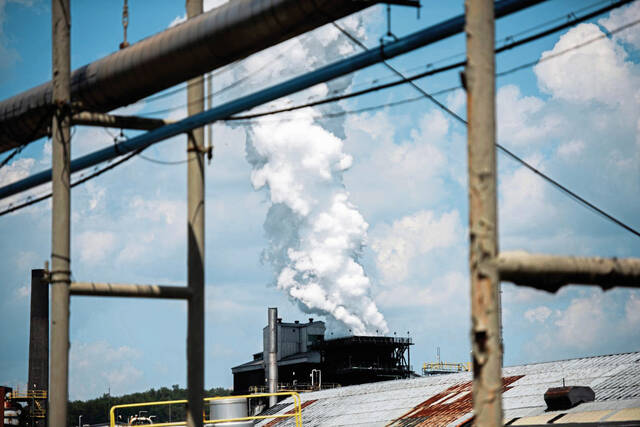
An air quality monitoring sensor near Rossville, Georgia, registered a significant decline in air quality, reaching the “Red” category with an Air Quality Index (AQI) peak approaching 200. This level poses a direct threat to human health, a core concern of SDG 3.
- Cause: The Georgia Environmental Protection Division identified the source as a combination of particulates from a nearby house fire and dust from local construction activities.
- Meteorological Conditions: A recent cold front resulted in denser, more stagnant air, which trapped the pollutants and prevented their dispersal.
- Scope: Officials confirmed the readings were highly localized to the immediate vicinity of the sensor and did not represent a widespread regional health risk.
Implications for Public Health
The incident serves as a critical reminder of the health risks associated with poor air quality, directly impacting the targets of SDG 3. The recorded AQI levels present a clear danger, particularly to vulnerable populations.
- Vulnerable Groups: Individuals with lung or heart disease, older adults, and children face the most significant risk from such pollution events.
- General Public: “Red” level air quality is classified as unhealthy for the general population, with sensitive groups potentially facing serious health effects.
- Information Dissemination: While no official alert was issued for this localized event, the monitoring and subsequent investigation are vital processes for protecting community health and well-being.
Urban Monitoring and SDG 11: Sustainable Cities and Communities
The Role of Environmental Monitoring Systems
This event demonstrates the essential function of air quality monitoring networks in achieving SDG 11, which aims to make cities and human settlements safe, resilient, and sustainable. The detection of the anomaly, even on a micro-scale, is a testament to the systems in place to manage the environmental impact of urban activities.
- Detection and Investigation: The automated sensor reading prompted an investigation by the state’s Environmental Protection Division, showcasing a functional governance framework for environmental protection.
- Data Reporting: The state agency’s protocol to report the cause of the spike to the federal Environmental Protection Agency ensures data integrity and contributes to a national understanding of localized pollution events.
- Regional Context: During the same period, air quality in nearby Chattanooga, Tennessee, dropped to a “Moderate” level before recovering, illustrating the dynamic nature of air quality within a metropolitan region and the need for comprehensive monitoring to support sustainable urban planning.
Environmental Factors and Broader SDG Linkages
Contributing Elements and Connections to SDG 13 & SDG 15
While the primary cause was localized, officials noted other factors that influence regional air quality, connecting the incident to broader environmental goals such as SDG 13 (Climate Action) and SDG 15 (Life on Land).
- Weather Patterns (SDG 13): The impact of a cold front and light wind speeds on pollutant concentration highlights how meteorological conditions, which are influenced by climate change, can exacerbate local pollution events.
- Land Use and Management (SDG 15): An official from the Chattanooga-Hamilton County region noted that small-scale seasonal burning in the Southeast can contribute to air quality degradation, linking land management practices directly to atmospheric health.
Air Quality Index (AQI) as a Public Information Tool
The AQI provides a standardized framework for communicating air quality status to the public, supporting the objectives of both SDG 3 and SDG 11 by empowering citizens with health-relevant information.
- Green (0-50): No health concern.
- Yellow (51-100): Moderate concern; potential effects for unusually sensitive groups.
- Orange (101-150): Unhealthy for sensitive groups.
- Red (151-200): Unhealthy for the general public; serious effects possible for sensitive groups.
- Purple (201-300): Very unhealthy; increased health risk for everyone.
- Maroon (301+): Hazardous; health warning of emergency conditions for the entire population.
Analysis of Sustainable Development Goals in the Article
-
Which SDGs are addressed or connected to the issues highlighted in the article?
-
SDG 3: Good Health and Well-being
This goal is central to the article, which focuses on the health implications of poor air quality. The text explicitly states that when air quality drops to the “red” category, it is “unhealthy for the general public” and that “sensitive groups may face serious health effects.” It identifies these vulnerable groups as “people with lung or heart disease, older adults and children,” directly linking environmental conditions to human health outcomes.
-
SDG 11: Sustainable Cities and Communities
The article discusses air quality within specific communities, namely Northwest Georgia, Rossville, and Chattanooga. The issue of localized pollution from a house fire and construction directly relates to managing the environmental quality of human settlements. The involvement of local and state agencies like the Georgia Environmental Protection Division and the Chattanooga-Hamilton County air monitoring manager highlights the governance and infrastructure needed to make cities and communities safe and sustainable.
-
SDG 3: Good Health and Well-being
-
What specific targets under those SDGs can be identified based on the article’s content?
-
Target 3.9: By 2030, substantially reduce the number of deaths and illnesses from hazardous chemicals and air, water and soil pollution and contamination.
The article’s entire premise is the measurement and reporting of air pollution (caused by particulates, smoke, and dust) and the associated health risks. The description of air quality levels from “Moderate” to “Hazardous” and the specific mention of increased health risks for everyone at higher levels directly align with the goal of reducing illnesses from air pollution.
-
Target 11.6: By 2030, reduce the adverse per capita environmental impact of cities, including by paying special attention to air quality and municipal and other waste management.
The article is a case study of monitoring the environmental impact of a city, with a specific focus on air quality. The actions of the Georgia Environmental Protection Division to investigate high sensor readings and report the cause to the federal EPA are practical examples of paying “special attention to air quality” as mandated by this target.
-
Target 3.9: By 2030, substantially reduce the number of deaths and illnesses from hazardous chemicals and air, water and soil pollution and contamination.
-
Are there any indicators mentioned or implied in the article that can be used to measure progress towards the identified targets?
- Indicator for Target 3.9: The article implicitly relates to Indicator 3.9.1 (Mortality rate attributed to household and ambient air pollution). While it does not mention mortality rates, it extensively discusses the primary tool for measuring the health risk of ambient air pollution: the Air Quality Index (AQI). The article details the different AQI levels (Green, Yellow, Orange, Red, etc.) and their corresponding health concerns. The specific reading that “inched toward a health alert at an air quality index peak of 200” is a direct measurement used to assess the level of air pollution and its potential to cause illness.
- Indicator for Target 11.6: The article’s content is directly relevant to Indicator 11.6.2 (Annual mean levels of fine particulate matter (e.g. PM2.5 and PM10) in cities). The text explicitly states that the sensor “picked up particulates from a nearby house fire and dirt-heavy construction” and that the AQI measures “ozone and particle pollution.” The monitoring activities described by the Georgia Environmental Protection Division and the Chattanooga-Hamilton County region are the exact processes used to collect data for this indicator. The AQI values reported are a real-time reflection of the concentration of these pollutants.
-
Create a table with three columns titled ‘SDGs, Targets and Indicators” to present the findings from analyzing the article. In this table, list the Sustainable Development Goals (SDGs), their corresponding targets, and the specific indicators identified in the article.
SDGs Targets Indicators SDG 3: Good Health and Well-being Target 3.9: By 2030, substantially reduce the number of deaths and illnesses from hazardous chemicals and air, water and soil pollution and contamination. Indicator 3.9.1 (Implied): The article uses the Air Quality Index (AQI) as a direct measure of ambient air pollution. Specific values like the “peak of 200” and the different color-coded health alert levels (Red, Yellow) are used to quantify the health risk from pollution. SDG 11: Sustainable Cities and Communities Target 11.6: By 2030, reduce the adverse per capita environmental impact of cities, including by paying special attention to air quality… Indicator 11.6.2 (Implied): The article discusses the measurement of “particulates” and “particle pollution” in urban areas (Northwest Georgia, Chattanooga). The monitoring of these pollutants by local and state agencies is the method for tracking this indicator.
Source: timesfreepress.com
What is Your Reaction?
 Like
0
Like
0
 Dislike
0
Dislike
0
 Love
0
Love
0
 Funny
0
Funny
0
 Angry
0
Angry
0
 Sad
0
Sad
0
 Wow
0
Wow
0