














































;Resize=620#)











How climate change is reshaping the art and science of Sierra snowmaking – CBS News
Report on Climate Change Adaptation in the Ski Industry and Alignment with Sustainable Development Goals
Introduction: Climate Change Impacts on Mountain Economies and Communities
Recent climate variability, characterized by warmer temperatures and inconsistent storms, is posing a significant threat to the operational viability of the ski industry. This directly impacts the economic stability of mountain regions, jeopardizing progress towards several Sustainable Development Goals (SDGs).
- SDG 8: Decent Work and Economic Growth: The ski industry is a primary source of employment and economic activity in many mountain communities. Operational disruptions threaten jobs and local economic growth.
- SDG 11: Sustainable Cities and Communities: The resilience of communities dependent on winter tourism is compromised by unpredictable winter seasons, affecting their long-term sustainability.
Primary Challenge: A Manifestation of SDG 13 (Climate Action)
The core challenge facing ski resorts is a direct consequence of climate change, demanding urgent adaptation measures as outlined in SDG 13. The industry can no longer rely on historical weather patterns for a sufficient snow base.
- Insufficient Natural Snowfall: A fresh layer of powder is often inadequate to prepare resorts for the winter season.
- Delayed Openings: Most resorts have been forced to push back opening dates, impacting revenue and employment.
- Increased Operational Uncertainty: Fluctuating temperatures and humidity make natural and artificial snow production difficult to predict and manage.
Industry Response: Innovation and Infrastructure for Resilience
In response, the ski industry is investing heavily in technological and strategic solutions, aligning with SDG 9 (Industry, Innovation, and Infrastructure). This involves building resilient infrastructure and fostering innovation to adapt to new climate realities.
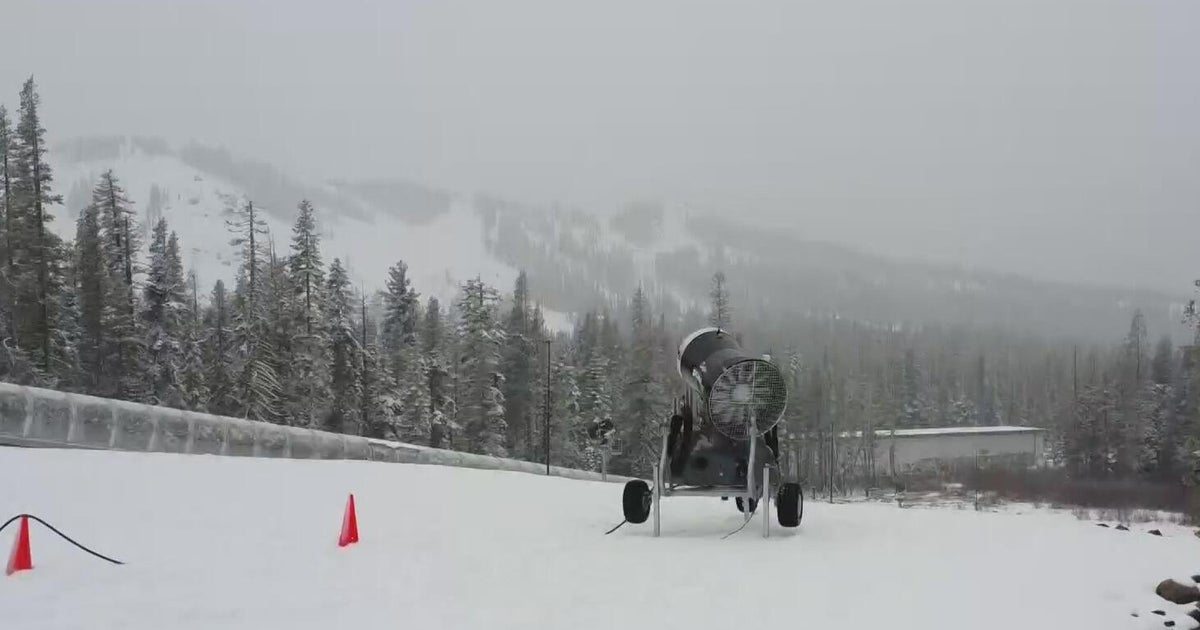
- Advanced Snowmaking Systems: Resorts are increasingly dependent on artificial snowmaking to build the necessary base, turning to experts and consultants to develop effective strategies.
- Strategic Master Planning: Facilities like Sugar Bowl Resort are implementing multi-year master plans to expand and modernize their snowmaking infrastructure for long-term viability.
- Customized Solutions: Adaptation strategies are tailored to the unique challenges of each location, considering factors like elevation, temperature patterns, and water access.
Resource Management and Operational Considerations
The primary adaptation strategy, snowmaking, presents its own set of complexities and resource management challenges, particularly concerning SDG 6 (Clean Water and Sanitation).
- Dependence on Climatic Variables: Successful snowmaking requires a delicate balance of low temperature and low humidity, conditions which are becoming less reliable.
- Water Resource Management: Snowmaking is a water-intensive process (“using air and water to create snow”). Sustainable water management is a critical component of these adaptation plans to avoid impacting local ecosystems and water supplies, aligning with the principles of SDG 6.
Conclusion: Adapting to a Changing Climate for Sustainable Futures
The ski industry’s proactive investment in technology, expert consultation, and long-term planning represents a critical effort in climate adaptation. These measures are essential not only for the survival of the industry but also for supporting the sustainable development of the mountain communities that depend on it. The ongoing challenge is to adapt to an ever-changing climate, ensuring that these efforts contribute positively to achieving SDG 8, SDG 9, SDG 11, and SDG 13.
Analysis of the Article in Relation to Sustainable Development Goals
1. Which SDGs are addressed or connected to the issues highlighted in the article?
The article discusses issues that connect to several Sustainable Development Goals (SDGs). The primary focus on climate change and its impact on the ski industry, along with the industry’s response, links directly to the following SDGs:
- SDG 13: Climate Action: The core issue of the article is the impact of climate change on winter weather patterns, forcing ski resorts to adapt. The text explicitly states, “staff say climate change is changing everything” and mentions adapting to “unpredictable weather patterns” and an “ever-changing climate.”
- SDG 8: Decent Work and Economic Growth: The article highlights an entire industry (ski resorts) struggling to maintain its economic viability. Pushing back opening dates affects revenue, employment, and the local economy. The efforts to make snow are aimed at sustaining business operations and, by extension, jobs.
- SDG 9: Industry, Innovation, and Infrastructure: The response of the ski resorts involves significant investment in technology and infrastructure. The article mentions that Sugar Bowl Resort “has launched a multi-year master plan to expand and modernize its snowmaking system” and that resorts are “investing heavily in technology, consulting, and long-term planning.” This points to building resilient infrastructure and fostering innovation to adapt to new challenges.
- SDG 12: Responsible Consumption and Production: The process of snowmaking involves the consumption of natural resources, specifically water and energy (“using air and water to create snow”). The need for “effective snowmaking strategies” implies a drive towards more efficient use of these resources to produce the desired outcome, which aligns with sustainable production patterns.
2. What specific targets under those SDGs can be identified based on the article’s content?
Based on the article’s discussion of adaptation, technological investment, and resource management, the following specific SDG targets can be identified:
- Target 13.1: Strengthen resilience and adaptive capacity to climate-related hazards and natural disasters in all countries.
- The entire article is a case study of this target. Ski resorts are strengthening their resilience to climate-related hazards (warmer temperatures, lack of natural snow) by developing adaptive strategies like advanced snowmaking and long-term planning.
- Target 9.1: Develop quality, reliable, sustainable and resilient infrastructure, including regional and transborder infrastructure, to support economic development and human well-being, with a focus on affordable and equitable access for all.
- The mention of a “multi-year master plan to expand and modernize its snowmaking system” directly relates to developing resilient infrastructure to support the local economy dependent on the ski industry.
- Target 8.2: Achieve higher levels of economic productivity through diversification, technological upgrading and innovation, including through a focus on high-value added and labour-intensive sectors.
- Resorts are pursuing technological upgrading (“modernize its snowmaking system”) and innovation (hiring consultants like Brendan Ryan) to maintain their economic productivity despite the challenges posed by climate change.
- Target 12.2: By 2030, achieve the sustainable management and efficient use of natural resources.
- The article describes snowmaking as a process that uses “air and water.” The development of “most effective snowmaking strategies” implies a move towards more efficient management of these natural resources to ensure the industry’s long-term viability.
3. Are there any indicators mentioned or implied in the article that can be used to measure progress towards the identified targets?
The article does not provide quantitative data, but it implies several qualitative and quantitative indicators that could be used to measure progress:
- Indicator for Target 13.1 (Adaptive Capacity): The existence and implementation of climate adaptation plans. The article explicitly mentions Sugar Bowl’s “multi-year master plan” for its snowmaking project, which serves as a direct indicator of a formal strategy to adapt to climate change. The number of resorts adopting such plans could be a metric.
- Indicator for Target 9.1 (Resilient Infrastructure): The level of investment in modernizing infrastructure. The article states that “Resorts are investing heavily in technology, consulting, and long-term planning.” The monetary value of these investments or the percentage of snowmaking systems upgraded could serve as an indicator.
- Indicator for Target 8.2 (Economic Productivity): The ability to maintain a consistent operating season. The article notes that resorts have been “forced to push back their opening dates.” A key indicator of success for their new strategies would be the number of operational days per season or the ability to meet scheduled opening dates, which directly impacts revenue and employment.
- Indicator for Target 12.2 (Resource Efficiency): The efficiency of water and energy use in snowmaking. While not quantified, the goal of mapping out the “most effective snowmaking strategies” implies a focus on maximizing snow output while minimizing resource input (water, energy). Progress could be measured by the volume of water used per cubic meter of snow produced.
4. Table of SDGs, Targets, and Indicators
| SDGs | Targets | Indicators (Identified or Implied in the Article) |
|---|---|---|
| SDG 13: Climate Action | 13.1: Strengthen resilience and adaptive capacity to climate-related hazards. | Number of ski resorts with formal climate adaptation strategies or master plans (e.g., Sugar Bowl’s “multi-year master plan”). |
| SDG 9: Industry, Innovation and Infrastructure | 9.1: Develop quality, reliable, sustainable and resilient infrastructure. | Level of investment in modernizing snowmaking systems and related technology. |
| SDG 8: Decent Work and Economic Growth | 8.2: Achieve higher levels of economic productivity through technological upgrading and innovation. | Number of operational days per season; ability to meet scheduled opening dates. |
| SDG 12: Responsible Consumption and Production | 12.2: Achieve the sustainable management and efficient use of natural resources. | Efficiency of water and energy use in snowmaking operations (implied by the search for “most effective snowmaking strategies”). |
Source: cbsnews.com
What is Your Reaction?
 Like
0
Like
0
 Dislike
0
Dislike
0
 Love
0
Love
0
 Funny
0
Funny
0
 Angry
0
Angry
0
 Sad
0
Sad
0
 Wow
0
Wow
0