





















































How to actually feed America – Slow Boring
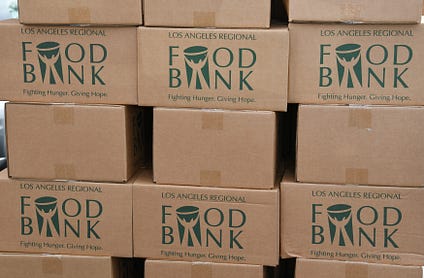
Report on Feeding America’s Innovative Food Distribution System and its Contribution to Sustainable Development Goals
Introduction: Addressing Inefficiencies in Food Aid to Advance SDG 2
The distribution of charitable food in the United States has historically faced significant logistical and informational challenges, hindering progress toward Sustainable Development Goal 2 (Zero Hunger). The nation’s largest charitable food network, Feeding America, previously operated on a queue-based system. This model forced regional food banks into inefficient choices, often requiring them to accept and pay for the transport of non-essential items to maintain their position for future donations. This process created waste and failed to align resources with specific community needs, undermining efforts related to both SDG 2 and SDG 12 (Responsible Consumption and Production).
A Market-Based Solution: A Partnership for the Goals (SDG 17)
Approximately two decades ago, Feeding America initiated a collaboration with economists from the University of Chicago to redesign its allocation system, exemplifying a multi-stakeholder approach in line with SDG 17 (Partnerships for the Goals). The objective was to create a fair, efficient, and predictable method for matching donated food with the needs of over 200 food banks.
The resulting innovation was a market-based auction system founded on a custom internal currency called “shares.”
- Allocation of Shares: Each food bank receives an allotment of shares based on the population size and poverty levels of the community it serves, directly addressing SDG 10 (Reduced Inequalities) by providing greater purchasing power to higher-need areas.
- National Auction: Food banks use their shares to bid on available truckloads of food in a daily national auction. This mechanism allows them to signal their specific needs and preferences.
- Price Discovery: The bidding process reveals the relative value of different food items to the network. High-demand, shelf-stable items command higher share prices, while less desirable or perishable items clear at low or even negative prices, incentivizing their removal and use, thereby reducing waste.
Impact on Key Sustainable Development Goals
The implementation of this choice-based system has had a transformational impact on the effectiveness of food distribution, contributing directly to several SDGs.
- SDG 2 (Zero Hunger): The system empowers food banks to acquire food that meets the nutritional and cultural needs of their communities. By replacing guesswork with a data-driven allocation model, it ensures that resources are directed toward their highest-value use in combating hunger. Food banks can strategically plan acquisitions to create a balanced and reliable food supply for those in need.
- SDG 12 (Responsible Consumption and Production): The auction model significantly reduces food loss and waste within the supply chain. By creating an efficient market for surplus food, it increased the flow of donations by 50 million pounds in its first year. The system ensures that perishable items are routed quickly and efficiently, preventing spoilage and contributing to Target 12.3, which aims to halve per capita global food waste.
- SDG 10 (Reduced Inequalities): The system is designed with equity as a core principle. By allocating shares based on need and providing mechanisms for smaller food banks to participate effectively, it levels the playing field and ensures that resources are not disproportionately claimed by larger, better-resourced organizations.
System Outcomes and Future Considerations
The data generated over nearly two decades has provided invaluable insights and measurable improvements in the fight against hunger.
Key Outcomes:
- Enhanced Efficiency: The system eliminated logistical absurdities, such as shipping unwanted items across the continent, ensuring resources are used effectively.
- Informed Decision-Making: Food banks gained visibility into the national supply, enabling them to plan strategically rather than react to unpredictable offers.
- Increased Donor Confidence: The efficiency and liquidity of the market incentivized donors, leading to a substantial increase in the volume of available food.
- Data-Driven Insights: The auction revealed significant preference disparities (e.g., a 35:1 value ratio for cereal over some produce), allowing the network to better understand and respond to demand.
Feeding America is now considering evolving the system further, potentially to a posted-price “supermarket” model. However, this evolution requires careful consideration of the trade-offs between simplicity and the current auction’s built-in safeguards for equity, which are crucial for maintaining fairness, especially during periods of acute demand. The success of the choice system demonstrates that structuring charitable work with well-designed systems is critical to maximizing its impact and advancing the Sustainable Development Goals.
Analysis of Sustainable Development Goals in the Article
1. Which SDGs are addressed or connected to the issues highlighted in the article?
- SDG 2: Zero Hunger: The article’s central theme is the effort by Feeding America to combat hunger by improving the distribution of donated food to people in need. It details the challenges and solutions in getting food to communities experiencing hunger, which is the core mission of this SDG.
- SDG 12: Responsible Consumption and Production: The system described is designed to manage “surplus food from grocery stores, producers, and farms.” By creating an efficient market to redistribute this food, the initiative directly addresses the problem of food loss and waste in the supply chain, a key component of SDG 12.
- SDG 1: No Poverty: Food banks serve as a critical social safety net for low-income individuals and families. The article mentions the system serves “millions of them” and allocates resources based on the number of people served, directly contributing to social protection measures for the poor and vulnerable.
- SDG 10: Reduced Inequalities: The article highlights how the old system created inequities between “food-rich banks” and “food-poor banks.” The new auction system was designed specifically to create a fairer, more equitable distribution of resources by giving “the highest-need food banks” more purchasing power and implementing safeguards to help smaller organizations.
- SDG 17: Partnerships for the Goals: The success of the initiative is a direct result of a multi-stakeholder partnership. The article describes the collaboration between Feeding America (a civil society organization), University of Chicago professors (academia), and food donors (private sector) to solve a complex allocation problem.
2. What specific targets under those SDGs can be identified based on the article’s content?
-
SDG 2: Zero Hunger
- Target 2.1: “By 2030, end hunger and ensure access by all people, in particular the poor and the vulnerable… to safe, nutritious and sufficient food all year round.” The entire purpose of Feeding America’s network and the new distribution system is to ensure that donated food reaches vulnerable populations effectively, thereby increasing their access to sufficient food.
-
SDG 12: Responsible Consumption and Production
- Target 12.3: “By 2030, halve per capita global food waste at the retail and consumer levels and reduce food losses along production and supply chains…” The article explains that the system takes surplus food from producers and retailers and prevents it from being wasted. The improved efficiency prevents spoilage and ensures items that might otherwise be discarded (like five-gallon buckets of pickles) find a use.
-
SDG 10: Reduced Inequalities
- Target 10.2: “By 2030, empower and promote the social, economic and political inclusion of all…” The article describes how the market-based system was designed to “level the playing field” between large and small food banks. By allocating “shares” based on need and creating mechanisms to help smaller banks participate, the system promotes more equitable access to resources among the organizations serving vulnerable communities.
-
SDG 17: Partnerships for the Goals
- Target 17.17: “Encourage and promote effective public, public-private and civil society partnerships…” The project is a textbook example of this target. It involved a partnership between Feeding America (civil society), business school professors (academia), and corporate food donors (private sector) to design and implement a more effective system.
3. Are there any indicators mentioned or implied in the article that can be used to measure progress towards the identified targets?
- For Target 12.3 (Reduce food loss): A direct quantitative indicator is mentioned: “the supply of food moving through the network rose by 50 million pounds in the first year after the new system’s introduction.” This figure measures the increase in rescued food, directly indicating a reduction in food loss.
- For Target 2.1 (End hunger): The article implies an indicator used by the system itself: the allocation of the “shares” currency was “based on how many people it served.” This metric of people served is a direct way to measure the reach and scale of the anti-hunger efforts. The mention of serving “millions of them” (families) further points to this scale.
- For Target 10.2 (Reduce inequalities): The article provides qualitative indicators of a more equitable system. The shift away from a random queue to a market where “highest-need food banks entered the market with more purchasing power” is an indicator of progress. The ability of smaller banks to “delegate bids” also serves as a measure of a more inclusive and fair system.
- For Target 17.17 (Partnerships): The existence and success of the collaboration between Feeding America, the University of Chicago, and corporate donors is itself a qualitative indicator of an effective partnership. The article details how the expertise from academia was applied to solve a real-world problem for a charitable network, demonstrating the partnership’s effectiveness.
Summary Table: SDGs, Targets, and Indicators
| SDGs | Targets | Indicators |
|---|---|---|
| SDG 2: Zero Hunger | 2.1: End hunger and ensure access for all people to safe, nutritious and sufficient food. | The number of people served by each food bank, which is used as the basis for allocating “shares” in the auction system. |
| SDG 12: Responsible Consumption and Production | 12.3: Halve per capita global food waste and reduce food losses along production and supply chains. | The increase in food distribution by 50 million pounds in the first year of the new system, representing a direct reduction in food loss. |
| SDG 10: Reduced Inequalities | 10.2: Empower and promote the social and economic inclusion of all. | The system’s design features that promote equity, such as allocating more “shares” (purchasing power) to the highest-need food banks and allowing smaller banks to delegate bids. |
| SDG 17: Partnerships for the Goals | 17.17: Encourage and promote effective public-private and civil society partnerships. | The successful collaboration between Feeding America (civil society), University of Chicago professors (academia), and food donors (private sector) to create and implement the system. |
Source: slowboring.com
What is Your Reaction?
 Like
0
Like
0
 Dislike
0
Dislike
0
 Love
0
Love
0
 Funny
0
Funny
0
 Angry
0
Angry
0
 Sad
0
Sad
0
 Wow
0
Wow
0