





































How Toyota and BYD are influencing the future of electric vehicles – Latest news from Azerbaijan
Report on Japan’s Electric Vehicle Market Growth and Sustainable Development Goals (SDGs)
Overview of Japan’s EV Market
Japan’s electric vehicle (EV) market is experiencing gradual growth, significantly slower than in China, Europe, or the United States. Recent data highlight Toyota and BYD as key contributors to this modest expansion, reflecting a cautious adoption of EVs within the country.
Current Market Dynamics
- Incremental increase in EV registrations year on year.
- Battery electric vehicles (BEVs) still represent a small share of new car sales compared to global standards.
- Consumer conservatism, loyalty to domestic brands, and preference for hybrids shape the slow transition.
Factors Contributing to Modest EV Growth
- Japanese consumers prioritize reliability, resale value, and total cost of ownership.
- Widespread acceptance of hybrid vehicles as a low-risk, fuel-efficient alternative.
- Charging infrastructure, though improving, remains less convenient than traditional refueling.
- Urban density and limited private parking complicate home charging options.
Role of Toyota in EV Market Development
- Toyota leverages brand power and dealer networks to influence EV adoption.
- Historically focused on hybrids, Toyota is now expanding its battery electric vehicle lineup.
- Toyota’s approach promotes a balanced electrification portfolio including hybrids, plug-in hybrids, and EVs.
- Cautious full electrification strategy due to battery supply concerns, emissions reduction efficiency of hybrids, and infrastructure variability.
BYD’s Impact on Japan’s EV Market
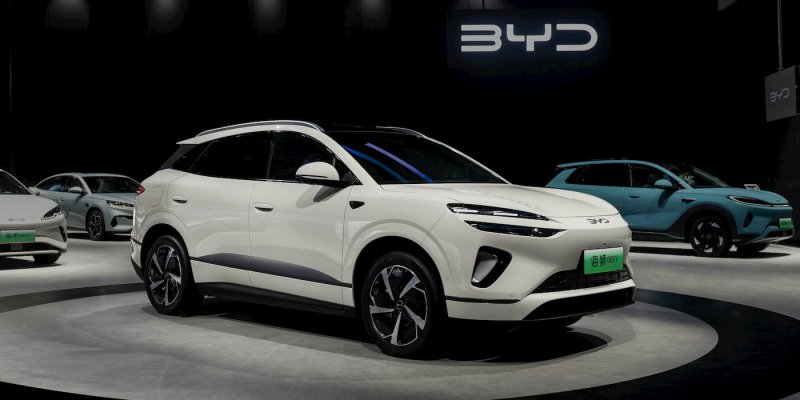
- BYD enters Japan with an EV-only strategy, emphasizing battery and drivetrain expertise.
- Gaining traction among urban buyers and fleet customers despite Japan’s strong brand loyalty.
- Competitive pricing, vertical integration in battery production, and urban-focused product lineup support BYD’s growth.
- BYD introduces competitive pressure, encouraging domestic automakers to accelerate EV offerings.
Comparison of Toyota and BYD EV Strategies
- Toyota: Balanced approach with multiple electrification options prioritizing reliability and consumer choice.
- BYD: Focused approach on battery electric vehicles emphasizing technological maturity and cost efficiency.
Significance of Hybrids in Japan’s Electrification
Hybrids remain central to Japan’s strategy, viewed as “electrified enough” by many consumers, offering emissions reductions without significant lifestyle changes. This widespread hybrid adoption partially explains the slower growth of pure EVs.
Government Policy and Infrastructure
- Government incentives support EV purchases and charging infrastructure but avoid aggressive mandates.
- Policy focus on long-term carbon neutrality aligns with Japan’s industrial and consumer culture.
- Charging infrastructure improvements continue, but convenience and availability remain challenges, especially for apartment dwellers.
Consumer Interest and Pricing
- Growing interest among younger and environmentally conscious consumers.
- Cautious adoption due to concerns about reliability, resale value, and long-term support.
- Price sensitivity limits EV adoption; BYD’s competitive pricing and Toyota’s trusted brand help mitigate this barrier.
Market Growth and International Comparison
- Modest growth characterized by incremental increases rather than rapid expansion.
- Japan’s early hybrid adoption contrasts with China and Europe’s direct push toward battery electric vehicles.
- Japan prioritizes stability and consumer confidence over rapid disruption.
Implications for Automakers and Market Outlook
- Toyota faces global pressure to accelerate EV strategy but aligns well with domestic consumer expectations.
- BYD’s presence symbolizes potential for foreign EV specialists to compete in Japan, encouraging innovation and competition.
- Other manufacturers observe the modest growth led by Toyota and BYD as a model balancing innovation with consumer needs.
- Long-term outlook anticipates continued EV adoption alongside hybrids and other electrification solutions.
Emphasis on Sustainable Development Goals (SDGs)
SDG 7: Affordable and Clean Energy
- Expansion of EVs contributes to cleaner energy consumption in the transport sector.
- Government incentives and infrastructure development support the transition to sustainable energy sources.
SDG 9: Industry, Innovation, and Infrastructure
- Technological advancements by Toyota and BYD promote innovation in electric mobility.
- Investment in charging infrastructure enhances sustainable industrial development.
SDG 11: Sustainable Cities and Communities
- EV adoption reduces urban air pollution, improving health and sustainability in dense cities.
- Challenges with urban charging infrastructure highlight the need for sustainable urban planning.
SDG 12: Responsible Consumption and Production
- Consumer preference for hybrids reflects responsible consumption patterns balancing environmental impact and practicality.
- BYD’s vertical integration supports sustainable production practices.
SDG 13: Climate Action
- Transition to EVs and hybrids contributes to reducing greenhouse gas emissions from the transport sector.
- Japan’s gradual electrification aligns with national carbon neutrality goals.
Conclusion
Toyota and BYD represent two credible paths toward sustainable electrification in Japan, balancing continuity with innovation. Their combined efforts support a steady, consumer-aligned transition that contributes to multiple Sustainable Development Goals, particularly in clean energy, innovation, sustainable cities, responsible consumption, and climate action. Although growth is modest, it reflects a realistic and culturally appropriate approach to long-term transformation in Japan’s automotive sector.
1. Sustainable Development Goals (SDGs) Addressed or Connected
-
SDG 7: Affordable and Clean Energy
- The article discusses the growth of electric vehicles (EVs) in Japan, which relates to the transition to clean energy in the transport sector.
- Charging infrastructure development and energy efficiency are key themes.
-
SDG 9: Industry, Innovation and Infrastructure
- Innovation in EV technology by Toyota and BYD, and infrastructure challenges such as charging station availability are highlighted.
-
SDG 11: Sustainable Cities and Communities
- Urban density and limited private parking affect EV adoption, linking to sustainable urban planning and transport.
-
SDG 12: Responsible Consumption and Production
- Consumer behavior, preference for hybrids, and cost considerations relate to sustainable consumption patterns.
-
SDG 13: Climate Action
- EV adoption contributes to reducing greenhouse gas emissions from transportation, supporting climate mitigation efforts.
2. Specific Targets Under Those SDGs Identified
-
SDG 7 Targets
- Target 7.2: Increase substantially the share of renewable energy in the global energy mix – implied through EV adoption and clean energy use.
- Target 7.3: Double the global rate of improvement in energy efficiency – linked to EV efficiency and hybrid vehicle use.
-
SDG 9 Targets
- Target 9.4: Upgrade infrastructure and retrofit industries to make them sustainable, with increased resource-use efficiency – related to charging infrastructure improvements and EV technology development.
-
SDG 11 Targets
- Target 11.2: Provide access to safe, affordable, accessible and sustainable transport systems for all – connected to EV adoption and urban transport challenges.
-
SDG 12 Targets
- Target 12.8: Ensure that people have the relevant information and awareness for sustainable development and lifestyles – reflected in consumer awareness and cautious adoption of EVs.
-
SDG 13 Targets
- Target 13.2: Integrate climate change measures into national policies, strategies and planning – seen in Japan’s government policies supporting gradual EV adoption and carbon neutrality.
3. Indicators Mentioned or Implied to Measure Progress
-
EV Sales and Market Share
- Year-on-year increase in EV registrations and market share of battery electric vehicles versus hybrids and conventional vehicles.
-
Charging Infrastructure Availability
- Number and convenience of public and private EV charging stations, especially in urban areas.
-
Consumer Adoption and Interest
- Consumer interest levels, especially among younger buyers and environmentally conscious consumers.
- Consumer perceptions of reliability, resale value, and total cost of ownership.
-
Government Policy and Incentives
- Extent and impact of government incentives for EV purchases and infrastructure development.
-
Emissions Reduction
- Reduction in greenhouse gas emissions from the transport sector, linked to EV and hybrid vehicle adoption.
4. Table of SDGs, Targets and Indicators
| SDGs | Targets | Indicators |
|---|---|---|
| SDG 7: Affordable and Clean Energy |
|
|
| SDG 9: Industry, Innovation and Infrastructure |
|
|
| SDG 11: Sustainable Cities and Communities |
|
|
| SDG 12: Responsible Consumption and Production |
|
|
| SDG 13: Climate Action |
|
|
Source: news.az
What is Your Reaction?
 Like
0
Like
0
 Dislike
0
Dislike
0
 Love
0
Love
0
 Funny
0
Funny
0
 Angry
0
Angry
0
 Sad
0
Sad
0
 Wow
0
Wow
0