


























IMFN and COP30: How Model Forests are at the forefront of community-based climate action and conservation – International Union for Conservation of Nature
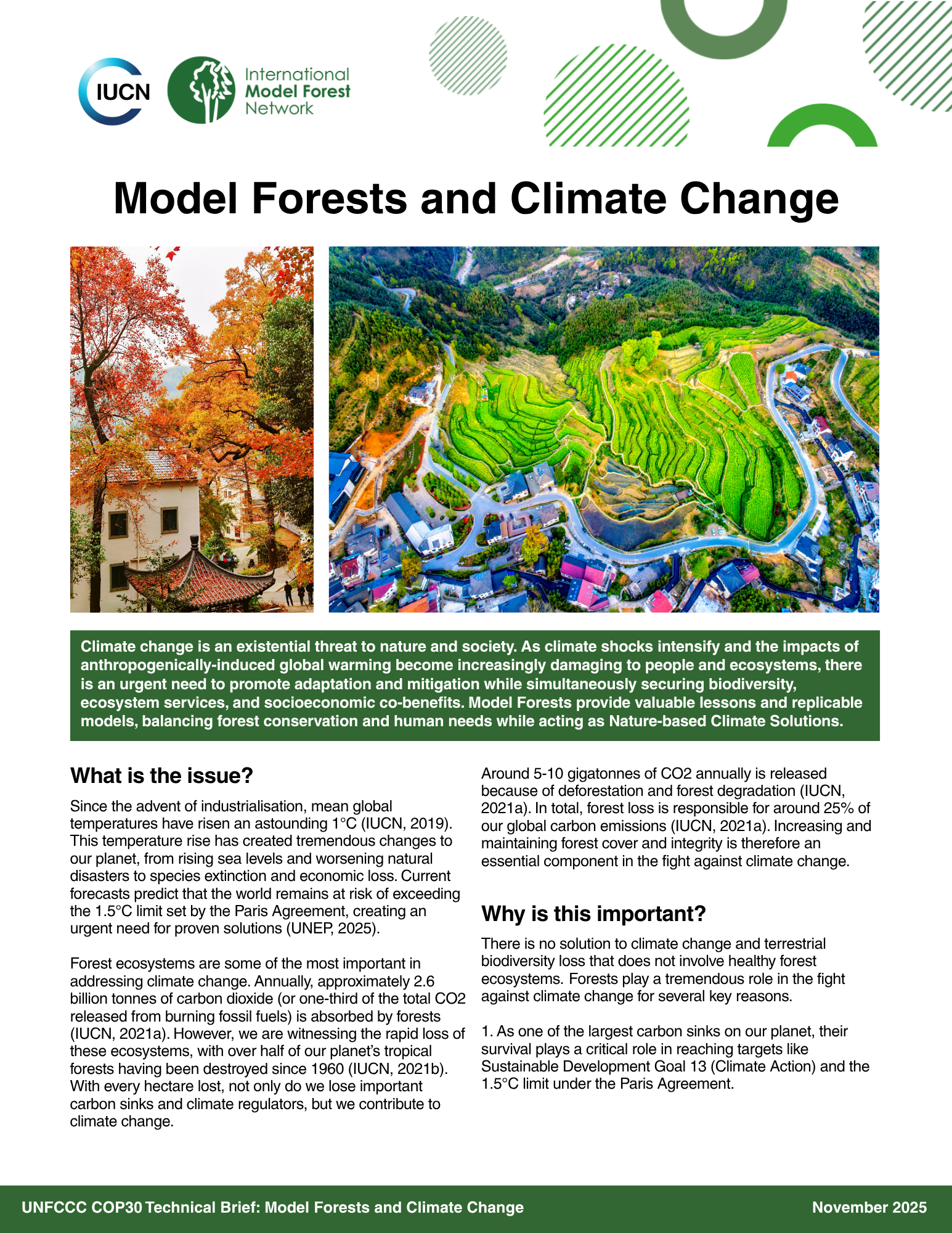
Report on the Role of Model Forests in Achieving Sustainable Development Goals
Introduction: The Nexus of Forests, Climate, and Sustainable Development
The imperative to address climate change, a central theme of COP30, is intrinsically linked to the global Sustainable Development Goals (SDGs). Forests are a critical natural asset in this context, directly contributing to climate mitigation and adaptation efforts. Their role is fundamental to achieving SDG 13 (Climate Action) by absorbing approximately 2.6 billion tonnes of carbon dioxide annually. Furthermore, forests provide essential ecosystem services that underpin numerous other goals, including:
- SDG 15 (Life on Land): By providing habitats and regulating ecosystems.
- SDG 6 (Clean Water and Sanitation): Through the facilitation of water cycles.
- SDG 2 (Zero Hunger): By providing food and supporting livelihoods for billions of people.
- SDG 3 (Good Health and Well-being): Via air filtration and disease mediation.
Global deforestation, however, weakens the capacity of these ecosystems, jeopardizing progress on these goals. The sustainable management, restoration, and conservation of forests are therefore paramount. The International Model Forest Network (IMFN) presents a proven framework for implementing integrated, Nature-Positive solutions that align with the 2030 Agenda for Sustainable Development.
The International Model Forest Network: A Framework for SDG Implementation
Operational Principles and Global Reach
The International Model Forest Network (IMFN) is a global community of practice dedicated to the sustainable management of forest-based landscapes. A Model Forest is a large-scale landscape encompassing forests, farms, protected areas, and communities, managed through a multi-stakeholder partnership. This approach moves beyond traditional timber-focused forestry to a holistic model that integrates social, environmental, and economic objectives, directly reflecting the indivisible nature of the SDGs. The network currently includes over 60 Model Forests in 35 countries, covering more than 70 million hectares.
The core principles of the Model Forest approach are instrumental in localizing the SDGs:
- Partnership: A broad coalition of stakeholders, including governments, community members, and producers, ensures inclusive decision-making, advancing SDG 17 (Partnerships for the Goals).
- Landscape-Level Management: An integrated approach that addresses interconnected challenges across a large geographical area.
- Commitment to Sustainability: A governance structure that balances environmental, social, and economic priorities.
- Participatory Governance: Empowering local communities and stakeholders to design and implement solutions, contributing to SDG 16 (Peace, Justice and Strong Institutions).
Model Forests as a Catalyst for Integrated SDG Action
Advancing Climate Action and Life on Land (SDG 13 & SDG 15)
Model Forests serve as ‘living laboratories’ for developing and implementing strategies that address climate change and biodiversity loss. They contribute directly to Nationally Determined Contributions (NDCs) by maintaining ecosystem integrity and restoring degraded areas. Key contributions include:
- Halting and Reversing Biodiversity Loss: By creating economic opportunities centered on biodiversity-friendly practices and establishing conservation frameworks, Model Forests support the Global Biodiversity Framework and targets under SDG 15.
- Achieving Land Degradation Neutrality (LDN): The focus on restoration and sustainable land management is central to achieving SDG Target 15.3.
- Building Climate Resilience: By promoting climate-resilient value chains and peer-to-peer learning, communities enhance their capacity to adapt to climate impacts.
Promoting Gender Equality and Social Inclusion (SDG 5 & SDG 10)
Recognizing that environmental challenges disproportionately affect women and marginalized groups, the Model Forest approach actively promotes social equity. This advances SDG 5 (Gender Equality) and SDG 10 (Reduced Inequalities) through several mechanisms:
- Implementation of inclusive governance strategies that ensure women’s participation in natural resource management.
- Strengthening women’s access to finance and land tenure.
- Enabling gender-sensitive vocational training and leadership development.
Empirical evidence from Model Forests demonstrates that the inclusion of women and Indigenous peoples in conservation and management leads to more effective and durable outcomes.
Enhancing Economic and Community Resilience (SDG 8 & SDG 11)
Model Forests foster sustainable economic development that does not come at the expense of environmental health. By creating alternative livelihoods and food sources, they reduce pressure on threatened species and contribute to SDG 8 (Decent Work and Economic Growth). They also enhance community safety and resilience, a key component of SDG 11 (Sustainable Cities and Communities), by developing localized disaster risk reduction (DRR) strategies. This is exemplified by the testing of Integrated Fire Management (IFM) strategies to combat the growing threat of wildfires, building local capacity for prevention and response.
Strategic Partnerships for Amplifying Impact (SDG 17)
The IUCN and IMFN Collaboration
The partnership between IUCN and the IMFN exemplifies the collaborative spirit of SDG 17. This joint effort supports Model Forests globally to scale up community-based solutions. The primary objectives of this collaboration are:
- To accelerate Forest Landscape Restoration (FLR) initiatives.
- To promote gender-responsive governance in the forestry sector.
- To foster the development of climate-resilient value chains.
- To amplify the voices of local communities pioneering sustainable forest management.
This partnership highlights the power of cooperation in addressing complex global challenges, demonstrating that multi-stakeholder platforms are essential for achieving shared environmental and development objectives.
Conclusion: A Proven Model for the Post-COP30 Agenda
As the international community moves forward from COP30, the Model Forest approach offers a tested and adaptable framework for achieving the targets of the Paris Agreement and the 2030 Agenda. It proves that people-centric strategies are fundamental to resolving the climate crisis. By placing trust, transparency, and knowledge exchange at the center of Nature-based Solutions, Model Forests reconcile the well-being of people with the health of the planet. Elevating and scaling these community-led, partnership-based approaches is imperative for creating a sustainable future where both people and nature can thrive.
Analysis of Sustainable Development Goals in the Article
1. Which SDGs are addressed or connected to the issues highlighted in the article?
The article on Model Forests addresses several interconnected Sustainable Development Goals by highlighting a holistic approach to forest management that balances environmental, social, and economic needs. The primary SDGs identified are:
- SDG 13: Climate Action: The article’s central theme is the link between forests and climate change. It emphasizes the role of forests in absorbing carbon dioxide, the impact of climate change on forest ecosystems (e.g., increased wildfires), and how Model Forests contribute to climate adaptation and mitigation strategies.
- SDG 15: Life on Land: This goal is directly addressed through the focus on sustainable forest management, halting deforestation, restoring degraded lands, and conserving biodiversity. The article explicitly states that Model Forests are crucial for implementing strategies for “sustainable management, restoration, and conservation of secondary forests alongside protection of primary forests.”
- SDG 5: Gender Equality: The article dedicates a section to how Model Forests “play a tremendous role in incubating and accelerating gender-responsive approaches to forest management.” It discusses empowering women through inclusive policies, participation in governance, access to finance, and land tenure.
- SDG 17: Partnerships for the Goals: The entire concept of the International Model Forest Network (IMFN) is built on partnership. The article describes it as a “voluntary global community of practice” that brings together diverse stakeholders like governments, producers, and community members. The collaboration between IUCN and IMFN is also highlighted as a key partnership.
2. What specific targets under those SDGs can be identified based on the article’s content?
Based on the activities and outcomes described in the article, the following specific SDG targets can be identified:
-
Under SDG 13 (Climate Action):
- Target 13.1: Strengthen resilience and adaptive capacity to climate-related hazards and natural disasters in all countries. The article mentions that Model Forests are “pivotal to developing strategies to combat natural disasters, like wildfires” and test “Integrated Fire Management (IFM) strategies.”
- Target 13.2: Integrate climate change measures into national policies, strategies and planning. The article notes that the efforts of Model Forests have “contributed to the Nationally Determined Contributions (NDCs) of Parties,” which are central to national climate policies.
-
Under SDG 15 (Life on Land):
- Target 15.2: By 2020, promote the implementation of sustainable management of all types of forests, halt deforestation, restore degraded forests and substantially increase afforestation and reforestation globally. The article’s core subject, the Model Forest approach, is a direct implementation of this target, focusing on “sustainable management, restoration, and conservation.”
- Target 15.5: Take urgent and significant action to reduce the degradation of natural habitats, halt the loss of biodiversity and, by 2020, protect and prevent the extinction of threatened species. The article states that Model Forests have “made strides in biodiversity conservation by increasing public awareness… creating alternative livelihoods and food sources to remove pressure from threatened species, and establishing frameworks for restoration and conservation.”
-
Under SDG 5 (Gender Equality):
- Target 5.5: Ensure women’s full and effective participation and equal opportunities for leadership at all levels of decision-making in political, economic and public life. The article describes how Model Forests advance this target through “inclusive policies and governance strategies that support women’s participation in Forest Landscape Restoration (FLR).”
- Target 5.a: Undertake reforms to give women equal rights to economic resources, as well as access to ownership and control over land and other forms of property, financial services, inheritance and natural resources, in accordance with national laws. This is directly referenced when the article mentions that Model Forests work to “strengthen women’s access to finance and land tenure.”
-
Under SDG 17 (Partnerships for the Goals):
- Target 17.16: Enhance the Global Partnership for Sustainable Development, complemented by multi-stakeholder partnerships that mobilize and share knowledge, expertise, technology and financial resources, to support the achievement of the Sustainable Development Goals in all countries, in particular developing countries. The IMFN is described as a “voluntary global community of practice” and a platform for stakeholders to “convene, engage in dialogue, and find solutions,” perfectly embodying this target.
3. Are there any indicators mentioned or implied in the article that can be used to measure progress towards the identified targets?
The article implies several indicators that can be used to measure progress, even if it does not cite specific SDG indicator codes:
-
For SDG 13 (Climate Action):
- Implied Indicator for Target 13.1: The development and implementation of disaster risk reduction (DRR) strategies at the local level. The article’s mention of developing “DRR strategies that are tailored to local realities” suggests that the number and effectiveness of such strategies could be a measure of progress.
- Implied Indicator for Target 13.2: The amount of carbon sequestered by forests. The article quantifies this by stating forests “absorb approximately 2.6 billion tonnes of carbon dioxide” annually, indicating that measuring carbon stock and sequestration rates in Model Forests is a key performance metric.
-
For SDG 15 (Life on Land):
- Implied Indicator for Target 15.2: The area of land under sustainable forest management. The article states the IMFN encompasses “over 70,000,000 hectares of land,” which serves as a direct indicator of the scale of this approach. Progress would be measured by the expansion of this area.
- Implied Indicator for Target 15.5: The reduction in the rate of biodiversity loss. The article’s focus on halting and reversing biodiversity loss and creating “biodiversity-friendly practices” implies that monitoring species populations and habitat integrity within Model Forests would be a relevant indicator.
-
For SDG 5 (Gender Equality):
- Implied Indicator for Target 5.5: The level of women’s participation in natural resource management bodies. The article’s emphasis on “women’s participation in Forest Landscape Restoration (FLR)” suggests that tracking the percentage of women in decision-making roles within these community structures is a key metric.
- Implied Indicator for Target 5.a: The number or percentage of women with secure land tenure and access to finance within the Model Forest landscapes. This is implied by the goal to “strengthen women’s access to finance and land tenure.”
-
For SDG 17 (Partnerships for the Goals):
- Implied Indicator for Target 17.16: The number and scope of active partnerships. The article provides a clear indicator with the growth of the IMFN to “more than 60 Model Forests across 35 countries” and the specific partnership between IUCN and IMFN.
4. Table of SDGs, Targets, and Indicators
| SDGs | Targets | Indicators (as identified or implied in the article) |
|---|---|---|
| SDG 13: Climate Action |
13.1: Strengthen resilience and adaptive capacity to climate-related hazards.
13.2: Integrate climate change measures into national policies. |
– Number of local disaster risk reduction (DRR) strategies developed (e.g., for wildfires).
– Tonnes of carbon dioxide absorbed/sequestered by forests under management. |
| SDG 15: Life on Land |
15.2: Promote sustainable management of all types of forests, halt deforestation, and restore degraded forests.
15.5: Halt the loss of biodiversity. |
– Total area (in hectares) of forest landscapes under the Model Forest sustainable management approach.
– Progress in halting and reversing biodiversity loss, measured through biodiversity-friendly practices and conservation frameworks. |
| SDG 5: Gender Equality |
5.5: Ensure women’s full and effective participation and equal opportunities for leadership.
5.a: Give women equal rights to economic resources and access to ownership and control over land. |
– Percentage of women participating in forest governance and decision-making bodies.
– Number of women with strengthened access to finance and secure land tenure within the project areas. |
| SDG 17: Partnerships for the Goals | 17.16: Enhance the Global Partnership for Sustainable Development, complemented by multi-stakeholder partnerships. |
– Number of countries and sites participating in the International Model Forest Network (IMFN). – Number of active multi-stakeholder partnerships (e.g., IUCN and IMFN collaboration). |
Source: iucn.org
What is Your Reaction?
 Like
0
Like
0
 Dislike
0
Dislike
0
 Love
0
Love
0
 Funny
0
Funny
0
 Angry
0
Angry
0
 Sad
0
Sad
0
 Wow
0
Wow
0