























































Inclusive innovation: one school leaders’ incredible Nature, Nurture, Network curriculum – EducationHQ
The Hills Christian Community School: Advancing Sustainable Digital Education
Introduction
The Hills Christian Community School, a unique F-12 nature school located on nine acres of pristine play space in South Australia, serves 600 students. It stands as a model institution for technological excellence and innovation, recognized nationally for its commitment to inclusive and sustainable education aligned with the Sustainable Development Goals (SDGs).
Integration of Nature and Digital Innovation
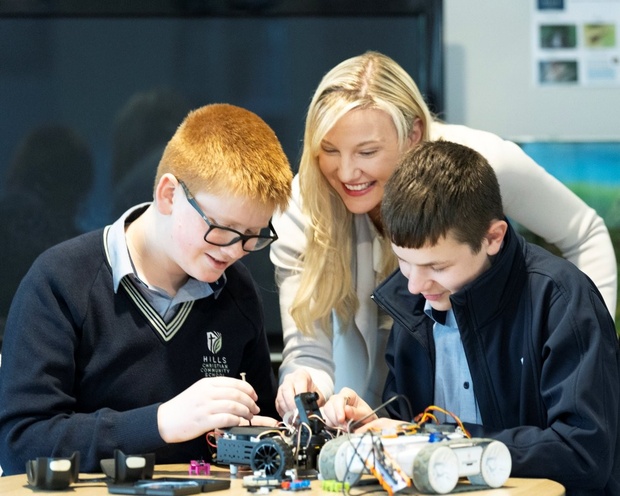
Situated alongside the Onkaparinga Valley River, the school leverages its natural environment to foster a holistic learning experience. Under the leadership of Colleen O’Rourke, the school’s digital innovation leader, the curriculum emphasizes equity, creativity, and system-wide impact, particularly supporting neurodivergent students.
Focus on Inclusive Education and Equity (SDG 4: Quality Education, SDG 10: Reduced Inequalities)
- Approximately 40% of students are identified with a disability (NSCCD).
- O’Rourke oversees the inclusive education team, selecting digital tools tailored to diverse learning needs.
- Her efforts promote equitable access to education through adaptive technologies and AI-driven differentiation for students with ADHD, ASD, dyslexia, and complex learning needs.
Curriculum Innovation and Connection to Nature (SDG 4: Quality Education, SDG 15: Life on Land)
- Remapping the digital technology curriculum to connect digital literacy with natural systems.
- Using augmented reality and immersive technologies to explore parallels between digital systems and ecological processes, such as:
- Comparing digital inputs and outputs with plant life cycles.
- Examining swarm systems in nature alongside AI neural networks.
- Studying internet network systems in relation to tree and Mycorrhizal underground networks.
- Embedding the United Nations Sustainable Development Goals into digital sustainable solutions education.
Innovative Learning Spaces and Technology (SDG 9: Industry, Innovation and Infrastructure, SDG 12: Responsible Consumption and Production)
- The Digital Innovation Centre, housed in a renovated farmhouse within the nature play space, serves as a hub for immersive, interdisciplinary learning.
- Utilization of low-cost, open-source tools to ensure scalability and accessibility across diverse school settings.
- Features include a 360-degree immersive room with projection mapping and an augmented reality sandbox mapping the Onkaparinga Valley River.
Scalability and Outreach (SDG 17: Partnerships for the Goals)
- O’Rourke’s program is designed to be adaptable for schools without natural environments, ensuring broad applicability.
- Collaboration with other educational institutions, including co-developing cross-cultural VR storytelling projects with Nyangatjatjara College near Uluru.
- Sharing expertise through presentations at EdTech SA, Science Teachers’ Association, and AI education summits.
- Interest from schools nationwide, including Tasmania, in adopting the program to address digital dependence and reconnect students with nature.
Research and Measurable Impact
In partnership with the University of South Australia (UniSA), O’Rourke collects data to track improvements in student engagement, creativity, and executive functioning, demonstrating the program’s effectiveness.
Promoting Ethical Use of AI and Digital Tools (SDG 4: Quality Education, SDG 16: Peace, Justice and Strong Institutions)
- Emphasis on establishing ethical foundations and policies before integrating AI tools in education.
- Encouraging educators to model responsible AI use, addressing bias and misinformation.
- Highlighting AI’s potential for creative content creation and enhancing digital literacy.
Conclusion
The Hills Christian Community School exemplifies a forward-thinking approach to education that aligns with multiple Sustainable Development Goals. Through innovative curriculum design, inclusive practices, sustainable use of technology, and ethical AI integration, the school fosters an environment where students develop digital literacy while maintaining a deep connection to nature and wellbeing.
1. Sustainable Development Goals (SDGs) Addressed or Connected
- SDG 4: Quality Education
- The article focuses on innovative, inclusive education practices, digital literacy, and equitable learning opportunities for neurodivergent students.
- SDG 3: Good Health and Well-being
- There is emphasis on student wellbeing, reducing digital dependence, and supporting mental health through nature connection and adaptive technologies.
- SDG 10: Reduced Inequalities
- The school’s inclusive approach for students with disabilities and neurodivergence addresses equity and reduces inequalities in education.
- SDG 9: Industry, Innovation and Infrastructure
- Use of digital innovation, STEM education, AI, and adaptive technologies highlights innovation in education infrastructure.
- SDG 15: Life on Land
- Connection of digital learning to natural systems and sustainability education links to protecting terrestrial ecosystems.
2. Specific Targets Under Those SDGs Identified
- SDG 4: Quality Education
- Target 4.5: Eliminate gender disparities and ensure equal access to all levels of education and vocational training for vulnerable populations, including persons with disabilities.
- Target 4.7: Ensure that all learners acquire knowledge and skills needed to promote sustainable development, including education for sustainable lifestyles and human rights.
- SDG 3: Good Health and Well-being
- Target 3.4: Promote mental health and well-being.
- SDG 10: Reduced Inequalities
- Target 10.2: Empower and promote social, economic and political inclusion of all, irrespective of disability.
- SDG 9: Industry, Innovation and Infrastructure
- Target 9.5: Enhance scientific research, upgrade technological capabilities, and encourage innovation.
- SDG 15: Life on Land
- Target 15.9: Integrate ecosystem and biodiversity values into planning and development processes.
3. Indicators Mentioned or Implied to Measure Progress
- Student Engagement and Creativity
- Through the research partnership with UniSA, data is gathered to track measurable gains in student engagement, creativity, and executive functioning.
- Inclusion and Accessibility
- Percentage of students with disabilities (noted as nearly 40% NSCCD identified) benefiting from adaptive and inclusive technologies.
- Digital Literacy and Sustainable Education
- Implementation of curricula that cross-compare digital systems with natural systems and use UN sustainability goals as a framework.
- Use of low-cost and open-source digital tools to ensure accessibility and scalability.
- Reduction in Digital Dependence
- Qualitative measures of reduced digital dependence and increased wellbeing through nature connection and balanced digital use.
- Ethical Use of AI
- Adoption of policies and practices for ethical AI use in education, including discussions on bias and misinformation.
4. Table of SDGs, Targets and Indicators
| SDGs | Targets | Indicators |
|---|---|---|
| SDG 4: Quality Education |
|
|
| SDG 3: Good Health and Well-being |
|
|
| SDG 10: Reduced Inequalities |
|
|
| SDG 9: Industry, Innovation and Infrastructure |
|
|
| SDG 15: Life on Land |
|
|
Source: educationhq.com
What is Your Reaction?
 Like
0
Like
0
 Dislike
0
Dislike
0
 Love
0
Love
0
 Funny
0
Funny
0
 Angry
0
Angry
0
 Sad
0
Sad
0
 Wow
0
Wow
0