






















































India’s Yellow Pea Import Duty Shake-Up: A Global Ripple in Agricultural Markets – FinancialContent
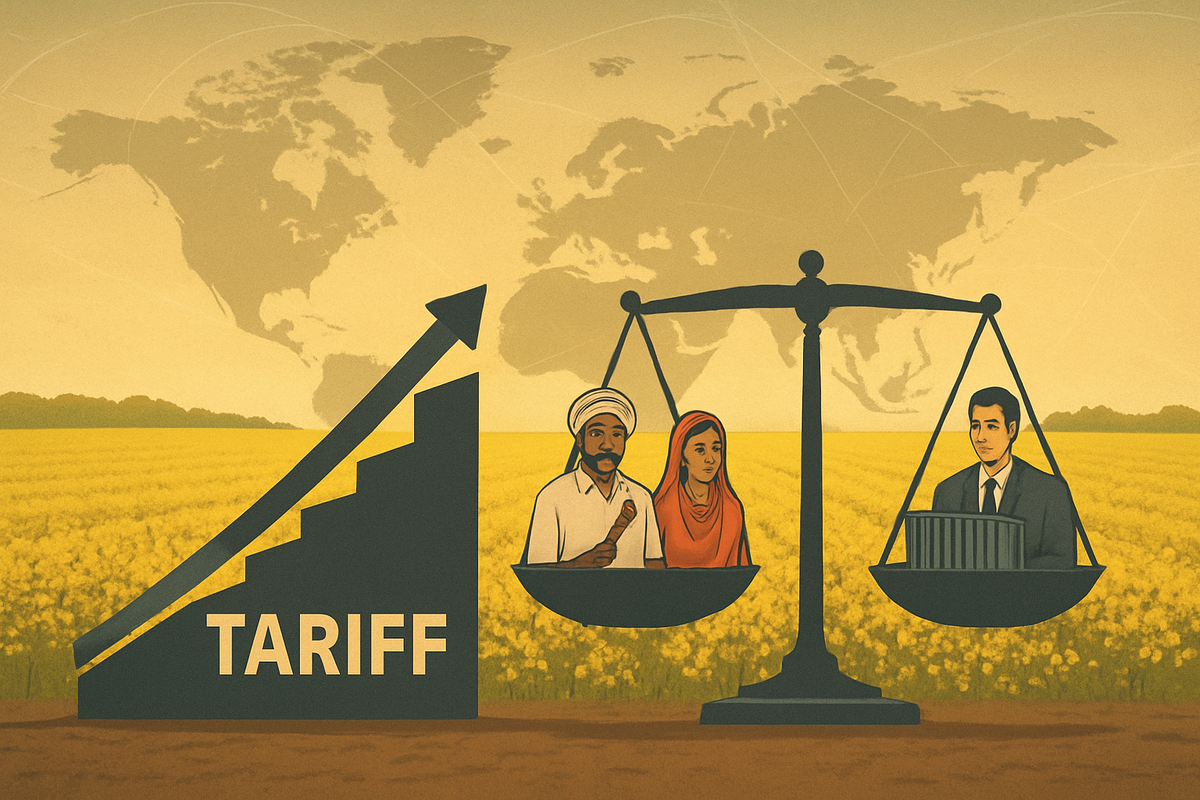
Report on India’s Yellow Pea Import Duty and its Alignment with Sustainable Development Goals
This report analyzes the Government of India’s decision to re-impose a 30% import duty on yellow peas, effective November 1, 2025. The policy is evaluated through the framework of the United Nations Sustainable Development Goals (SDGs), with a focus on its implications for domestic agriculture, food security, and international trade.
Policy Impact on Sustainable Development Goals (SDGs)
The tariff reinstatement is a strategic measure directly supporting several key SDGs by prioritizing the economic stability of domestic agricultural producers and enhancing national food self-sufficiency.
SDG 2: Zero Hunger
The policy is fundamentally aligned with the objectives of SDG 2, which aims to end hunger, achieve food security, improve nutrition, and promote sustainable agriculture.
- Target 2.3 (Double Smallholder Productivity and Incomes): By protecting domestic pulse prices from inexpensive imports, the duty aims to ensure farmers receive remuneration at or above the Minimum Support Price (MSP). This directly supports the economic viability and incomes of millions of small-scale farmers.
- Target 2.4 (Sustainable Food Production Systems): The measure encourages resilient agricultural practices by making domestic pulse cultivation more profitable, thereby strengthening India’s internal food production systems and reducing reliance on volatile global supply chains.
SDG 1: No Poverty & SDG 8: Decent Work and Economic Growth
The tariff serves as a tool to address rural poverty and support the agricultural workforce, which is a cornerstone of the Indian economy.
- SDG 1 (No Poverty): Stabilizing and increasing the income of farmers, particularly small and marginal producers, is a direct intervention to alleviate poverty in rural communities.
- SDG 8 (Decent Work and Economic Growth): A profitable agricultural sector ensures the livelihood of a significant portion of the population, contributing to inclusive and sustainable economic growth by protecting a key domestic industry.
SDG 12: Responsible Consumption and Production
The policy implicitly promotes more sustainable production patterns by incentivizing local sourcing over long-distance importation.
- By making domestic pulses more competitive, the tariff encourages a reduction in the carbon footprint associated with international shipping and supports national food self-sufficiency.
Market and Stakeholder Analysis
The policy creates a clear distinction between domestic beneficiaries and international stakeholders, reshaping market dynamics across the supply chain.
Domestic Market Impact
The immediate effect has been a recalibration of India’s internal pulse market, providing crucial support to local producers.
- Price Stabilization: Domestic yellow pea prices surged by ₹150-325 per quintal, with corresponding increases in other pulses like chana and masur. This correction helps align market prices with the government’s MSP.
- Farmer Welfare: Indian farmers are the primary beneficiaries, poised to receive better prices for their produce ahead of the rabi-sowing season, which enhances their financial stability.
- Processing Sector: Indian importers and food processors face higher input costs, which may be passed on to consumers or absorbed, impacting profit margins.
International Market Impact
Major yellow pea exporting nations and companies face significant headwinds, highlighting the tension between national policy and global trade (SDG 17: Partnerships for the Goals).
- Reduced Demand: Key exporters, including Canada and Russia, will experience a substantial reduction in demand from India, a primary market.
- Corporate Impact: Commodity trading houses such as Viterra and Richardson International must now recalibrate their export strategies and seek alternative markets.
- Global Price Pressure: The diversion of supply previously destined for India may exert downward pressure on global yellow pea prices.
Strategic Outlook and Long-Term Implications
The re-imposition of the tariff is expected to catalyze long-term structural shifts in both the Indian and global pulse markets.
Path Towards Self-Reliance
The policy reinforces India’s strategic goal of achieving greater self-sufficiency in pulse production, a critical component of national nutrition and food security (SDG 2).
- It is anticipated to spur greater private and public investment in domestic pulse cultivation, storage infrastructure, and processing capabilities.
- The move may encourage the adoption of agricultural technology to improve domestic yields in response to more favorable market conditions.
Global Trade Reconfiguration
International suppliers must adapt to the new trade landscape, which will likely involve market diversification and strategic repositioning.
- Market Diversification: Exporters from Canada and Russia will need to identify and develop new markets to absorb surpluses.
- Trade Relations: The unilateral tariff action could become a point of discussion in bilateral trade relations, testing the principles of global partnership under SDG 17.
- Precedent: This action is consistent with India’s historical use of trade policy to manage domestic agricultural markets, signaling a predictable pattern for global commodity traders.
Analysis of Sustainable Development Goals in the Article
1. Which SDGs are addressed or connected to the issues highlighted in the article?
-
SDG 1: No Poverty
The article connects to SDG 1 by focusing on policies designed to improve the financial well-being of farmers. The re-imposition of the import duty is explicitly aimed at providing “crucial support to Indian farmers” and ensuring “improved profitability and greater stability for millions of small and marginal farmers,” which is a direct effort to alleviate poverty in the agricultural sector.
-
SDG 2: Zero Hunger
This is a central theme, as the article discusses food security, agricultural markets, and farmer livelihoods. The policy aims to achieve “greater self-sufficiency in its food basket” by bolstering domestic production of pulses, which are a “critical dietary staple” in India. It also addresses the stability of food markets by managing import flows to protect local food producers.
-
SDG 8: Decent Work and Economic Growth
The article relates to SDG 8 by highlighting a government intervention intended to protect a key domestic industry (agriculture) and the livelihoods of those who depend on it. The decision to support domestic pulse prices against cheap imports is a measure to ensure the economic viability of farming, which contributes to the broader national economy and secures the work of millions of farmers.
-
SDG 12: Responsible Consumption and Production
The policy shift described in the article aligns with SDG 12 by promoting more sustainable and self-reliant production patterns. By aiming to “reduce reliance on imported pulses,” India is encouraging domestic production. This shift can lead to a more stable and locally-sourced food supply chain, reducing the vulnerabilities associated with long-distance international trade.
-
SDG 17: Partnerships for the Goals
The article directly addresses international trade dynamics, a key component of SDG 17. It details how a national trade policy (the 30% import duty) impacts global partners like Canada and Russia. The discussion of “trade relations,” potential “retaliatory measures,” and the use of “tariffs” to manage markets falls squarely within the scope of global trade and partnerships.
2. What specific targets under those SDGs can be identified based on the article’s content?
-
Target 2.3: Double the agricultural productivity and incomes of small-scale food producers.
The article directly supports this target. The primary goal of the import duty is to “bolster domestic pulse prices” and ensure they trade closer to or above their Minimum Support Prices (MSPs). This is a direct mechanism to increase the incomes of “millions of small and marginal farmers” who were hurt by depressed prices from cheap imports.
-
Target 2.c: Adopt measures to ensure the proper functioning of food commodity markets… to help limit extreme food price volatility.
The Indian government’s action is a clear example of this target in practice. By re-imposing a tariff, it is actively managing its domestic food commodity market to correct a price depression caused by a “glut of cheap imports.” The article notes this move is consistent with India’s “past policy toolkit” for managing its pulse markets and curbing “excessive imports.”
-
Target 1.2: By 2030, reduce at least by half the proportion of men, women and children of all ages living in poverty…
The policy’s focus on improving the “profitability and greater stability” for farmers is a direct effort to reduce poverty within this large demographic. By protecting their livelihoods from being undermined by import surges, the government is working to ensure a stable income, which is fundamental to poverty reduction.
-
Target 17.10: Promote a universal, rules-based, open, non-discriminatory and equitable multilateral trading system…
The article discusses the use of a trade policy tool—a tariff—which is a key element of the global trading system. The decision impacts trade relations with Canada and Russia and is described as part of a “broader global trend of nations prioritizing domestic food security and farmer welfare” through trade policy. This highlights the complexities and national interests within the global trading system that this target addresses.
3. Are there any indicators mentioned or implied in the article that can be used to measure progress towards the identified targets?
- Domestic Commodity Prices: The article explicitly mentions this as a key indicator of the policy’s impact. It states that “Domestic yellow pea prices in Indian mandis (wholesale markets) surged by ₹150-325 per quintal,” and prices for other pulses like chana and masur also saw increases. This directly measures the impact on farmer income potential (Target 2.3).
- Prices Relative to Minimum Support Price (MSP): This is an implied indicator of farmer welfare. The article notes that before the policy change, domestic pulses “were trading below their respective Minimum Support Prices (MSPs).” A key measure of success would be whether prices now consistently meet or exceed the MSP, ensuring farmers receive a fair price.
- Import Volumes: The policy’s objective is to “staunch the flow of inexpensive foreign yellow peas.” Therefore, a direct indicator of its effectiveness would be the measured reduction in the volume of yellow pea imports into India from countries like Canada and Russia.
- Tariff Rates: The “30% import duty on yellow peas” is itself a specific, measurable indicator of trade policy (Target 17.10). Changes in this rate over time would be a primary indicator of the government’s trade stance on this commodity.
- Domestic Acreage for Pulse Cultivation: The article suggests a long-term outcome could be “increased acreage for pulse cultivation in the upcoming seasons.” This would be a clear indicator of progress towards greater agricultural self-sufficiency (related to SDG 2 and SDG 12).
4. Table of SDGs, Targets, and Indicators
| SDGs | Targets | Indicators Identified in the Article |
|---|---|---|
| SDG 1: No Poverty | Target 1.2: Reduce poverty in all its dimensions according to national definitions. |
|
| SDG 2: Zero Hunger |
Target 2.3: Double the agricultural productivity and incomes of small-scale food producers.
Target 2.c: Adopt measures to ensure the proper functioning of food commodity markets and limit price volatility. |
|
| SDG 8: Decent Work and Economic Growth | Target 8.1: Sustain per capita economic growth in accordance with national circumstances. |
|
| SDG 12: Responsible Consumption and Production | Target 12.2: Achieve the sustainable management and efficient use of natural resources. |
|
| SDG 17: Partnerships for the Goals | Target 17.10: Promote a universal, rules-based, open, non-discriminatory and equitable multilateral trading system. |
|
Source: markets.financialcontent.com
What is Your Reaction?
 Like
0
Like
0
 Dislike
0
Dislike
0
 Love
0
Love
0
 Funny
0
Funny
0
 Angry
0
Angry
0
 Sad
0
Sad
0
 Wow
0
Wow
0