Iran a reliable energy supplier for Turkey, ready to extend gas export contract: FM Araghchi – PressTV
Bilateral Cooperation Report: Iran and Turkey Advance Sustainable Development Goals
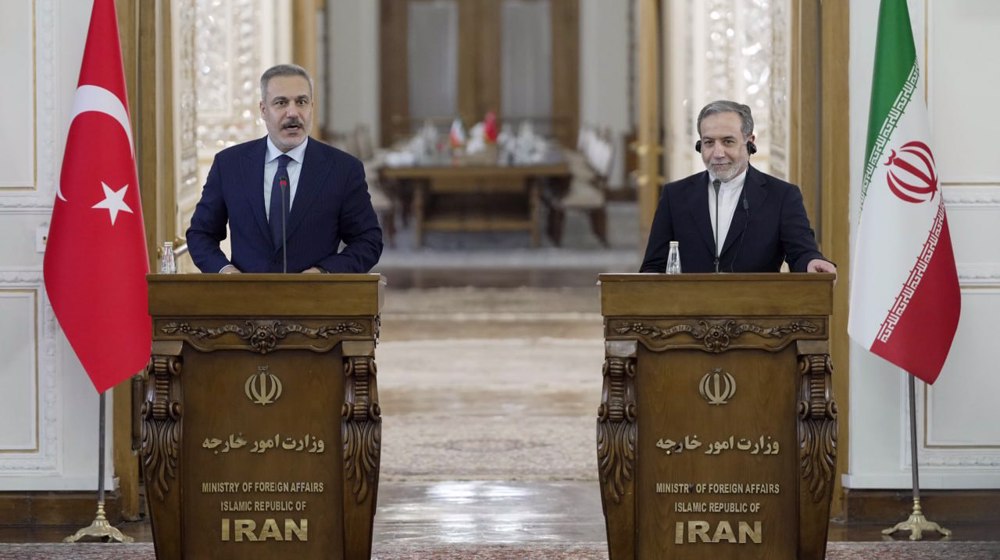
A high-level meeting between Iranian Foreign Minister Abbas Araghchi and Turkish Foreign Minister Hakan Fidan in Tehran has reinforced the strategic partnership between the two nations, with discussions centered on initiatives that directly support the United Nations Sustainable Development Goals (SDGs), particularly in the areas of energy, economic growth, and regional stability.
Energy Partnership for Sustainable Growth (SDG 7 & SDG 8)
The dialogue underscored a mutual commitment to ensuring access to affordable, reliable, and sustainable energy, a cornerstone of SDG 7 (Affordable and Clean Energy). This commitment is foundational to fostering sustained economic growth as outlined in SDG 8 (Decent Work and Economic Growth).
- Gas Supply Agreement: Iran reaffirmed its position as a reliable energy supplier for Turkey and expressed readiness to extend the 25-year natural gas contract, set to expire in 2026. Negotiations for a new deal, initiated in July 2022, aim to meet Turkey’s rising energy demand for both household consumption and its manufacturing sector, thereby supporting industrialization and economic productivity.
- Electricity Sector Cooperation: Both parties agreed to enhance bilateral cooperation in the electricity sector, further diversifying the energy partnership and contributing to a more resilient energy infrastructure for the region.
Fostering Economic Integration and Infrastructure Development (SDG 8, SDG 9, SDG 17)
The ministers agreed on a series of measures to remove barriers to trade and investment, promoting economic development in line with SDG 8, building resilient infrastructure as per SDG 9 (Industry, Innovation, and Infrastructure), and strengthening partnerships as called for in SDG 17 (Partnerships for the Goals).
- Institutional Mechanisms: The High-Level Cooperation Council and the Joint Economic Commission will convene to address and resolve economic issues systematically.
- Trade Enhancement: Discussions will be held at the expert level to advance the preferential trade agreement between the two countries.
- Infrastructure and Logistics: Key projects were identified to boost economic integration:
- Establishment of joint free trade zones.
- Activation of a new border crossing.
- Implementation of logistics and transportation projects to improve border security and efficiency.
Collaborative Efforts for Regional Peace and Justice (SDG 16)
A significant portion of the discussions was dedicated to regional security, reflecting a shared commitment to promoting peaceful and inclusive societies, a central tenet of SDG 16 (Peace, Justice, and Strong Institutions).
- Regional Stability: Both nations expressed common concerns and positions on regional issues, emphasizing cooperation to address instability. The ministers highlighted the need to prevent destabilizing actions in Syria, Lebanon, and Gaza.
- Conflict Resolution: Iran and Turkey affirmed their support for Syria’s territorial integrity and national sovereignty as essential for peace. They also advocated for regional cooperation to maintain stability in the Caucasus, opposing extra-regional intervention.
- Counter-Terrorism: Terrorism was identified as a common threat. The ministers reiterated their mutual commitment to combating all terrorist groups, including the PKK, to achieve a region free from terrorism and build strong, just institutions.
Which SDGs are addressed or connected to the issues highlighted in the article?
Detailed Explanations
- SDG 7: Affordable and Clean Energy
- The article extensively discusses energy cooperation between Iran and Turkey. It highlights Iran’s role as a reliable energy supplier, the supply of “10 billion cubic meters of natural gas annually,” and readiness to “extend a gas contract and enhance bilateral cooperation in the electricity sector.” This directly relates to ensuring access to affordable and reliable energy.
- SDG 8: Decent Work and Economic Growth
- The focus on strengthening economic ties by underscoring “the need to remove barriers to trade and investment” and discussing a “preferential trade agreement” aims to foster sustained economic growth and trade between the two nations.
- SDG 9: Industry, Innovation and Infrastructure
- The article mentions plans to “improve border security by installing more border gates and implementing logistics and transportation projects” and the “activation of a new border crossing.” This points to the development of resilient and cross-border infrastructure to facilitate trade and connectivity.
- SDG 16: Peace, Justice and Strong Institutions
- A significant portion of the article addresses regional peace and security. It covers discussions on “regional issues,” the “issue of Palestine,” stability in Syria, and a shared commitment to “combating terrorism.” The specific mention of supporting the “disarmament of the Kurdistan Workers’ Party (PKK) militant group” directly links to promoting peaceful and inclusive societies.
- SDG 17: Partnerships for the Goals
- The entire article is a testament to a bilateral partnership (South-South cooperation) between Iran and Turkey. The agreement to hold meetings of the “High-Level Cooperation Council and the Joint Economic Commission” institutionalizes this partnership to achieve shared goals in energy, trade, and security.
What specific targets under those SDGs can be identified based on the article’s content?
Detailed Explanations
- Target 7.a: By 2030, enhance international cooperation to facilitate access to clean energy research and technology, including renewable energy, energy efficiency and advanced and cleaner fossil-fuel technology, and promote investment in energy infrastructure and clean energy technology.
- The bilateral cooperation to supply natural gas, extend the contract, and enhance collaboration in the electricity sector directly reflects this target of enhancing international cooperation and investing in energy infrastructure.
- Target 8.a: Increase Aid for Trade support for developing countries, in particular least developed countries, including through the Enhanced Integrated Framework for Trade-Related Technical Assistance to Least Developed Countries.
- While not about LDCs, the principle of fostering trade is central. The discussions to “remove barriers to trade,” establish “joint free trade zones,” and hold talks on a “preferential trade agreement” align with the goal of promoting trade as a driver of economic growth.
- Target 9.1: Develop quality, reliable, sustainable and resilient infrastructure, including regional and transborder infrastructure, to support economic development and human well-being, with a focus on affordable and equitable access for all.
- The agreement to work on “logistics and transportation projects” and activate a “new border crossing” is a direct effort to develop transborder infrastructure to support economic development between Iran and Turkey.
- Target 16.1: Significantly reduce all forms of violence and related death rates everywhere.
- The commitment to “combating terrorism” and the support for the “disarmament of the Kurdistan Workers’ Party (PKK) militant group” are actions aimed at reducing violence and ending a long-running insurgency, which directly contributes to this target.
- Target 17.9: Enhance international support for implementing effective and targeted capacity-building in developing countries to support national plans to implement all the Sustainable Development Goals, including through North-South, South-South and triangular cooperation.
- The establishment of institutional mechanisms like the “High-Level Cooperation Council” and the “Joint Economic Commission” represents a form of South-South cooperation to build capacity and implement national and bilateral plans for economic and energy development.
Are there any indicators mentioned or implied in the article that can be used to measure progress towards the identified targets?
Detailed Explanations
- Volume of Natural Gas Supply: The article explicitly states that Iran “supplies Turkey with about 10 billion cubic meters of natural gas annually.” This is a direct quantitative indicator for energy cooperation (SDG 7). Turkey’s request for “increased supplies” implies that this volume is a key metric for the partnership.
- Energy Contract Renewal: The status of the 25-year gas agreement, set to expire in mid-2026, and the negotiations for a “new gas export deal” serve as a key qualitative indicator of the long-term stability and progress of the energy partnership (SDG 7, SDG 17).
- Infrastructure Development: The “activation of a new border crossing” and the number of “more border gates” installed are measurable indicators of progress in developing transborder infrastructure (SDG 9).
- Institutional Mechanisms for Cooperation: The frequency and outcomes of the “meetings of the High-Level Cooperation Council and the Joint Economic Commission” can be used as an indicator to measure the strength and effectiveness of the bilateral partnership (SDG 17).
- Counter-Terrorism Actions: The article mentions the “disarmament of the Kurdistan Workers’ Party (PKK) militant group” as a specific event. This serves as a significant indicator of progress in reducing violence and combating terrorism in the region (SDG 16).
Create a table with three columns titled ‘SDGs, Targets and Indicators” to present the findings from analyzing the article. In this table, list the Sustainable Development Goals (SDGs), their corresponding targets, and the specific indicators identified in the article.
| SDGs | Targets | Indicators |
|---|---|---|
| SDG 7: Affordable and Clean Energy | 7.a: Enhance international cooperation… and promote investment in energy infrastructure. |
|
| SDG 8: Decent Work and Economic Growth | 8.a: Increase Aid for Trade support for developing countries. |
|
| SDG 9: Industry, Innovation and Infrastructure | 9.1: Develop quality, reliable, sustainable and resilient infrastructure, including regional and transborder infrastructure. |
|
| SDG 16: Peace, Justice and Strong Institutions | 16.1: Significantly reduce all forms of violence and related death rates everywhere. |
|
| SDG 17: Partnerships for the Goals | 17.9: Enhance international support for implementing effective and targeted capacity-building… through South-South cooperation. |
|
Source: presstv.ir
What is Your Reaction?
 Like
0
Like
0
 Dislike
0
Dislike
0
 Love
0
Love
0
 Funny
0
Funny
0
 Angry
0
Angry
0
 Sad
0
Sad
0
 Wow
0
Wow
0