





































;Resize=620#)







Iran Water Crisis Deepens As 19 Dams Near Depletion; Mashhad Reservoirs Below 3% – National Council of Resistance of Iran – NCRI
Report on Iran’s Escalating Water Crisis and its Implications for Sustainable Development Goals
1.0 Executive Summary
Iran is experiencing a severe and rapidly escalating water crisis, characterized by critically low reservoir levels, widespread drought, and impending water rationing in major urban centers. This situation poses a direct threat to public welfare and national stability, while fundamentally undermining Iran’s capacity to meet key United Nations Sustainable Development Goals (SDGs). The crisis stems from a combination of prolonged drought, systemic mismanagement, and inadequate infrastructure investment, leading to a nationwide ecological emergency that jeopardizes progress on clean water, sustainable cities, and environmental preservation.
2.0 National Water Resource Status
The national water supply infrastructure is under unprecedented stress, indicating a failure to achieve the integrated water resources management outlined in SDG 6 (Clean Water and Sanitation). The deterioration is accelerating, with critical shortfalls observed across the country.
- Nineteen (19) dams are reported to be on the verge of complete depletion.
- More than twenty (20) dams are holding less than 5% of their total capacity.
- The number of dams in critical condition more than doubled in less than two weeks from late October.
- Shortfalls are not regional but systemic, affecting basins in the Central Plateau, east, north, south, and west of the country.
3.0 Regional Impact Analysis
Major metropolitan areas are facing acute shortages, highlighting a failure to build inclusive, safe, and resilient urban environments as mandated by SDG 11 (Sustainable Cities and Communities).
3.1 Tehran
The capital is experiencing its fifth consecutive year of drought, with water reserves at a historic minimum. Current management strategies include:
- Implementation of nighttime water pressure reductions.
- Official recommendations for households to install private storage tanks and pumps.
3.2 Mashhad
The situation in Mashhad demonstrates a critical imbalance between water availability and urban demand, directly challenging the targets of SDG 6.4 regarding water-use efficiency.
- Reservoirs supplying the city have fallen to below 3% capacity.
- Rainfall this season is recorded at 0.4 mm, a fraction of the long-term average of 14 mm.
- Current supply from dams (1,000–1,500 liters/second) meets less than 20% of the city’s demand (8,000 liters/second).
- Authorities are considering rationing and have requested a 20% reduction in public consumption.
4.0 Causal Factors and Institutional Failures
The crisis is attributed to long-term governance and planning deficiencies, reflecting a lack of effective and accountable institutions as promoted by SDG 16 (Peace, Justice and Strong Institutions).
- Chronic Mismanagement: A history of poor water resource management has exacerbated natural drought conditions.
- Inadequate Infrastructure Investment: Failure to modernize networks and develop sustainable supply solutions has left the country vulnerable.
- Unsustainable Urban Growth: Population growth in major cities has outpaced water supply planning and infrastructure capacity.
- Reactive Policies: Authorities have relied on short-term measures like public appeals and pressure cuts instead of implementing structural reforms.
5.0 Implications for Sustainable Development Goals (SDGs)
The water crisis represents a significant setback for Iran’s progress on the 2030 Agenda for Sustainable Development, with direct and indirect impacts across multiple goals.
5.1 Direct Contravention of SDG 6 (Clean Water and Sanitation)
The inability to provide a stable water supply directly violates the core objective of ensuring water availability and sustainable management for all. The depletion of both surface and groundwater resources threatens access to safe drinking water and sanitation.
5.2 Threats to SDG 15 (Life on Land)
The crisis is causing severe ecological damage. Widespread groundwater depletion exceeding natural recharge rates and the reduction of major rivers to seasonal streams contribute to desertification and biodiversity loss, undermining efforts to protect terrestrial ecosystems.
5.3 Broader SDG Impacts
- SDG 2 (Zero Hunger): Water scarcity directly threatens agricultural output, jeopardizing food security.
- SDG 3 (Good Health and Well-being): Reduced water availability can lead to poor hygiene and increased risk of waterborne diseases.
- SDG 11 (Sustainable Cities and Communities): The crisis renders major cities less resilient and sustainable, threatening the well-being of millions of urban dwellers.
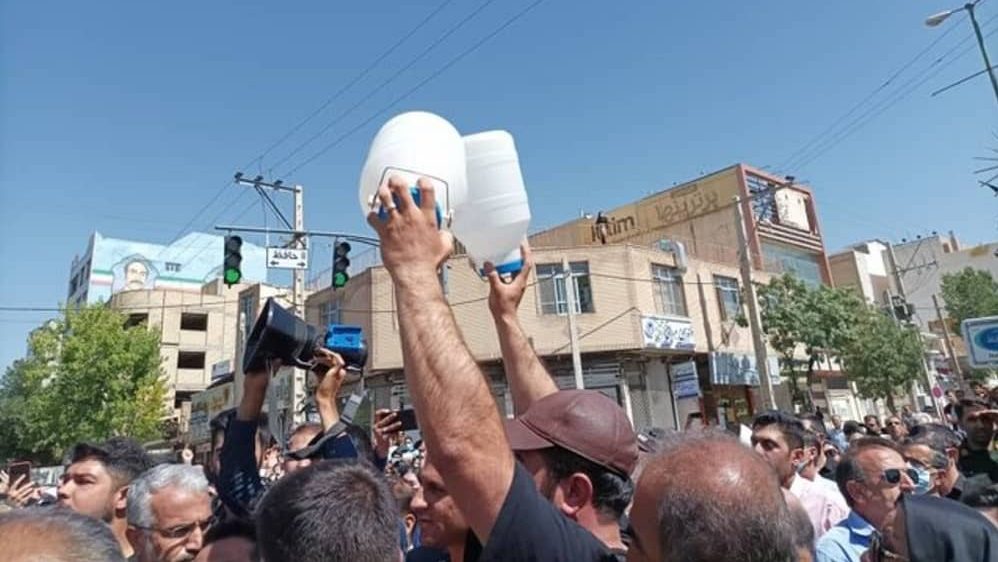
- SDG 16 (Peace, Justice and Strong Institutions): The failure of governance to address the crisis erodes public trust and threatens state stability, as evidenced by public protests over water access.
SDGs Addressed in the Article
SDG 6: Clean Water and Sanitation
- The article’s central theme is the severe water crisis in Iran, which directly relates to SDG 6. It details issues of water scarcity, depleting water sources, and the challenges in providing a stable water supply to the population. The text highlights “an escalating water emergency as dam levels sink to historic lows,” which is the core concern of SDG 6.
SDG 11: Sustainable Cities and Communities
- The article specifically discusses the impact of the water crisis on major urban centers like Tehran and Mashhad. It mentions “potential rationing in major cities” and how “long-term planning has lagged the city’s growth.” This connects the water issue to the sustainability and resilience of cities, a key aspect of SDG 11, which aims to make cities inclusive, safe, resilient, and sustainable.
SDG 15: Life on Land
- The crisis is described as a “nationwide ecological emergency.” The article points to severe environmental degradation, such as “groundwater depletion now exceeding natural recharge in most provinces, and major river systems reduced to seasonal streams.” This directly pertains to SDG 15, which includes the protection and restoration of terrestrial and inland freshwater ecosystems.
Specific SDG Targets Identified
SDG 6: Clean Water and Sanitation
- Target 6.1: By 2030, achieve universal and equitable access to safe and affordable drinking water for all.
The article implies a threat to this target by describing measures like “nighttime pressure reductions” in Tehran and potential “rationing” in Mashhad. The protests in Shahr-e Kord, with residents “demanding drinking water solutions,” further underscore the challenges in ensuring reliable access to drinking water. - Target 6.4: By 2030, substantially increase water-use efficiency across all sectors and ensure sustainable withdrawals and supply of freshwater to address water scarcity.
This target is central to the article. The description of Iran facing an “approaching point of irreversible water stress,” with dams nearing depletion and groundwater being over-extracted, points directly to a failure in ensuring sustainable withdrawals and managing water scarcity. The call for residents in Mashhad to “cut consumption by about 20%” is an attempt to increase water-use efficiency at the consumer level. - Target 6.5: By 2030, implement integrated water resources management at all levels.
The article explicitly points to a lack of integrated management, stating that the shortages reflect “years of mismanagement and inadequate investment in water infrastructure.” It notes that authorities have relied on “short-term measures” instead of “structural reforms,” indicating a failure to implement comprehensive, long-term water resource management plans.
SDG 11: Sustainable Cities and Communities
- Target 11.5: By 2030, significantly reduce the number of deaths and the number of people affected… by disasters, including water-related disasters.
The deepening water crisis can be classified as a slow-onset, water-related disaster. The article highlights that large urban populations in Tehran and Mashhad are directly affected by this crisis through water pressure reductions and the threat of rationing. The protests show that the public welfare is threatened, aligning with the goal of reducing the number of people affected by such disasters.
SDG 15: Life on Land
- Target 15.1: By 2020, ensure the conservation, restoration and sustainable use of terrestrial and inland freshwater ecosystems and their services.
The article provides clear evidence of the degradation of freshwater ecosystems. The statement that “major river systems reduced to seasonal streams” and “groundwater depletion now exceeding natural recharge” signifies a failure to conserve and sustainably use these vital natural resources, which is the primary goal of this target.
Indicators for Measuring Progress
SDG 6: Clean Water and Sanitation
- Indicator 6.4.2: Level of water stress: freshwater withdrawal as a proportion of available freshwater resources.
The article provides several data points that act as direct measures for this indicator. These include: “19 dams are on the verge of complete depletion,” reservoirs in Mashhad are “below three percent” of capacity, and “more than 20 dams are holding under five percent of their capacity.” These figures clearly indicate an extremely high level of water stress. - Implied Indicator for Target 6.1 (Reliability of water supply):
While not a formal UN indicator, the article implies a measure of supply reliability. The implementation of “nighttime pressure reductions” and considerations for “rationing” serve as direct evidence of an unreliable and insufficient water supply for the urban population.
SDG 11: Sustainable Cities and Communities
- Implied Indicator for Target 11.5 (Number of people affected by a water-related disaster):
The article implies this indicator by referencing the large populations of major cities like Tehran and Mashhad that are facing water shortages. The protests in Shahr-e Kord also provide a qualitative measure of the population affected and mobilized by the crisis.
SDG 15: Life on Land
- Implied Indicator for Target 15.1 (Health of freshwater ecosystems):
The article provides a qualitative assessment that can be used as an indicator for the health of these ecosystems. The description of “major river systems reduced to seasonal streams” is a clear indicator of severe ecosystem degradation due to water scarcity and over-extraction.
Summary Table of SDGs, Targets, and Indicators
| SDGs | Targets | Indicators Identified in the Article |
|---|---|---|
| SDG 6: Clean Water and Sanitation | Target 6.4: Address water scarcity and ensure sustainable withdrawals. | Indicator 6.4.2 (Level of water stress): Dam reservoirs in Mashhad are “below three percent” capacity; “19 dams are on the verge of complete depletion”; “groundwater depletion now exceeding natural recharge.” |
| SDG 6: Clean Water and Sanitation | Target 6.1: Achieve universal and equitable access to safe drinking water. | Implied Indicator (Reliability of water supply): “Nighttime pressure reductions” in Tehran; potential “rationing” in Mashhad; public protests “demanding drinking water solutions.” |
| SDG 6: Clean Water and Sanitation | Target 6.5: Implement integrated water resources management. | Implied Indicator (Degree of IWRM): The crisis reflects “years of mismanagement,” “inadequate investment,” and a reliance on “short-term measures” instead of “structural reforms.” |
| SDG 11: Sustainable Cities and Communities | Target 11.5: Reduce the number of people affected by water-related disasters. | Implied Indicator (Number of people affected): The populations of major cities like Tehran and Mashhad are facing water shortages and potential rationing. |
| SDG 15: Life on Land | Target 15.1: Ensure the conservation and sustainable use of inland freshwater ecosystems. | Implied Indicator (Health of freshwater ecosystems): “Major river systems reduced to seasonal streams,” indicating severe degradation of these ecosystems. |
Source: ncr-iran.org
What is Your Reaction?
 Like
0
Like
0
 Dislike
0
Dislike
0
 Love
0
Love
0
 Funny
0
Funny
0
 Angry
0
Angry
0
 Sad
0
Sad
0
 Wow
0
Wow
0