

























Justice For All’s Save Uyghur Campaign Calls Attention to Human Rights Watch Findings on Türkiye’s Failure to Protect Uyghurs – Justice For All
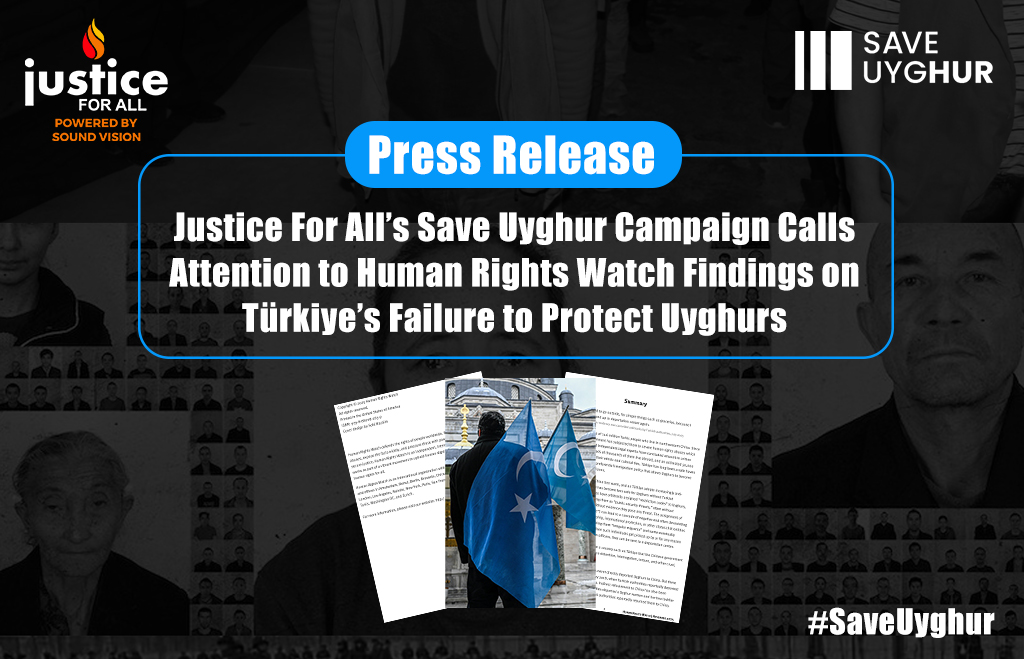
Report on the Diminishing Protection of Uyghur Refugees in Türkiye and Implications for Sustainable Development Goals
1.0 Introduction
A report released by Human Rights Watch (HRW) on November 20, 2025, titled “Protected No More: Uyghurs in Türkiye,” details a significant deterioration in the legal and physical security of Uyghur refugees. Türkiye, historically a safe haven, is now described as an increasingly precarious environment. This development poses a direct challenge to the principles of international law and undermines progress toward several key Sustainable Development Goals (SDGs), particularly those concerning peace, justice, inequality, and human rights.
2.0 Key Findings of the Human Rights Watch Report
The HRW investigation documents a systematic erosion of protections for the Uyghur community. The primary issues identified include:
- Erosion of Legal Status: Authorities are increasingly cancelling long-term residence permits and denying citizenship applications, leaving many Uyghurs without legal status.
- Arbitrary Detention: There is an expanded use of vague “restriction codes” to justify the detention of Uyghurs in overcrowded deportation centers.
- Pressure for Refoulement: Detainees face significant pressure to sign “voluntary return” forms, which contravenes the international legal principle of non-refoulement.
- Climate of Fear: The actions have created an environment of fear, where Uyghur families are afraid to renew documents or leave their homes, fearing detention and potential deportation to China, where they face persecution.
3.0 Analysis of Sustainable Development Goal (SDG) Implications
The situation described in the report represents a severe regression on multiple Sustainable Development Goals. The failure to protect this vulnerable refugee population directly conflicts with the 2030 Agenda’s core pledge to “leave no one behind.”
-
SDG 16: Peace, Justice and Strong Institutions
The report’s findings indicate a failure to uphold Target 16.3 (promote the rule of law and ensure equal access to justice) and Target 16.9 (provide legal identity for all). The arbitrary detentions and denial of legal status undermine the very foundations of just and inclusive institutions. The pressure for refoulement is a violation of international human rights law, which is a cornerstone of SDG 16.
-
SDG 10: Reduced Inequalities
The targeting of a specific ethnic and religious minority directly contravenes Target 10.2 (empower and promote the social, economic and political inclusion of all) and Target 10.3 (ensure equal opportunity and reduce inequalities of outcome). Furthermore, the situation undermines Target 10.7, which calls for facilitating orderly, safe, regular, and responsible migration and mobility of people through the implementation of planned and well-managed migration policies.
-
SDG 8: Decent Work and Economic Growth
Without legal residence permits, Uyghurs are unable to secure formal employment, which violates Target 8.8 (protect labor rights and promote safe and secure working environments for all workers, including migrant workers). This lack of legal status forces them into precarious economic situations, hindering their ability to achieve self-reliance and contribute to the economy.
-
SDG 11: Sustainable Cities and Communities
The climate of fear preventing Uyghurs from leaving their homes obstructs their inclusion in community life, in direct opposition to Target 11.1 (ensure access for all to adequate, safe and affordable housing and basic services). A community cannot be considered sustainable or inclusive if a segment of its population lives in constant fear of detention and deportation.
4.0 Responses and Recommendations for Upholding Global Goals
In response to the report, the Save Uyghur Campaign of Justice For All has highlighted the growing vulnerability of the Uyghur community. Imam Abdul Malik Mujahid, President of Justice For All, emphasized the responsibility of all nations to uphold their duty to protect those fleeing oppression and genocide, a sentiment that aligns with the global partnership for sustainable development (SDG 17).
To address these violations of human rights and ensure alignment with the SDGs, the following actions are urged:
- International Monitoring: The international community must closely monitor Türkiye’s treatment of Uyghur refugees to ensure compliance with international law and its commitments to the SDGs.
- Expansion of Resettlement Pathways: Global partners should expand resettlement pathways for Uyghur refugees who are at risk in Türkiye and other host countries.
- Accountability for Transnational Repression: Concerted international efforts are needed to confront China’s transnational repression, which manipulates immigration systems and endangers refugees abroad.
- Recommitment to Non-Refoulement: Türkiye is called upon to renew its commitment to the principle of non-refoulement and ensure that its legal and administrative systems provide robust protection for all refugees, thereby strengthening its institutions in line with SDG 16.
Analysis of Sustainable Development Goals in the Article
1. Which SDGs are addressed or connected to the issues highlighted in the article?
-
SDG 16: Peace, Justice and Strong Institutions
This goal is central to the article, which focuses on the failure of legal and justice systems to protect a vulnerable group. The text highlights a “sharp deterioration in legal protections,” “arbitrary detention,” and Türkiye “failing to uphold its obligations under international law.” These issues directly concern the promotion of justice, the rule of law, and the strength and accountability of institutions responsible for protecting refugees.
-
SDG 10: Reduced Inequalities
The article discusses the specific targeting and marginalization of the Uyghur community, a distinct ethnic and religious group. The denial of citizenship, cancellation of residence permits, and deportation pressures are discriminatory practices that create and exacerbate inequalities. The goal to “facilitate orderly, safe, regular and responsible migration” (Target 10.7) is contravened by the “increasingly dangerous environment” described for Uyghurs in Türkiye.
2. What specific targets under those SDGs can be identified based on the article’s content?
-
Target 16.3: Promote the rule of law at the national and international levels and ensure equal access to justice for all.
The article directly addresses this target by stating that Türkiye is “failing to uphold its obligations under international law, including the prohibition on refoulement.” The documented “arbitrary detention,” cancellation of residence permits, and denial of citizenship applications demonstrate a failure to ensure the rule of law and provide equal access to justice for the Uyghur population.
-
Target 16.1: Significantly reduce all forms of violence and related death rates everywhere.
This target is relevant due to the “real threats of refoulement to a place where crimes against humanity are ongoing.” Sending refugees back to such an environment directly exposes them to extreme violence and risks to their lives, undermining the goal of reducing violence and related deaths.
-
Target 10.7: Facilitate orderly, safe, regular and responsible migration and mobility of people, including through the implementation of planned and well-managed migration policies.
The article describes the opposite of safe and well-managed migration policies for Uyghurs. The situation is characterized as an “increasingly dangerous environment,” where families live in fear, face detention, and are pressured into “voluntary return.” This points to a breakdown in policies meant to protect refugees and manage migration responsibly.
-
Target 16.9: By 2030, provide legal identity for all, including birth registration.
The actions of “cancelling residence permits” and “denying citizenship applications” directly impact the legal identity of Uyghurs in Türkiye. Without a secure legal status, individuals are left vulnerable and unable to access basic rights and protections, which this target aims to secure for all.
3. Are there any indicators mentioned or implied in the article that can be used to measure progress towards the identified targets?
-
Proportion of the population subjected to physical, psychological or sexual violence. (Relates to Target 16.1)
The article implies this through descriptions of Uyghur families “living in fear for their safety” and being “terrified to renew their documents, afraid to leave their homes.” The psychological distress caused by the threat of detention and refoulement is a key indicator of the violence they face.
-
Number of cases of arbitrary detention. (Relates to Target 16.3)
The article explicitly mentions “mounting cases of arbitrary detention” and the detention of Uyghurs in “overcrowded deportation centers” as key findings of the Human Rights Watch report. This serves as a direct, measurable indicator of the breakdown of the rule of law.
-
Number of refugees or asylum seekers returned to their country of origin (refoulement). (Relates to Target 10.7 and 16.3)
This is a critical implied indicator. The article warns of “real threats of refoulement” and documents that Uyghurs have been “pressured into signing ‘voluntary return’ forms.” Tracking the number of individuals returned against their will would be a direct measure of Türkiye’s failure to uphold the principle of non-refoulement.
-
Proportion of the population with a secure legal status/identity. (Relates to Target 16.9)
The article provides a negative indicator for this by stating that Turkish authorities are “cancelling residence permits” and “denying citizenship applications.” The rate of these cancellations and denials for the Uyghur population would be a specific measure of their lack of secure legal identity.
4. Table of SDGs, Targets, and Indicators
| SDGs | Targets | Indicators (as implied in the article) |
|---|---|---|
| SDG 16: Peace, Justice and Strong Institutions |
16.1: Reduce all forms of violence.
16.3: Promote the rule of law and ensure equal access to justice. 16.9: Provide legal identity for all. |
– Prevalence of psychological distress and fear within the Uyghur community due to threats of refoulement. – Number of documented cases of arbitrary detention of Uyghurs. – Number of Uyghurs held in overcrowded deportation centers. – Rate of cancellation of residence permits and denial of citizenship applications for Uyghurs. |
| SDG 10: Reduced Inequalities | 10.7: Facilitate orderly, safe, regular and responsible migration. |
– Number of reported violations of the non-refoulement principle. – Number of Uyghurs pressured to sign “voluntary return” forms. – Reports on the safety and security of the refugee environment. |
Source: justiceforall.org
What is Your Reaction?
 Like
0
Like
0
 Dislike
0
Dislike
0
 Love
0
Love
0
 Funny
0
Funny
0
 Angry
0
Angry
0
 Sad
0
Sad
0
 Wow
0
Wow
0