


























Linn Co. Public Health installs new air monitoring site in Cedar Rapids – KCRG

Report on the Establishment of a New Air Quality Monitoring Site in Linn County
Introduction
Linn County Public Health has established a third air quality monitoring site in Cedar Rapids, Iowa. This initiative represents a significant step towards enhancing environmental surveillance and public health protection, directly aligning with several United Nations Sustainable Development Goals (SDGs). The new facility, located on the southeast side of the city, is designed to provide critical data on airborne pollutants, thereby strengthening the county’s capacity to manage environmental health risks.
Strategic Implementation and Alignment with Sustainable Development Goals
Site Location and Technical Specifications
The monitoring station is strategically positioned across from the McKinley Steam Academy. It consists of a specialized trailer equipped with two advanced sensors that continuously draw in ambient air to detect and measure particulate pollution and airborne toxins. This technology enables the real-time assessment of air quality, facilitating prompt public health advisories when conditions become hazardous, such as during the wildfire smoke events experienced in the previous summer.
Addressing Urban Environmental Quality (SDG 11)
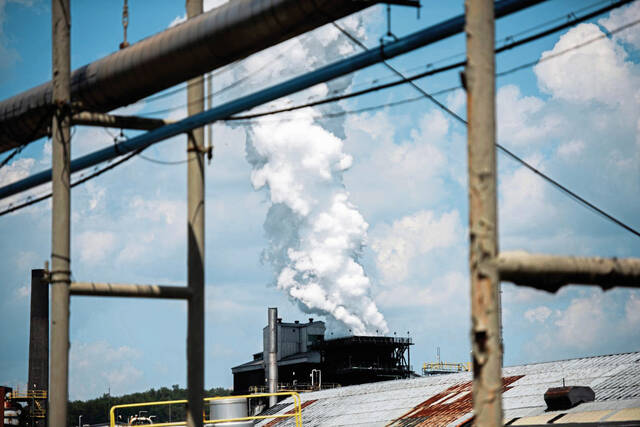
The selection of this location addresses a previously unmonitored area characterized by significant industrial and vehicular traffic. This targeted approach is crucial for creating healthier and more sustainable urban environments, directly supporting SDG 11 (Sustainable Cities and Communities).
- Target 11.6: By 2030, reduce the adverse per capita environmental impact of cities, including by paying special attention to air quality and municipal and other waste management. The new site provides the essential data needed to measure, manage, and ultimately reduce the environmental impact of urban air pollution.
Primary Contributions to Global Sustainability Objectives
Promoting Good Health and Well-being (SDG 3)
The primary objective of the monitoring station is to safeguard community health. By providing accurate data on air quality, the project directly contributes to SDG 3 (Good Health and Well-being).
- Continuous Monitoring: The site systematically tracks pollutants that pose risks to human health.
- Public Health Alerts: The data enables Linn County Public Health to issue timely warnings to the public, especially vulnerable populations, during periods of poor air quality.
- Supporting SDG Target 3.9: The initiative actively works to substantially reduce the number of illnesses and deaths from hazardous air pollution and contamination.
Fostering Quality Education and Community Engagement (SDG 4)
In addition to its monitoring function, the site serves as a practical educational resource. This dual purpose aligns with SDG 4 (Quality Education).
- Educational Outreach: Linn County Public Health will utilize the station as an outreach tool to teach students at the adjacent McKinley Steam Academy about the science of air pollution and environmental stewardship.
- Supporting SDG Target 4.7: The project promotes education for sustainable development by providing learners with the knowledge and skills needed to promote sustainability.
Enhancing the County-Wide Monitoring Network
The new station is the third in Linn County’s air monitoring network, complementing existing sites in another part of Cedar Rapids and in Coggon. This expansion creates a more comprehensive data-gathering infrastructure, improving the county’s ability to understand and respond to air quality challenges, thereby enhancing urban resilience in line with the principles of SDG 11 and SDG 13 (Climate Action).
Analysis of SDGs, Targets, and Indicators
1. Which SDGs are addressed or connected to the issues highlighted in the article?
-
SDG 3: Good Health and Well-being
The article directly connects to SDG 3 by focusing on monitoring air quality to protect public health. The installation of a new air monitoring site is a proactive measure to assess environmental health risks. The text states that the information gathered “can alert the public if quality potentially becomes dangerous,” which is a key component of preventing illnesses related to air pollution.
-
SDG 11: Sustainable Cities and Communities
The initiative described is a city-level action in Cedar Rapids, Linn County, aimed at improving the urban environment. The article mentions the new site was added to monitor a “blind spot” in the city with “plenty of traffic, plenty of industry.” This effort to manage and reduce the adverse environmental impact of a city by paying special attention to air quality is central to SDG 11.
-
SDG 4: Quality Education
The article explicitly states that the new monitoring site “will also be an outreach tool to teach students at McKinley Middle School about air pollution.” This links the project to SDG 4 by using a real-world environmental issue as a practical educational resource, promoting awareness and knowledge about sustainable development topics among students.
2. What specific targets under those SDGs can be identified based on the article’s content?
-
Target 3.9: Substantially reduce the number of deaths and illnesses from hazardous chemicals and air, water and soil pollution and contamination.
The core purpose of the air monitoring site is to detect “particle pollution or toxins” and alert the public to dangerous air quality. This directly supports the goal of reducing illnesses caused by air pollution by providing data that can inform public health advisories and preventative actions.
-
Target 11.6: Reduce the adverse per capita environmental impact of cities, including by paying special attention to air quality.
The establishment of a third air monitoring site in Linn County, specifically to cover an unmonitored area of Cedar Rapids, is a direct action to pay “special attention to air quality.” The article highlights concerns about traffic and industry, which are major sources of urban air pollution, making this target highly relevant.
-
Target 4.7: Ensure that all learners acquire the knowledge and skills needed to promote sustainable development.
The plan to use the site as an “outreach tool to teach students… about air pollution” aligns perfectly with this target. It aims to provide learners with knowledge about a critical environmental issue, thereby promoting education for sustainable development.
3. Are there any indicators mentioned or implied in the article that can be used to measure progress towards the identified targets?
-
Indicator for Target 11.6 (Implied): Annual mean levels of fine particulate matter (e.g., PM2.5 and PM10) in cities.
The article explicitly mentions that the sensors on the monitoring trailer “detect any particle pollution or toxins.” It also references a past event where a site “detected dust particles in the air due to wildfires.” This indicates that the system is measuring particulate matter, which is the basis for indicator 11.6.2. The data collected from this site would directly contribute to measuring this indicator for Cedar Rapids.
-
Indicator for Target 4.7 (Implied): Implementation of educational programs on air pollution.
While not a quantitative metric, the article’s statement that the site “will also be an outreach tool to teach students” implies the creation and implementation of an educational program. The existence and reach of this program would serve as a qualitative indicator of progress towards educating learners on sustainable development issues like air pollution.
-
Indicator for Target 3.9 (Implied): Existence of an air quality monitoring and public alert system.
The article describes the function of the new site as a system that “helps determine the air quality and can alert the public if quality potentially becomes dangerous.” The establishment and operational capacity of this monitoring and alert system is a direct indicator of a community’s effort to mitigate the health impacts of air pollution, thus contributing to the goal of reducing illnesses.
SDGs, Targets and Indicators Table
| SDGs | Targets | Indicators |
|---|---|---|
| SDG 3: Good Health and Well-being | Target 3.9: Substantially reduce the number of deaths and illnesses from hazardous chemicals and air, water and soil pollution and contamination. | Implied Indicator: Existence of an air quality monitoring and public alert system to warn of dangerous pollution levels. |
| SDG 11: Sustainable Cities and Communities | Target 11.6: Reduce the adverse per capita environmental impact of cities, including by paying special attention to air quality. | Implied Indicator (related to 11.6.2): Measurement of “particle pollution or toxins” and “dust particles” in the city’s air. |
| SDG 4: Quality Education | Target 4.7: Ensure that all learners acquire the knowledge and skills needed to promote sustainable development. | Implied Indicator: Use of the monitoring site as an “outreach tool to teach students… about air pollution.” |
Source: kcrg.com
What is Your Reaction?
 Like
0
Like
0
 Dislike
0
Dislike
0
 Love
0
Love
0
 Funny
0
Funny
0
 Angry
0
Angry
0
 Sad
0
Sad
0
 Wow
0
Wow
0