










































;Resize=620#)











Mainstreaming gender: Will Africa’s first G20 deliver progress for women? – African Business
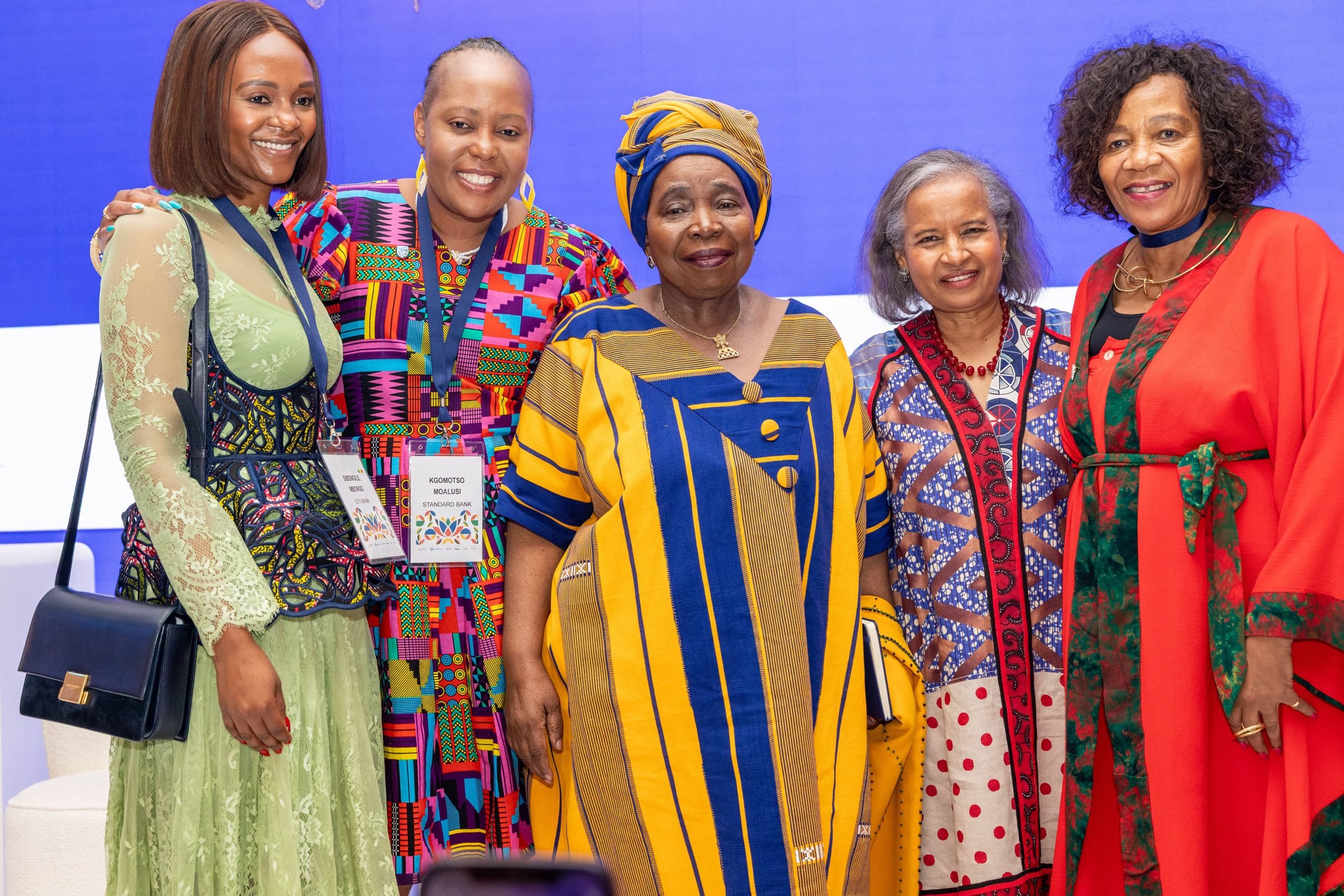
Report on the Women20 Call for Gender Mainstreaming at the G20 Summit
Introduction: Aligning G20 Policy with Sustainable Development Goals
The Women20 (W20) engagement group has issued a formal recommendation to G20 leaders, urging the integration of gender perspectives across all fiscal, monetary, and trade policies. This initiative, known as gender mainstreaming, is presented as a critical strategy for achieving multiple Sustainable Development Goals (SDGs), particularly SDG 5 (Gender Equality), SDG 8 (Decent Work and Economic Growth), and SDG 10 (Reduced Inequalities). The G20 forum is identified as a pivotal platform for driving global policy coherence and mobilizing resources necessary to translate gender equality from a reference point into a resourced objective, in line with SDG 17 (Partnerships for the Goals).
Core Principles of Gender Mainstreaming for Sustainable Development
Gender mainstreaming involves the systematic integration of gender perspectives into every stage of policy development and implementation. This approach ensures that development initiatives do not exacerbate existing inequalities but actively promote gender equality. Key applications relevant to the SDGs include:
- Economic Policy (SDG 8): Analyzing how monetary and fiscal policies differentially impact men and women to ensure equitable economic growth.
- Infrastructure Development (SDG 9 & SDG 11): Evaluating infrastructure projects based on their impact on women’s mobility, safety, and access to services.
- International Trade (SDG 8 & SDG 17): Assessing the effects of trade agreements on women-led enterprises and female workers in global supply chains.
The ‘Johannesburg Goals’: A Framework for Accountability on SDG 5 and SDG 8
To move from rhetoric to measurable action, the W20 has introduced the ‘Johannesburg Goals’. This landmark pledge establishes a clear, time-bound target for G20 nations, directly contributing to the achievement of SDG 5 and SDG 8 targets on economic participation and equal pay.
- Primary Goal: To reduce the existing gaps in labour force participation, wages, and unpaid care work by 35% by the year 2035.
- Accountability Mechanism: The goals are supported by a framework for transparent public reporting to monitor progress and hold governments accountable for their commitments.
Addressing Systemic Barriers to Gender Equality in Africa
The report highlights several critical barriers that impede progress towards the SDGs on the African continent. The W20 has outlined specific policy recommendations to address these challenges:
- Unpaid Care Work: In Sub-Saharan Africa, unpaid care constitutes up to 80% of women’s total work hours, severely limiting their economic opportunities. W20 advocates for recognizing unpaid care as essential economic infrastructure and calls for public investment in childcare, eldercare, and healthcare. This aligns with SDG 5.4, which calls for the recognition and valuation of unpaid care and domestic work.
- Labour and Wage Disparities: Women’s labour force participation in Africa is 20-25 percentage points lower than men’s, with most working women in low-wage, informal sectors. This disparity undermines SDG 8.5 (full employment and equal pay for work of equal value) and SDG 1 (No Poverty).
- Exclusion from Key Sectors: W20 demands expanded access for women to the digital economy, financial services, and entrepreneurship ecosystems. These measures are crucial for achieving SDG 5.b (enhancing the use of enabling technology) and promoting inclusive economic growth.
Combating Gender-Based Violence: A Prerequisite for SDG 5 and SDG 8
The W20 communique identifies gender-based violence (GBV) as a severe impediment to sustainable development, directly contravening SDG 5.2 (eliminate all forms of violence against all women and girls). The economic consequences are also significant, with GBV estimated to cost up to 3.7% of global GDP, thereby hindering progress on SDG 8.
Recommendations for G20 Action
To address this crisis, W20 urges G20 member states to take the following actions:
- Enact and enforce comprehensive legislation to hold perpetrators of violence accountable.
- Establish systems that provide survivors with access to justice, comprehensive care, and dignity.
- Formally recognize and treat Violence Against Women and Girls (VAWG) as a public health emergency, requiring a coordinated and urgent response.
Analysis of the Article in Relation to Sustainable Development Goals
-
Which SDGs are addressed or connected to the issues highlighted in the article?
The article primarily addresses issues related to several Sustainable Development Goals (SDGs), with a central focus on gender equality and its intersection with economic development. The key SDGs identified are:
- SDG 5: Gender Equality: This is the most prominent SDG in the article. The entire text revolves around the W20’s push for women’s empowerment, gender mainstreaming in policy, closing gender gaps in labor and wages, recognizing unpaid care work, expanding access to finance, and ending gender-based violence.
- SDG 8: Decent Work and Economic Growth: The article directly connects gender equality to economic strategy. It discusses closing labor force participation gaps, addressing the wage gap, and improving working conditions for women, who are often in “informal and low-wage sectors.” The goal of “tapping women’s economic potential” to unlock global growth is a core theme.
- SDG 10: Reduced Inequalities: The article explicitly mentions the goal to “reduce inequality” by tapping into women’s economic potential. The call to mainstream gender in fiscal, monetary, and trade policies is a direct strategy to reduce economic inequalities between men and women.
- SDG 16: Peace, Justice and Strong Institutions: The strong emphasis on ending violence against women and girls (VAWG) connects to this goal. The article calls for G20 member states to “pass and enforce comprehensive legislation that not only holds perpetrators accountable but also ensures survivors are met with justice, care, and dignity,” which aligns with the goal of promoting just and inclusive societies.
-
What specific targets under those SDGs can be identified based on the article’s content?
Several specific SDG targets can be identified from the article’s discussion:
- Target 5.1: End all forms of discrimination against all women and girls everywhere. This is addressed by the call to “institute anti-discrimination policies in workplaces.”
- Target 5.2: Eliminate all forms of violence against all women and girls. This is a central point, with the W20 making it a “critical priority” and demanding “urgent, united action” to end violence against women and girls (VAWG), including the call to “pass and enforce comprehensive legislation.”
- Target 5.4: Recognize and value unpaid care and domestic work. The article directly addresses this by urging leaders to “recognize unpaid care as economic infrastructure” and calling for “investments in childcare, eldercare, and the healthcare workforce” to address the fact that unpaid care accounts for up to 80% of women’s work hours in sub-Saharan Africa.
- Target 5.a: Undertake reforms to give women equal rights to economic resources, including access to financial services. This is reflected in the demand for “expanding women’s access to finance” and “expanded access to the digital economy, finance, and entrepreneurship ecosystems.”
- Target 8.5: Achieve full and productive employment and decent work for all women and men… and equal pay for work of equal value. The ‘Johannesburg Goals’ to “cut labour, wage, and unpaid-care gaps by 35% over the next decade” directly align with this target. The article highlights that “women’s labour force participation on the continent remains 20–25 percentage points lower than men’s” and that “the wage gap is equally huge.”
- Target 10.2: Empower and promote the social, economic and political inclusion of all, irrespective of… sex. The core concept of “gender mainstreaming,” described as “the embedding of gender perspectives across all working groups,” is a strategy to achieve this target.
-
Are there any indicators mentioned or implied in the article that can be used to measure progress towards the identified targets?
Yes, the article mentions several explicit and implicit indicators that can be used to measure progress:
- Gender gap in labour force participation: The article provides a specific metric, stating that “women’s labour force participation on the continent remains 20–25 percentage points lower than men’s.” This percentage point difference is a key indicator.
- Gender pay gap: While not giving a specific number, the article refers to the “wage gap” as “equally huge” and includes it in the ‘Johannesburg Goals’ to be cut by 35%, implying that the ratio of female to male earnings is a crucial indicator.
- Proportion of time spent on unpaid care work: The article provides a clear indicator by stating that “unpaid care accounts for up to 80% of women’s total work hours in sub-Saharan Africa.” Measuring time-use is a direct way to track progress on this issue.
- Economic cost of violence against women: An economic indicator is provided when the article notes that violence against women “drains up to 3.7% of global GDP.” This percentage can be monitored to assess the economic impact.
- Legal frameworks on gender equality: The call to “pass and enforce comprehensive legislation” against violence implies an indicator related to the number of countries that have and effectively implement such legal frameworks.
- Access to financial services: The demand for “expanding women’s access to finance” implies an indicator measuring the proportion of women who have access to formal financial services compared to men.
-
Create a table with three columns titled ‘SDGs, Targets and Indicators” to present the findings from analyzing the article.
SDGs Targets Indicators (Mentioned or Implied in the Article) SDG 5: Gender Equality 5.1: End discrimination against women. 5.2: Eliminate violence against women.
5.4: Recognize and value unpaid care work.
5.a: Equal rights to economic resources and financial services.
Existence of anti-discrimination policies in workplaces. Economic cost of violence as a percentage of GDP (3.7% mentioned). Existence and enforcement of comprehensive legislation.
Proportion of time spent on unpaid care (up to 80% of women’s work hours).
Proportion of women with access to finance and the digital economy.
SDG 8: Decent Work and Economic Growth 8.5: Achieve full employment and equal pay for work of equal value. Gender gap in labor force participation rate (20-25 percentage points).
Gender wage gap (targeted for a 35% reduction).SDG 10: Reduced Inequalities 10.2: Promote social and economic inclusion of all, irrespective of sex. Implementation of gender mainstreaming across fiscal, monetary, and trade policies. SDG 16: Peace, Justice and Strong Institutions 16.1: Significantly reduce all forms of violence.
16.3: Promote the rule of law and ensure equal access to justice.Number of countries that pass and enforce comprehensive legislation against violence against women.
Source: african.business
What is Your Reaction?
 Like
0
Like
0
 Dislike
0
Dislike
0
 Love
0
Love
0
 Funny
0
Funny
0
 Angry
0
Angry
0
 Sad
0
Sad
0
 Wow
0
Wow
0