




































Maple research: DIY project keeps sap cool – Adirondack Daily Enterprise
Report on DIY Maple Sap Chilling Systems and Their Contribution to Sustainable Development Goals
Introduction
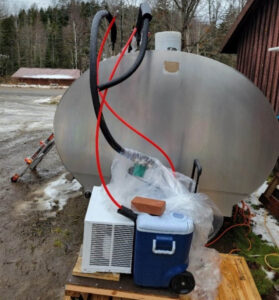
In response to the challenges posed by warmer spring temperatures during the maple sap season, a project funded by the Northern New York Agricultural Development Program has successfully developed do-it-yourself (DIY) maple sap chilling systems. Led by Adam Wild, Director of the Uihlein Maple Research Forest, this initiative aims to maintain sap quality by preventing spoilage through effective cooling solutions. The outcomes of this proof-of-concept project are documented in two freely available resources: the “Chilling Maple Sap” informational bulletin and the “How-To Build a Maple Sap Chiller” guide.
Project Overview and Methodology
- Development of DIY Chillers:
- Adaptation of window-size air conditioning units.
- Integration with plastic picnic coolers containing food-grade glycol solution.
- Testing Configurations:
- Use of a submersible wine chilling plate in a stainless steel tank.
- Pumping sap through a 20-plate heat exchanger into a 1,500-gallon insulated dairy tank equipped with cooling plates.
- Collaboration with the Upper Hudson Maple Producers Association for dairy tank provision.
Key Findings and Benefits
- Improved Sap Quality: Chilling and holding sap enhances flavor and quality, directly impacting maple syrup production.
- Operational Flexibility: Producers can process sap at convenient times, benefiting those with additional farming or off-farm commitments.
- Cost-Effectiveness: Glycol chilling systems offer a less expensive alternative to traditional refrigeration, with unit costs ranging from $300 to $1,400.
- Efficiency Gains: The system reduced boiling requirements by 40% and saved over 24 hours of labor in post-boil cleanup.
Resources and Accessibility
- Chilling Maple Sap Bulletin: Covers cooling efficiency, freezing points, and chiller sizing for various operations.
- How-To Build a Maple Sap Chiller Guide: Provides step-by-step instructions, safety tips, parts lists, cost estimates, photos, and optional Wi-Fi remote monitoring features.
- Both resources are freely available at nnyagdev.org and through the Cornell Maple Program.
Alignment with Sustainable Development Goals (SDGs)
- SDG 2: Zero Hunger
- Enhancing maple syrup production supports sustainable agriculture and food security by improving product quality and reducing spoilage.
- SDG 8: Decent Work and Economic Growth
- Labor savings and operational flexibility contribute to improved livelihoods for maple producers, especially those balancing multiple jobs.
- Cost-effective chilling systems promote economic sustainability for small and medium-sized farms.
- SDG 9: Industry, Innovation, and Infrastructure
- The DIY approach encourages innovation in agricultural practices and infrastructure development tailored to local needs.
- SDG 12: Responsible Consumption and Production
- Reducing sap spoilage and improving processing efficiency supports sustainable production patterns.
- SDG 13: Climate Action
- Adaptation to warmer temperatures through innovative chilling solutions demonstrates proactive climate resilience in agriculture.
Conclusion
The development and implementation of DIY food-grade glycol chillers for maple sap cooling represent a significant advancement in sustainable agricultural practices. By addressing climate-related challenges and enhancing operational efficiency, this project supports multiple Sustainable Development Goals, promoting environmental sustainability, economic viability, and social well-being within the maple syrup industry.
1. Which SDGs are addressed or connected to the issues highlighted in the article?
- SDG 2: Zero Hunger
- The article focuses on improving maple sap quality and syrup production, which relates to sustainable agriculture and food security.
- SDG 9: Industry, Innovation and Infrastructure
- The development and use of DIY glycol chillers represent innovation in agricultural processing technology.
- SDG 12: Responsible Consumption and Production
- Improving sap chilling efficiency reduces energy use (40% less boiling) and labor, promoting sustainable production practices.
- SDG 13: Climate Action
- The project addresses challenges posed by warmer spring temperatures, linking to adaptation to climate change impacts.
2. What specific targets under those SDGs can be identified based on the article’s content?
- SDG 2: Zero Hunger
- Target 2.3: By 2030, double the agricultural productivity and incomes of small-scale food producers, including through sustainable practices.
- Target 2.4: Ensure sustainable food production systems and implement resilient agricultural practices.
- SDG 9: Industry, Innovation and Infrastructure
- Target 9.5: Enhance scientific research and upgrade technological capabilities of industrial sectors.
- SDG 12: Responsible Consumption and Production
- Target 12.2: Achieve sustainable management and efficient use of natural resources.
- Target 12.4: Environmentally sound management of chemicals and wastes to minimize adverse impacts.
- SDG 13: Climate Action
- Target 13.1: Strengthen resilience and adaptive capacity to climate-related hazards and natural disasters.
3. Are there any indicators mentioned or implied in the article that can be used to measure progress towards the identified targets?
- Indicators related to SDG 2:
- Quality and flavor of maple syrup as a measure of improved agricultural productivity and product quality.
- Number of producers adopting the DIY chilling technology.
- Indicators related to SDG 9:
- Number of innovative technologies developed and implemented in maple syrup production.
- Cost efficiency of new technologies (e.g., chillers costing $300 to $1,400).
- Indicators related to SDG 12:
- Reduction in energy consumption (40% less boiling time).
- Labor hours saved (more than 24 hours of post-boil cleanup saved).
- Use of food-grade glycol as an environmentally safe chilling method.
- Indicators related to SDG 13:
- Adaptation measures implemented to cope with warmer spring temperatures.
- Effectiveness of chilling systems in maintaining sap quality despite climate variability.
4. Table: SDGs, Targets and Indicators
| SDGs | Targets | Indicators |
|---|---|---|
| SDG 2: Zero Hunger |
|
|
| SDG 9: Industry, Innovation and Infrastructure |
|
|
| SDG 12: Responsible Consumption and Production |
|
|
| SDG 13: Climate Action |
|
|
Source: adirondackdailyenterprise.com
What is Your Reaction?
 Like
0
Like
0
 Dislike
0
Dislike
0
 Love
0
Love
0
 Funny
0
Funny
0
 Angry
0
Angry
0
 Sad
0
Sad
0
 Wow
0
Wow
0