

































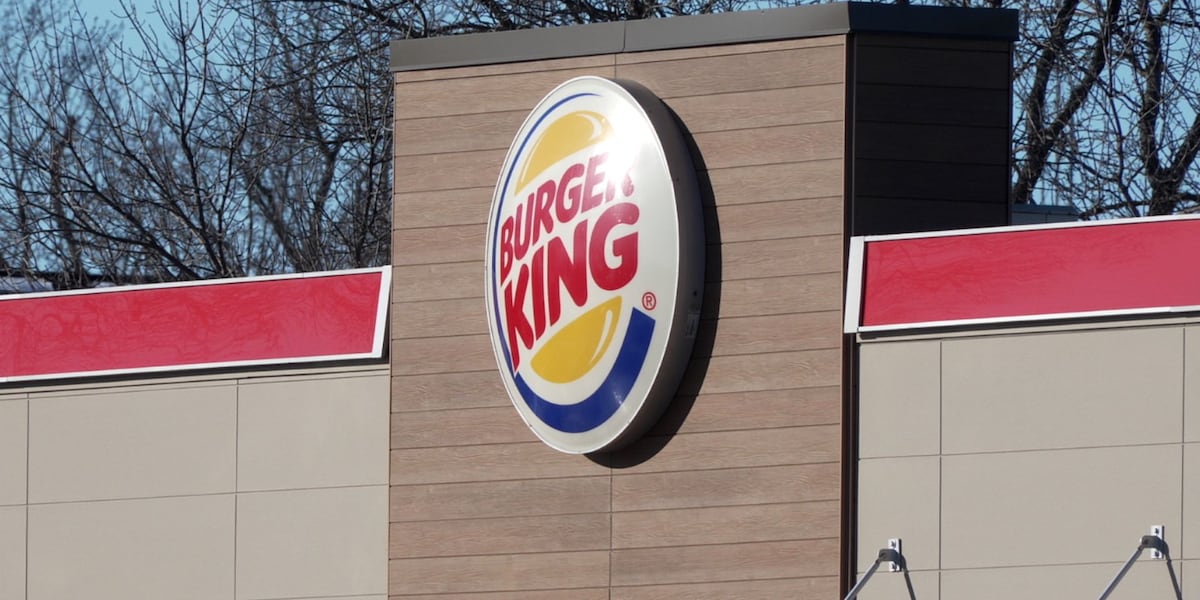

















McDonald’s is losing its low-income customers. Economists call it a symptom of the stark wealth divide – Los Angeles Times

Economic Divergence and its Impact on Sustainable Development Goals
A Case Study: McDonald’s and the Erosion of Affordability
An analysis of McDonald’s pricing strategy and customer demographics reveals significant challenges to achieving key Sustainable Development Goals (SDGs), particularly those related to poverty, hunger, and inequality.
- Historically, the company successfully targeted low-income consumers with its “Dollar Menu,” aligning with principles of food accessibility.
- However, a 40% average increase in menu prices between 2019 and 2024 has resulted in a double-digit decline in traffic from low-income households.
- This trend directly impacts SDG 1 (No Poverty) and SDG 2 (Zero Hunger) by making a historically affordable food source inaccessible to financially strained populations. The rising cost of items like a Big Mac (from $4.39 to $5.29) and a 10-piece McNuggets Meal (from $7.19 to $9.19) exemplifies this growing affordability gap.
The “K-Shaped” Economy and its Implications for SDG 10
The shift in consumer behavior at McDonald’s is emblematic of a broader economic trend of divergence, which undermines SDG 10 (Reduced Inequalities). This “K-shaped” economy is characterized by the simultaneous financial improvement of high-income earners and the decline of low-income households.
- Fast Food: While McDonald’s lost low-income customers, it saw a nearly equal increase in traffic from higher-earning consumers.
- Airlines: A recent Delta earnings report showed a 5% rise in premium ticket sales, contrasted with a 5% fall in main cabin revenue.
- Hospitality: Luxury hotel brands (Four Seasons, Ritz-Carlton) have seen revenue increase by 2.9%, while economy hotels experienced a 3.1% decline.
Systemic Pressures on Low-Income Households
Multiple economic factors are converging to disproportionately affect lower-income households, creating significant headwinds for several SDGs.
- Financial Instability and SDG 1: Households earning less than $45,000 annually have seen “huge year-over-year increases” in credit delinquency rates since COVID-19 stimulus programs ended. This financial distress is a direct barrier to progress on SDG 1 (No Poverty).
- The Housing Crisis and SDG 11: The goal of SDG 11 (Sustainable Cities and Communities), which includes access to affordable housing, is severely challenged.
- In 2023, half of all renters (22.6 million people) were cost-burdened, spending over 30% of their income on housing.
- The median residual income for renters earning under $30,000 fell to just $250 per month, a 55% decline since 2001, severely limiting their ability to afford food, healthcare, and other necessities.
Labor, Wages, and the Pursuit of SDG 8
The debate surrounding rising operational costs, including wages, is central to the challenge of achieving SDG 8 (Decent Work and Economic Growth). This goal seeks to promote inclusive economic growth, full and productive employment, and decent work for all.
- Input Costs: McDonald’s cites soaring costs for essentials like beef and paper as a primary driver of price increases.
- Labor Costs: The impact of minimum wage increases, such as the legislation in California, is a point of contention. While industry groups claim it forces layoffs and hiring freezes, academic analysis suggests minimal impact on employment and menu prices.
- Economic Stimulation: Labor groups argue that higher wages provide workers with more purchasing power, stimulating the economy and contributing to the objectives of SDG 8.
Corporate Response and Market Outlook
In response to these economic pressures, companies are re-evaluating their pricing strategies to appeal to cash-strapped consumers.
- McDonald’s has attempted to revive its value proposition with a $5 meal deal and other promotions, acknowledging the unsustainability of its previous Dollar Menu in an inflationary environment.
- Other businesses, such as the Super Duper burger chain with its “$10 recession combo,” are also implementing value-focused marketing.
- There is a growing consensus that consumer tolerance for further price hikes is minimal. This forces businesses to absorb costs rather than pass them on, highlighting the delicate balance between corporate profitability and the economic well-being of consumers, a crucial consideration for a sustainable and equitable market.
Analysis of the Article in Relation to Sustainable Development Goals
1. Which SDGs are addressed or connected to the issues highlighted in the article?
-
SDG 1: No Poverty
- The article extensively discusses the financial struggles of low-income households. It highlights how rising prices for essentials like food, groceries, clothes, rent, and child care are squeezing their budgets, making it “tougher and tougher every month for low-income households to make ends meet.” This directly relates to the goal of ending poverty in all its forms.
-
SDG 2: Zero Hunger
- The core theme of the article is the decreasing affordability of food, even from historically cheap fast-food chains like McDonald’s. The fact that “Happy Meals at McDonald’s are prohibitively expensive for some people” points to challenges in ensuring access to sufficient and affordable food for vulnerable populations, a key aspect of SDG 2.
-
SDG 8: Decent Work and Economic Growth
- The article delves into the debate surrounding labor costs and wages in the fast-food industry. It discusses the impact of raising the minimum wage in California, with arguments about businesses trimming hours and laying off staff versus the potential for increased worker purchasing power. This connects to the goal of promoting sustained, inclusive economic growth and decent work for all.
-
SDG 10: Reduced Inequalities
- A central argument in the article is the emergence of a “K-shaped economy,” where wealthier customers increase their spending while lower-income shoppers pull back. This divergence, where “economic and policy headwinds are disproportionately affecting lower-income households,” is a clear illustration of rising economic inequality within a country.
-
SDG 11: Sustainable Cities and Communities
- The article specifically cites a Harvard University report on the housing crisis, noting that “half of all renters, 22.6 million people, were cost-burdened in 2023, meaning they spent more than 30% of their income on housing and utilities.” This directly addresses the challenge of ensuring access to affordable housing, a critical component of sustainable communities.
2. What specific targets under those SDGs can be identified based on the article’s content?
-
Target 1.2: By 2030, reduce at least by half the proportion of men, women and children of all ages living in poverty in all its dimensions according to national definitions.
- The article’s focus on low-income households being squeezed by rising costs for all essentials and having minimal residual income directly relates to this target of reducing poverty.
-
Target 2.1: By 2030, end hunger and ensure access by all people, in particular the poor and people in vulnerable situations… to safe, nutritious and sufficient food all year round.
- The discussion about McDonald’s, a traditionally affordable food source, becoming too expensive for its core low-income customer base highlights a breakdown in access to sufficient food for vulnerable people.
-
Target 8.5: By 2030, achieve full and productive employment and decent work for all women and men… and equal pay for work of equal value.
- The debate over the California minimum wage law for fast-food workers, its effect on employment levels, and the 40% growth in McDonald’s spending on worker salaries since 2019 are directly linked to this target concerning wages and employment.
-
Target 10.1: By 2030, progressively achieve and sustain income growth of the bottom 40 per cent of the population at a rate higher than the national average.
- The article indicates a failure to meet this target by describing how wages for lower-income households are stagnating compared to others, and their purchasing power is shrinking due to inflation, creating a “two-tiered economy.”
-
Target 11.1: By 2030, ensure access for all to adequate, safe and affordable housing and basic services.
- The article explicitly references this target by citing data that half of all renters are “cost-burdened,” spending over 30% of their income on housing, and that this number has increased significantly since 2001.
3. Are there any indicators mentioned or implied in the article that can be used to measure progress towards the identified targets?
- Consumer Spending Patterns by Income Level: The article mentions that traffic from low-income households at McDonald’s “has dropped by double digits,” while traffic from higher-earners increased. This serves as an indicator of the diverging economic realities and purchasing power discussed under SDG 10.
- Consumer Credit Delinquency Rates: The article points to “huge year-over-year increases” in delinquency rates for households making less than $45,000 annually, while rates for higher-income households have stabilized. This is a direct measure of financial distress among low-income populations (SDG 1).
- Food Price Inflation: The article provides specific data on food price increases, such as the “average cost of a McDonald’s menu item rose 40%” from 2019 to 2024. This is a key indicator for measuring food affordability and access (SDG 2).
- Housing Cost Burden: The statistic that “half of all renters, 22.6 million people, were cost-burdened in 2023, meaning they spent more than 30% of their income on housing and utilities” is a direct indicator used to measure progress towards affordable housing (SDG 11).
- Residual Income Levels: The article states that in 2023, renters with incomes under $30,000 had a median of just “$250 per month in residual income,” an amount that has fallen 55% since 2001. This is a powerful indicator of the shrinking financial buffer for low-income families (SDG 1).
- Wage and Employment Data: The article discusses the impact of the $20 minimum wage on fast-food employment in California and notes that McDonald’s spending on salaries grew 40% since 2019. These figures are indicators for tracking decent work and economic conditions (SDG 8).
4. Table of SDGs, Targets, and Indicators
| SDGs | Targets | Indicators |
|---|---|---|
| SDG 1: No Poverty | 1.2: Reduce poverty in all its dimensions. |
|
| SDG 2: Zero Hunger | 2.1: Ensure access for all people to sufficient food. |
|
| SDG 8: Decent Work and Economic Growth | 8.5: Achieve full and productive employment and decent work for all. |
|
| SDG 10: Reduced Inequalities | 10.1: Sustain income growth of the bottom 40 per cent. |
|
| SDG 11: Sustainable Cities and Communities | 11.1: Ensure access for all to adequate and affordable housing. |
|
Source: latimes.com
What is Your Reaction?
 Like
0
Like
0
 Dislike
0
Dislike
0
 Love
0
Love
0
 Funny
0
Funny
0
 Angry
0
Angry
0
 Sad
0
Sad
0
 Wow
0
Wow
0