Michigan’s clean energy goals depend on rural partnership, not pressure – The Michigan Daily

Report on Michigan’s Clean Energy Transition and Sustainable Development Goal Alignment
Executive Summary: State-Level Ambitions and SDG 7
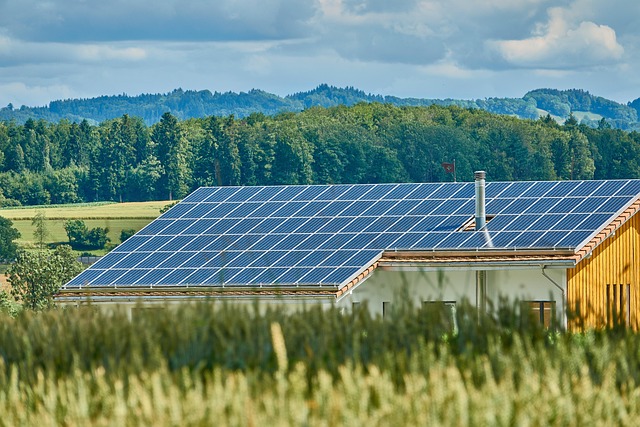
In a direct effort to advance Sustainable Development Goal 7 (Affordable and Clean Energy) and SDG 13 (Climate Action), the state of Michigan has legislated ambitious renewable energy targets. The 2023 climate action package mandates a transition to 50% clean energy by 2030 and 100% by 2040. The implementation of this policy relies heavily on the deployment of utility-scale solar projects, which are predominantly sited in rural communities due to land availability. This report analyzes the challenges of this transition, focusing on its alignment with broader Sustainable Development Goals, including SDG 11 (Sustainable Cities and Communities) and SDG 16 (Peace, Justice and Strong Institutions).
Challenges to Sustainable and Inclusive Development
The current pathway for solar project development in Michigan presents several challenges that risk undermining the principles of sustainable and inclusive development as outlined in the SDGs.
- Lack of Proactive Community Engagement: Project development processes frequently begin without the prior knowledge of local communities. This reactive approach, where local officials and residents are informed late in the process, conflicts with the participatory planning principles of SDG 11.
- Institutional Capacity Gaps: Rural municipalities often lack the necessary resources, including funding, specialized staff, and technical expertise, to proactively plan for large-scale energy infrastructure. This capacity gap hinders their ability to create effective zoning ordinances and engage as equal partners, a challenge to building the strong local institutions envisioned in SDG 16.
- Top-Down Legislative Pressure: Michigan’s 2023 statewide siting law permits developers to bypass local ordinances and appeal directly to the Michigan Public Service Commission. While intended to accelerate deployment for SDG 7, this mechanism can disempower local decision-making bodies and erode community trust, running counter to the goal of fostering inclusive institutions (SDG 16).
- Information Asymmetry: Community concerns regarding land use, economic benefits, and environmental impact are often rooted in a lack of accessible information and meaningful input, rather than inherent opposition to clean energy. Rushing development without addressing these concerns leads to project delays and deepens community divides.
Analysis of Stakeholder Concerns and Project Viability
Achieving a just transition requires addressing the legitimate concerns of host communities to ensure the long-term viability of clean energy projects.
- Economic Equity (SDG 8): Communities raise valid questions about the distribution of economic benefits, including lease payments, local tax revenue, and the long-term financial implications of land-use changes.
- Land Use and Environmental Stewardship (SDG 15): Concerns about the impact on prime farmland, local ecosystems, and visual landscapes are significant. Sustainable development requires that projects are designed to be reversible and to protect the ecological and cultural value of the land.
- Community Authority and Trust (SDG 16): When local authorities feel their decision-making power is stripped, it fosters distrust and can lead to stalled projects. Community buy-in is not an obstacle but a prerequisite for sustainable infrastructure development.
Recommendations for an SDG-Aligned Energy Transition
To ensure Michigan’s path to 100% clean energy is sustainable, equitable, and effective, the following actions are recommended:
- Foster Multi-Stakeholder Partnerships (SDG 17): State agencies and developers must treat rural host communities as essential partners. This involves initiating open, early-stage dialogue that invites communities to help shape project outcomes.
- Strengthen Local Institutions (SDG 16): Enhance support for local governments through increased funding and technical assistance programs, such as the Department of Environment, Great Lakes and Energy’s Renewable Energy Academy, to build their capacity for proactive and informed planning.
- Prioritize Community-Centered Design (SDG 11): Move beyond informing communities to actively involving them in the design process. Projects that reflect local priorities, minimize disruption, and protect land productivity are more likely to be viewed as community assets.
- Promote Shared Responsibility (SDG 7 & 13): The responsibility for decarbonization must be framed as a collective statewide effort. A successful transition requires that the benefits and burdens are shared equitably and that every community, urban and rural, has a recognized role in achieving Michigan’s climate goals.
Analysis of Sustainable Development Goals in the Article
1. Which SDGs are addressed or connected to the issues highlighted in the article?
-
SDG 7: Affordable and Clean Energy
The article’s central theme is Michigan’s transition to clean energy, directly aligning with the goal of ensuring access to affordable, reliable, sustainable, and modern energy for all. The state’s specific goals of “50% clean energy by 2030 and 100% clean energy by 2040” are the primary subject of discussion.
-
SDG 11: Sustainable Cities and Communities
The article extensively discusses the impact of large-scale solar projects on rural communities. It highlights issues of land use, local governance, community engagement, and the need for inclusive and sustainable planning. The tension between state-level energy goals and local community capacity (“very few have the staff, funding or technical expertise to plan for infrastructure of this scale”) is a core aspect of making communities sustainable and resilient.
-
SDG 13: Climate Action
The entire initiative described in the article is a direct response to the “global climate crisis.” Michigan’s clean energy legislation is a clear measure to combat climate change and its impacts by reducing carbon emissions through a shift to renewable energy sources.
-
SDG 17: Partnerships for the Goals
The article emphasizes that the success of Michigan’s energy transition depends on collaboration. It calls for stronger partnerships between the state government, private developers, and local communities. The text argues that “community trust is not an obstacle to clean energy but a necessity for it” and that treating “host communities as partners” is essential, highlighting the need for effective public, public-private, and civil society partnerships.
2. What specific targets under those SDGs can be identified based on the article’s content?
-
Target 7.2: By 2030, increase substantially the share of renewable energy in the global energy mix.
This target is directly addressed by Michigan’s stated goals to achieve “50% clean energy by 2030 and 100% clean energy by 2040.” The article is framed around the state’s efforts to meet these specific renewable energy benchmarks.
-
Target 11.3: By 2030, enhance inclusive and sustainable urbanization and capacity for participatory, integrated and sustainable human settlement planning and management in all countries.
The article highlights the lack of capacity in rural communities to manage utility-scale solar projects and advocates for a more participatory approach. It points out that “most communities are reacting to a proposal rather than getting the chance to understand these projects ahead of time” and calls for “community-centered development” that “invites them to help shape development outcomes.”
-
Target 13.2: Integrate climate change measures into national policies, strategies and planning.
Michigan’s “2023 package signed by Gov. Gretchen Whitmer” and the “2023 statewide siting law” are concrete examples of integrating climate change measures into state-level policy and planning to achieve clean energy goals.
-
Target 17.17: Encourage and promote effective public, public-private and civil society partnerships.
The article argues that Michigan’s goals cannot be met “without stronger collaboration and education at the community level.” It describes the interactions between the state (public), developers (private), and community support organizations like the “Center for EmPowering Communities” (civil society) as critical for the sustainable deployment of solar energy.
3. Are there any indicators mentioned or implied in the article that can be used to measure progress towards the identified targets?
-
Indicator for Target 7.2: Share of renewable energy in the total final energy consumption.
The article explicitly provides the metrics for this indicator through Michigan’s goals: achieving a 50% share by 2030 and a 100% share by 2040.
-
Indicator for Target 11.3: Proportion of cities with a direct participation structure of civil society in urban planning and management that operate regularly and democratically.
While not providing a quantitative number, the article implies this indicator by discussing its absence and necessity. It notes that communities often lack proactive planning (“Zoning ordinances may be decades old”) and are left “scrambling to respond.” Progress could be measured by the number of townships that update their ordinances and establish participatory processes for renewable energy projects, as supported by programs like the “Renewable Energy Academy.”
-
Indicator for Target 13.2: Number of countries that have communicated the establishment or operationalization of an integrated policy/strategy/plan which increases their ability to adapt to the adverse impacts of climate change, and foster climate resilience and low greenhouse gas emissions development.
The article directly mentions the existence of such policies at the state level: the “historic clean energy & climate action package” and the statewide siting law, which serve as concrete evidence of this indicator being met for Michigan.
-
Indicator for Target 17.17: Number of successful public, public-private, and civil society partnerships.
The article implies this can be measured by the outcome of development processes. A measure of success would be the number of solar projects that “move forward” with community support versus those that “stall” due to a lack of trust and engagement. The article suggests that successful partnerships lead to community buy-in and sustainable project deployment.
4. Summary Table of SDGs, Targets, and Indicators
| SDGs | Targets | Indicators |
|---|---|---|
| SDG 7: Affordable and Clean Energy | 7.2: Increase substantially the share of renewable energy in the global energy mix. | The specific percentage goals set by Michigan: “50% clean energy by 2030 and 100% clean energy by 2040.” |
| SDG 11: Sustainable Cities and Communities | 11.3: Enhance inclusive and sustainable urbanization and capacity for participatory, integrated and sustainable human settlement planning and management. | (Implied) The number of rural communities with updated zoning ordinances and established participatory processes for renewable energy planning. |
| SDG 13: Climate Action | 13.2: Integrate climate change measures into national policies, strategies and planning. | The existence of Michigan’s “2023 package” for clean energy and the “2023 statewide siting law.” |
| SDG 17: Partnerships for the Goals | 17.17: Encourage and promote effective public, public-private and civil society partnerships. | (Implied) The number of solar projects successfully developed with community buy-in, contrasted with those stalled due to local opposition. |
Source: michigandaily.com
What is Your Reaction?
 Like
0
Like
0
 Dislike
0
Dislike
0
 Love
0
Love
0
 Funny
0
Funny
0
 Angry
0
Angry
0
 Sad
0
Sad
0
 Wow
0
Wow
0