
















New study highlights emerging disease risk from mosquitoes – Mongabay-India
Report on Mosquito Vector Ecology in Kerala and its Implications for Sustainable Development Goals
Executive Summary
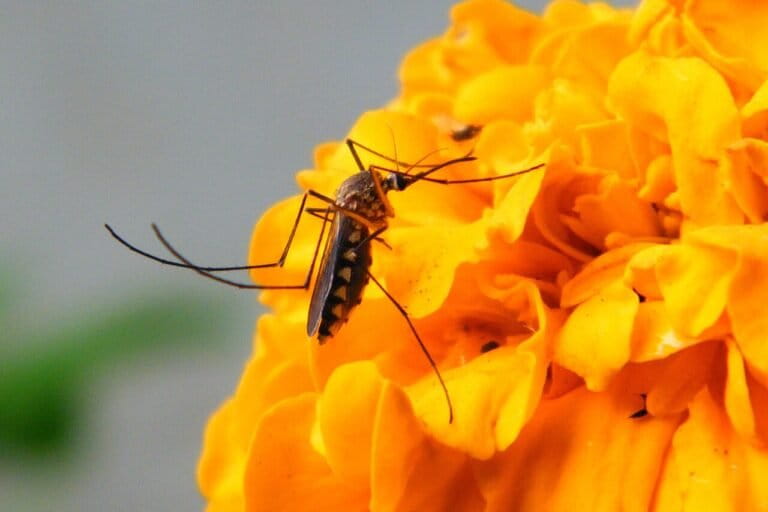
A recent ecological survey conducted across five districts in Kerala, India, reveals significant public health challenges that directly intersect with several Sustainable Development Goals (SDGs). The study identified 108 mosquito species, of which 14 are known vectors for human diseases, including dengue, chikungunya, malaria, and filariasis. Key findings indicate a high diversity of mosquito vectors in artificial, human-made habitats, overlapping distributions of multiple vector species, and adaptive shifts in breeding preferences. These results underscore the urgent need for integrated strategies that address SDG 3 (Good Health and Well-being), SDG 11 (Sustainable Cities and Communities), SDG 12 (Responsible Consumption and Production), and SDG 13 (Climate Action) to mitigate the growing threat of vector-borne diseases.
Vector-Borne Disease Burden and SDG 3: Good Health and Well-being
The proliferation of vector-borne diseases poses a direct threat to achieving Target 3.3 of the SDGs, which aims to end the epidemics of communicable diseases. The situation in Kerala, which has experienced a surge in dengue and chikungunya, highlights this challenge.
Key Public Health Findings
- High Vector Presence: The identification of 14 disease-carrying vector species confirms a persistent and diverse threat to public health in the region.
- Complex Transmission Dynamics: The study reports the co-existence of multiple vectors for the same disease (e.g., primary and secondary malaria vectors) and vectors capable of transmitting multiple diseases. This overlap complicates disease control and can lead to more challenging outbreaks.
- Dominance of Key Vectors: Stegomyia albopicta (Aedes albopictus), a primary vector for dengue and chikungunya, was the most abundant species, found across all surveyed districts, indicating a widespread risk.
- Low Abundance, High Risk: Primary vectors for critical diseases like dengue (Stegomyia aegypti), Japanese encephalitis (Culex tritaeniorhynchus), and malaria (Anopheles stephensi) were found in lower numbers, suggesting they may act as pathogen reservoirs that can trigger epidemics under favourable environmental conditions.
Urbanization, Waste, and Habitat Shift: A Challenge for SDG 11 and SDG 12
The study reveals a critical link between unsustainable urban environments and the spread of disease vectors, directly impacting SDG 11 (Sustainable Cities and Communities) and SDG 12 (Responsible Consumption and Production).
Habitat Preference Analysis
- Artificial Habitats as Breeding Hotspots: Mosquito diversity was found to be significantly higher in artificial habitats compared to natural ones. This demonstrates how human activities and infrastructure create ideal conditions for vector proliferation.
- Impact of Inadequate Waste Management: Discarded items such as plastic containers, tyres, and household waste serve as primary breeding sites. This links the risk of disease directly to failures in municipal waste management, a key component of Target 11.6, and highlights the consequences of unsustainable consumption patterns addressed in SDG 12.
- Vector Adaptation: The research observed species traditionally found in natural settings (e.g., tree holes) adapting to breed in artificial containers like discarded tyres. This adaptive behaviour increases the interface between vectors and human populations, elevating transmission risk in urban and peri-urban areas.
Climate Change and Environmental Degradation: Links to SDG 13 and SDG 15
The report underscores the influence of broader environmental factors on vector ecology, connecting the issue to SDG 13 (Climate Action) and SDG 15 (Life on Land).
Environmental Drivers of Vector Proliferation
- Climate Change as a Threat Multiplier: Rising temperatures and altered rainfall patterns, as highlighted by related studies, create more favourable conditions for mosquito breeding and shorten pathogen incubation periods. This aligns with the need to strengthen resilience to climate-related hazards under Target 13.1.
- Land-Use Change: The blurring boundaries between forests, plantations, and urban areas due to land-use changes facilitate the interaction between different mosquito species and their adaptation to human-dominated landscapes. This degradation of natural habitats is a core concern of SDG 15.
Conclusion and Policy Recommendations for Integrated SDG Achievement
The findings from Kerala necessitate a multi-sectoral approach that moves beyond a purely medical response to vector-borne diseases. Achieving SDG 3 is intrinsically linked to progress on environmental and urban development goals. An evidence-based policy framework is required to address these interconnected challenges.
Recommended Actions
- Strengthen Integrated Vector Management: Develop area-specific control strategies based on local vector prevalence and habitat data, rather than a one-size-fits-all approach.
- Promote Sustainable Urban Planning and Waste Management (SDG 11 & 12): Implement robust municipal solid waste management programs to eliminate artificial breeding sites. Public awareness campaigns on responsible waste disposal are crucial.
- Incorporate Climate Adaptation into Public Health Strategies (SDG 13): Develop early warning systems for disease outbreaks based on climatic modeling and enhance healthcare system preparedness for climate-induced health shocks.
- Enhance Ecological Surveillance (SDG 15): Invest in continuous monitoring of vector ecology, particularly at the interface of urban and natural ecosystems, to understand and predict shifts in vector behaviour due to land-use changes.
Analysis of Sustainable Development Goals (SDGs) in the Article
1. Which SDGs are addressed or connected to the issues highlighted in the article?
- SDG 3: Good Health and Well-being: This is the most central SDG addressed. The article focuses on the surge of mosquito-borne diseases like dengue, chikungunya, and malaria in Kerala, discussing the public health crisis, disease transmission dynamics, and the high number of cases and deaths. It directly relates to ensuring healthy lives and promoting well-being.
- SDG 11: Sustainable Cities and Communities: The article links the increase in mosquito populations to human habitats. It highlights that mosquito diversity is higher in “artificial habitats” such as “discarded plastic containers, tyres, and household items.” This points to issues of waste management and urban planning, which are critical components of creating sustainable and safe cities.
- SDG 13: Climate Action: The article explicitly connects climate change to the growing burden of mosquito-borne illnesses. It states that “changes in distribution patterns of mosquitoes, climate change, urbanisation, and other socio-economic factors” contribute to the risk. It also mentions that “higher temperatures result in shorter incubation periods” and “changing precipitation patterns” create more favorable breeding conditions, linking climate action directly to public health resilience.
- SDG 15: Life on Land: The article discusses the ecological aspect of the problem, noting shifts in mosquito habitats. It mentions that the “boundaries between forests and urban areas have blurred” and that some mosquito species are adapting from natural habitats like “tree holes” to man-made ones. This relates to the impact of land-use change and habitat degradation on biodiversity and ecosystem dynamics.
2. What specific targets under those SDGs can be identified based on the article’s content?
- Target 3.3: “By 2030, end the epidemics of AIDS, tuberculosis, malaria and neglected tropical diseases and combat hepatitis, water-borne diseases and other communicable diseases.” The article’s entire focus is on the prevalence and transmission of communicable, vector-borne diseases such as dengue, chikungunya, and malaria, making this target directly relevant. The mention of Kerala accounting for “three-quarters of the country’s dengue-related deaths” underscores the urgency of meeting this target.
- Target 11.6: “By 2030, reduce the adverse per capita environmental impact of cities, including by paying special attention to air quality and municipal and other waste management.” The article identifies “discarded tyres, household containers, and latex collection cups” as primary breeding sites for mosquitoes. This points directly to challenges in municipal waste management, which, if improved, could mitigate the environmental conditions that allow these vectors to thrive.
- Target 13.1: “Strengthen resilience and adaptive capacity to climate-related hazards and natural disasters in all countries.” The article highlights that a study “predicts up to 40% rise in mortality due to a rise in temperature and changes in rainfall patterns under climate change.” This shows a direct link between climate-related hazards (changing weather patterns) and a public health crisis, emphasizing the need to build resilience against these impacts.
- Target 15.5: “Take urgent and significant action to reduce the degradation of natural habitats, halt the loss of biodiversity, and, by 2020, protect and prevent the extinction of threatened species.” The article discusses how “the boundaries between forests and urban areas have blurred,” leading to “stark shifts in the geographic range of mosquitoes and interactions between different species.” This habitat modification and degradation is a key driver of the changing vector dynamics discussed.
3. Are there any indicators mentioned or implied in the article that can be used to measure progress towards the identified targets?
-
For Target 3.3: The article provides direct quantitative data that can be used as indicators.
- Incidence of specific diseases: The article mentions “8,259 cases” of dengue in Kerala and global figures of “249 million cases of malaria” and “96 million cases of dengue.” Tracking these numbers would measure progress.
- Mortality rate due to specific diseases: The article states Kerala had “31 of 42 deaths” from dengue in India and notes “40,000 deaths” from dengue globally each year. This is a critical indicator of disease severity and healthcare effectiveness.
-
For Target 11.6: The article implies an indicator related to waste management.
- Prevalence of artificial breeding sites: The study found that “mosquito diversity was higher in artificial as compared to natural habitats” and lists specific sites like “discarded plastic containers” and “tyres.” An indicator could be the density or percentage of unmanaged waste items that hold water and serve as breeding grounds in urban and peri-urban areas.
-
For Target 13.1: The article implies an indicator by linking climate variables to health outcomes.
- Correlation between climatic variables and disease incidence/mortality: The article cites a study finding that “dengue-related mortality is strongly influenced by temperature, rainfall, and humidity.” Measuring and modeling this correlation can serve as an indicator of vulnerability and the need for adaptive public health strategies.
-
For Target 15.5: The article implies an ecological indicator.
- Ratio of vector species diversity in artificial vs. natural habitats: The finding that “mosquito diversity was higher in artificial as compared to natural habitats” and that some species “were also observed in discarded tyres, suggesting an adaptation to man-made habitats” can be used as an indicator of habitat degradation and the impact of human encroachment on vector ecology.
4. Table of SDGs, Targets, and Indicators
| SDGs | Targets | Indicators |
|---|---|---|
| SDG 3: Good Health and Well-being | 3.3: End epidemics of malaria, neglected tropical diseases, and other communicable diseases. |
|
| SDG 11: Sustainable Cities and Communities | 11.6: Reduce the adverse per capita environmental impact of cities, including waste management. |
|
| SDG 13: Climate Action | 13.1: Strengthen resilience and adaptive capacity to climate-related hazards. |
|
| SDG 15: Life on Land | 15.5: Reduce the degradation of natural habitats and halt biodiversity loss. |
|
Source: india.mongabay.com
What is Your Reaction?
 Like
0
Like
0
 Dislike
0
Dislike
0
 Love
0
Love
0
 Funny
0
Funny
0
 Angry
0
Angry
0
 Sad
0
Sad
0
 Wow
0
Wow
0