









































;Resize=620#)








Portugal Witness its Golf Industry Driving New Economic Growth, Real Estate Development and Sports Tourism – Travel And Tour World
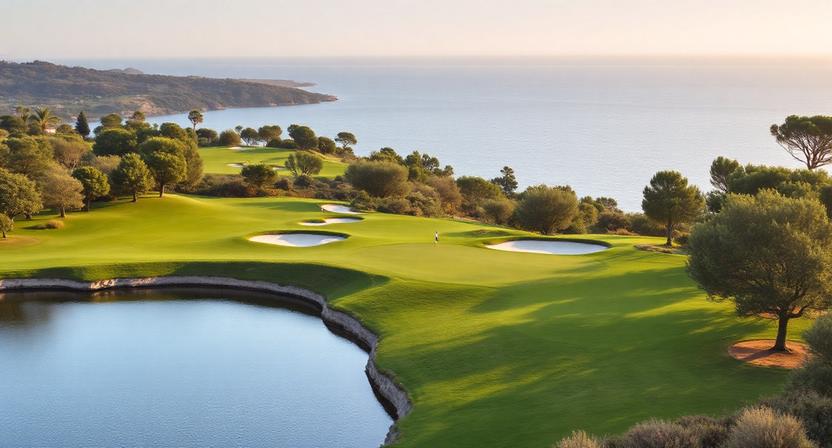
Report on the Economic and Sustainable Development Impact of Portugal’s Golf Industry
This report analyzes the multifaceted contributions of the golf industry to Portugal’s economy, focusing on its role in sports tourism, real estate development, and its alignment with the United Nations Sustainable Development Goals (SDGs).
Economic Performance and Contribution to SDG 8: Decent Work and Economic Growth
The golf sector is a significant driver of economic activity in Portugal, directly contributing to SDG 8 by promoting sustained, inclusive, and sustainable economic growth, full and productive employment, and decent work for all.
Key Economic Indicators
- Total Production: The industry generated a total production value of €760.5 million over the last decade.
- Gross Value Added (GVA): A substantial GVA of €407.9 million was contributed to the national economy.
- Fiscal Contributions: The sector generated €70.2 million in tax revenue through VAT and IRS.
- Wage Distribution: A total of €143.5 million was paid in wages, supporting local livelihoods.
Employment Generation
In direct support of Target 8.5 of the SDGs, the golf industry has demonstrated a strong capacity for job creation.
- Annual Job Creation: The sector creates an average of 810 full-time jobs annually.
- Sectoral Employment: These employment opportunities span multiple industries, including construction, real estate, tourism, and sports services, fostering economic diversification.
Infrastructure, Real Estate, and SDG 11: Sustainable Cities and Communities
The golf industry’s influence on real estate and residential tourism is pivotal for developing inclusive, safe, resilient, and sustainable communities, in line with SDG 11.
Influence on Real Estate and Construction
- Construction Share: Golf-related developments account for 12% of total construction in tourist accommodations and resorts.
- Brokerage Activity: The sector represents 12% of sales brokerage and 24% of resale brokerage, indicating its deep integration into the property market.
- Accommodation Units: By 2024, Portugal had 9,266 accommodation units linked to golf courses, with 2,595 licensed in the past decade.
Investment and Property Value
The development of quality infrastructure supports economic development and human well-being.
- New Investment: New investments in golf-related real estate have reached €270.29 million.
- Property Value Premium: Properties located within or offering views of golf courses command an average value premium of 19-20%, attracting sustainable investment and enhancing community value.
Promotion of Sustainable Tourism and Well-being (SDG 8 & SDG 3)
Portugal’s golf sector is instrumental in advancing the country’s sustainable tourism strategy, a key component of SDG 8 (Target 8.9), while also promoting active lifestyles that contribute to SDG 3: Good Health and Well-being.
Strategic Role in Sports Tourism
- Destination Attractiveness: The industry solidifies Portugal’s position as a premier global destination for sports and leisure tourism, attracting high-value international visitors.
- International Events: The hosting of international tournaments, such as those by the European Tour, enhances the nation’s global competitiveness and promotes local culture.
- Premium Experiences: The market caters to tourists seeking luxury experiences that combine sport, relaxation, and cultural exploration, driving growth in the hospitality and service sectors.
Conclusion: A Strategic Asset for Sustainable National Development
The golf industry is a strategic pillar for Portugal’s economic prosperity and international competitiveness. Its contributions extend beyond economic metrics to actively support key Sustainable Development Goals.
- SDG 8: By generating significant economic value and creating hundreds of stable, full-time jobs annually.
- SDG 11: By guiding sustainable real estate development and enhancing the value of communities.
- SDG 3 & SDG 8.9: By promoting a form of sustainable tourism that encourages well-being, attracts investment, and showcases Portugal’s natural and cultural heritage.
The continued growth of the golf sector is fundamental to Portugal’s success as a premium destination for tourism and investment, ensuring its path towards sustainable economic development.
Sustainable Development Goals (SDGs) Addressed in the Article
1. Which SDGs are addressed or connected to the issues highlighted in the article?
- SDG 8: Decent Work and Economic Growth: The article extensively discusses the golf industry’s role as a major economic driver in Portugal. It highlights job creation, contribution to Gross Value Added (GVA), tax revenue, and the promotion of a specific economic sector—sports tourism—which directly aligns with the goal of promoting sustained, inclusive, and sustainable economic growth, full and productive employment, and decent work for all.
- SDG 11: Sustainable Cities and Communities: The article connects the golf industry to significant developments in real estate and construction. It mentions the construction of thousands of accommodation units and the industry’s substantial share in building tourist resorts. This relates to developing sustainable infrastructure and managing urban and residential expansion linked to tourism.
- SDG 17: Partnerships for the Goals: The article mentions that the growth in golf-related real estate and tourism is attracting “international buyers and investors” and “large foreign investment.” This points to the mobilization of financial resources through foreign investment, which is a key aspect of strengthening the means of implementation and revitalizing global partnerships for sustainable development.
2. What specific targets under those SDGs can be identified based on the article’s content?
-
Target 8.2: Achieve higher levels of economic productivity through diversification, technological upgrading and innovation…
The article demonstrates how Portugal is achieving economic growth by diversifying its tourism sector, focusing specifically on the high-value niche of “sports tourism” and “luxury sports tourism.” The golf industry is presented as a “strategic sector” that acts as an “economic asset capable of creating significant value.” -
Target 8.5: By 2030, achieve full and productive employment and decent work for all…
The article directly addresses this target by stating that the golf sector creates “full-time jobs” and generates “810 jobs annually on average,” providing “stable employment” across various industries like construction, real estate, and tourism. -
Target 8.9: By 2030, devise and implement policies to promote sustainable tourism that creates jobs and promotes local culture and products.
The entire article is a case study of this target in action. It details how golf tourism has become a “pivotal segment” and one of the “pillars of Portugal’s sports tourism,” successfully creating jobs and positioning the country as a leading international destination. -
Target 11.1: By 2030, ensure access for all to adequate, safe and affordable housing and basic services…
While not focused on affordability, the article relates to the “housing” and “accommodation” aspect of this target. It quantifies the impact on residential development, noting that “9,266 golf course accommodation units” have been built and the sector represents “12% of total construction in tourist accommodations and resorts.”
3. Are there any indicators mentioned or implied in the article that can be used to measure progress towards the identified targets?
-
Economic Contribution Indicators (SDG 8): The article provides several quantitative measures of the golf industry’s economic impact, which can be used as indicators.
- Total production value: €760.5 million
- Gross Value Added (GVA): €407.9 million
- Tax revenue generated: €70.2 million
- Total wage payments: €143.5 million
-
Employment Indicators (SDG 8): A direct indicator for job creation is provided.
- Number of full-time jobs created: 810 jobs annually on average.
-
Infrastructure and Real Estate Development Indicators (SDG 11): The article includes specific data on construction and real estate.
- Number of accommodation units: 9,266 total, with 2,595 licensed in the last ten years.
- New investment in related real estate: €270.29 million.
- Increase in property values: An average of 19% to 20% higher value for properties near or on golf courses.
-
Investment Indicators (SDG 17): The article implies the attraction of foreign capital, which can be measured.
- Value of new investments: €270.29 million in golf-related real estate, much of which is driven by “international buyers and investors.”
Summary Table of SDGs, Targets, and Indicators
4. Create a table with three columns titled ‘SDGs, Targets and Indicators’ to present the findings from analyzing the article.
| SDGs | Targets | Indicators |
|---|---|---|
| SDG 8: Decent Work and Economic Growth | Target 8.2: Achieve higher levels of economic productivity through diversification. |
|
| SDG 8: Decent Work and Economic Growth | Target 8.5: Achieve full and productive employment and decent work. |
|
| SDG 8: Decent Work and Economic Growth | Target 8.9: Promote sustainable tourism that creates jobs. |
|
| SDG 11: Sustainable Cities and Communities | Target 11.1: Ensure access to adequate housing and basic services. |
|
| SDG 17: Partnerships for the Goals | Target 17.3: Mobilize additional financial resources from multiple sources. |
|
Source: travelandtourworld.com
What is Your Reaction?
 Like
0
Like
0
 Dislike
0
Dislike
0
 Love
0
Love
0
 Funny
0
Funny
0
 Angry
0
Angry
0
 Sad
0
Sad
0
 Wow
0
Wow
0